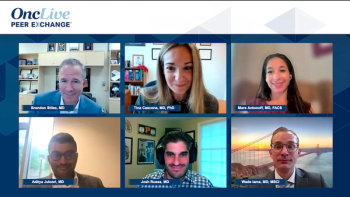
Oncologists explore the challenges of distinguishing between chemotherapy fatigue and cancer-related limb pain, emphasizing the need for effective screening tools.

Your AI-Trained Oncology Knowledge Connection!


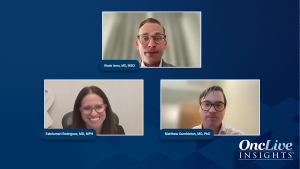
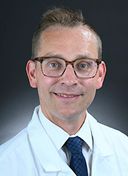
Wade Iams, MD, is the director of Lung Cancer Research at Tennessee Oncology in Nashville.

Oncologists explore the challenges of distinguishing between chemotherapy fatigue and cancer-related limb pain, emphasizing the need for effective screening tools.

Experts discuss diagnosing Lambert-Eaton Myasthenic Syndrome, emphasizing clinical features, serologic tests, and the importance of neurologist involvement.

Oncologists and neurologists enhance patient care through effective collaboration, early screening, and utilizing specialized resources for cancer-associated conditions.

Oncologists explore updated NCCN guidelines for diagnosing neurologic paraneoplastic syndromes in small cell lung cancer, emphasizing multidisciplinary care.

Explore effective treatment monitoring strategies for amifampridine, including side effects management and titration techniques for optimal patient care.

Oncologists explore the challenges of distinguishing between chemotherapy fatigue and cancer-related limb pain, emphasizing the need for effective screening tools.

Panelists discuss how CA-LEMS biology reflects an off-target antitumor immune response (often with SCLC) that generates antibodies against presynaptic VGCCs, reducing acetylcholine release and causing proximal weakness with brief strength improvement after repeated activation.

Panelists discuss how early segment-level recognition of CA-LEMS hinges on spotting hallmark clinical cues (proximal lower-extremity weakness, autonomic dysfunction, and reflexes that transiently improve after exercise) and not dismissing symptoms as deconditioning or cancer-treatment effects, given frequent links to SCLC and other malignancies.

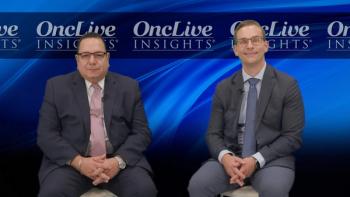
Wade T. Iams, MD, and Jessica Donington, MD, MSCR, discuss ongoing research in early-stage non–small cell lung cancer.

Panelists discuss how future advances will focus on biomarker-driven personalized approaches, platform trials to increase pathologic complete response rates, circulating tumor DNA (ctDNA)-guided therapy escalation and de-escalation, and the critical importance of comprehensive molecular testing in the neoadjuvant setting.

Wade T. Iams, MD, and Jessica Donington, MD, MSCR, discuss how immunotherapy could continue to reshape early NSCLC management.

Wade T. Iams, MD, and Jessica Donington, MD, MSCR, discuss factors that affect adjuvant treatment decisions in early non–small cell lung cancer.

Panelists discuss how the PACIFIC-R real-world data demonstrates excellent long-term outcomes with a median survival of 60 months, validating the durvalumab consolidation approach while addressing management strategies for patients who progress on or after immunotherapy.

Panelists discuss how neoadjuvant chemoimmunotherapy maintains acceptable surgical safety profiles with mortality rates under 4% and how technical complexity primarily stems from hilar lymph node involvement rather than the systemic therapy itself, requiring experienced surgeons to handle these cases.

Panelists discuss how circulating tumor DNA (ctDNA) serves as a promising biomarker for identifying patients at higher risk who may benefit from therapy escalation, though they acknowledge the current lack of prospective data on how to act therapeutically on positive ctDNA results.

Panelists discuss how treatment decisions should integrate multiple factors, including pathologic complete response (pCR), PD-L1 status, and nodal involvement, with particular emphasis on continuing adjuvant therapy for N2 disease and non-PCR patients despite the complexity of using residual viable tumor as a decision-making tool.

Wade T. Iams, MD, and Jessica Donington, MD, MSCR, discuss updated findings for neoadjuvant nivolumab plus chemotherapy in resectable NSCLC.

Wade T. Iams, MD, and Jessica Donington, MD, MSCR, discuss surgical outcomes from CheckMate-77T for perioperative nivolumab in resectable NSCLC.

Panelists discuss how subcutaneous (SQ) nivolumab administration offers patient convenience and potential logistical advantages, particularly in the maintenance setting, though they acknowledge limited current adoption and need for more biological data on efficacy differences.

Panelists discuss how borderline resectable patients can be made resectable through neoadjuvant chemoimmunotherapy when surgeons have clear, objective goals for what they aim to achieve rather than vague hopes to make surgery “less scary.”

Wade T. Iams, MD, and Jessica Donington, MD, MSCR, discuss updated data from CheckMate-77T of perioperative nivolumab in resectable NSCLC.

Wade T. Iams, MD, and Jessica Donington, MD, MSCR, discuss how immunotherapy is affecting perioperative treatment in early-stage non–small cell lung cancer.

Panelists discuss how to manage patients who cannot proceed to surgery after neoadjuvant chemoimmunotherapy by pivoting to definitive concurrent chemoradiation with reduced-dose chemotherapy, while emphasizing the need to distinguish true progression from inflammatory changes.

Panelists discuss how real-world data from the Flatiron Health database revealed that surgical completion rates after neoadjuvant therapy are lower in community practice (65%) compared with clinical trials, particularly for patients with poor performance status or more advanced stage disease.

Panelists discuss how surgeons evaluate candidates for neoadjuvant chemoimmunotherapy by emphasizing that all patients with stage II and III disease should be considered regardless of PD-L1 or mutation status, while highlighting the importance of multidisciplinary collaboration in treatment decisions.

Panelists discuss how the CheckMate 77T perioperative trial updates showed that even patients receiving fewer than 4 cycles of neoadjuvant therapy still benefited, and circulating tumor DNA (ctDNA) clearance serves as an independent biomarker for predicting outcomes regardless of pathologic response status.

Panelists discuss how the CheckMate 816 overall survival data presented at the 2025 American Society of Clinical Oncology (ASCO) Annual Meeting demonstrated a significant survival benefit with neoadjuvant chemoimmunotherapy, particularly in patients with higher PD-L1 expression and those achieving pathologic complete responses (pCRs).

Panelists discuss how the standard of care for resectable early-stage non–small cell lung cancer (NSCLC) has evolved from adjuvant chemotherapy alone to neoadjuvant chemoimmunotherapy and perioperative approaches that combine preoperative treatment with continued immunotherapy after surgery.