

AGS-003, a personalized dendritic cell immunotherapy, demonstrated prolonged survival benefits in patients with metastatic renal cell carcinoma, with one-third of those who took the drug during a phase II trial still alive after nearly four years.

Associate Director of Editorial, Print
Anita T. Shaffer is your lead editorial contact for OncologyLive®, a twice monthly clinical news publication. A 10-year veteran of MJH Life Sciences™, she has been at the helm of the publication since shortly after joining the company in 2010. Before becoming an oncology journalist, she held a variety of editorial positions at The Times of Trenton, including metro editor. Email: anitashaffer@onclive.com
AGS-003, a personalized dendritic cell immunotherapy, demonstrated prolonged survival benefits in patients with metastatic renal cell carcinoma, with one-third of those who took the drug during a phase II trial still alive after nearly four years.

A treatment regimen rooted in traditional Chinese philosophy has emerged as a targeted approach for patients with newly diagnosed, lower-risk acute promyelocytic leukemia.
The patterns characterizing oropharyngeal cancers associated with the human papillomavirus are bucking broad trends in oncology statistics in the United States⎯and not in a positive way.

As the genomic era in oncology unfolds, the development of new therapeutics increasingly will involve targeting a range of mutations simultaneously, requiring a "next-generation clinical trials system" to match the advances that technology is delivering.

Two large clinical trials are expected to define the impact that employing genomic tests in treatment decisions has on survival outcomes, according to Martine J. Piccart, MD, PhD.

An interview with Debu Tripathy, MD, summarizing noteworthy results from the 2012 ASCO Annual Meeting and SABCS, including clinical studies in local, adjuvant, and metastatic breast cancer therapies.
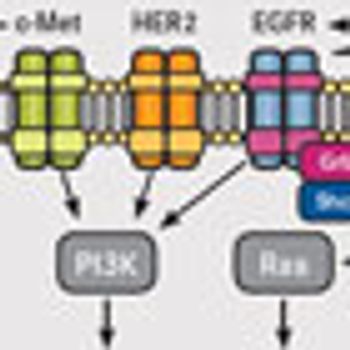
As therapy based on cell-signaling pathways has become a priority in cancer research, so has the concept of designing clinical trials that can better target patient populations more likely to benefit from a particular regimen.

Antibody-drug conjugates are a robust area of oncology exploration, with an estimated 25 ADCs under study in clinical trials, up from six less than a decade ago.
PS2 patients in focus at the 7th Annual New York Lung Cancer Symposium, hosted by Physicians' Education Resource, that took place in New York City.

The combination of pomalidomide and a steroid significantly improved outcomes for patients with MM who have exhausted other novel therapies, marking what researchers say is a notable advancement for a sizable proportion of those treated for the disease.

The novel targeted agent ibrutinib has demonstrated dramatic activity in hard-to-treat patients with CLL when used alone and in combination with rituximab.
The pace of discovery in breast cancer research has been brisk in the past year, leading not only to the approval of several new therapies but also to clinical trial results with the potential to change practice.

Interim data from a phase II clinical study of the dendritic cell vaccine CVac in patients with epithelial ovarian cancer showed promising signs of improving PFS compared with the observational standard of care.

A deeper understanding of androgen receptor signaling in castration-resistant prostate cancer has created an opportunity to deliver more effective therapies earlier in the treatment timeline.

Novel combinations of hormonal therapies with targeted agents show promise for improved outcomes and are likely to become part of a new paradigm for managing patients.

Nearly 2 years after a landmark study supported CT for people at high risk of developing lung cancer, questions persist about the complexities of implementing an early detection program.

A study evaluating first-line chemotherapy dosing strategies for treating patients with advanced epithelial ovarian cancer has delivered practice-changing findings.

In this interview, Lance A. Liotta, MD, PhD, discusses the hypothosis that led to the study and the research thus far into chloroquine.

Genentech is seeking the FDA's approval to offer T-DM1 for patients with HER2-positive metastatic breast cancer amid updated results from the pivotal EMILIA trial showing significantly improved OS.

A study that unfolded over 17 years has established combination chemotherapy after radiotherapy as a new standard of care for patients with anaplastic oligodendroglial tumors that contain 1p/19q chromosomal co-deletions.

Tivantinib has demonstrated statistically significant improvements in time to progression and overall survival versus placebo among patients with unresectable hepatocellular carcinoma.

Ponatinib, an oral multikinase inhibitor, generated significant responses in more than 50% of patients with certain chronic myeloid leukemia subtypes.
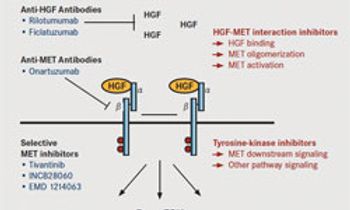
An effort to nurture the drug development skills of young oncologists as they explore a novel targeted agent has gained support from the Conquer Cancer Foundation of the American Society of Clinical Oncology.

GlaxoSmithKline is seeking the FDA's approval for single-agent use of dabrafenib and trametinib, two targeted therapies for the treatment of patients with metastatic melanoma who harbor BRAF V600 gene mutations.

Although much has changed in cancer therapeutics, chemotherapy-induced nausea and vomiting remains a significant and much-feared adverse effect of treatment for many patients.
Immunotherapy is maintaining its momentum in clinical development programs, with explorations under way in many tumor types, including breast and lung cancers previously considered poor candidates for such modalities.

Oncology specialists who treat patients with mCRPC can look forward to choosing from an expanding array of therapeutic tools, including regimens.

While many approaches to using immunotherapy for the treatment of prostate cancer are under study, four strategies currently in later-stage clinical development have emerged as the most promising.

The antidepressant duloxetine relieved pain associated with chemotherapy-induced peripheral neuropathy for 59% of patients.

Afatinib markedly prolonged PFS compared with standard chemotherapy in patients with advanced lung adenocarcinomas that tested positive for EGFR mutations, particularly one of two common mutation types.