

Angela Jain, MD, discussed the current treatment paradigm in triple-negative breast cancer (TNBC), including currently investigated therapies, during TNBC Awareness Day.

Ashley Chan joined the OncLive team as an assistant editor in 2025 after previously working on the CURE editorial team since 2023.
Email: [email protected]
Angela Jain, MD, discussed the current treatment paradigm in triple-negative breast cancer (TNBC), including currently investigated therapies, during TNBC Awareness Day.

Charles B. Nguyen, MD, provides insight into current challenges faced in the non–clear cell RCC landscape beyond the NCCN’s recent guideline updates.

The resubmission of a BLA for odronextamab was accepted by the FDA for the treatment of patients with relapsed/refractory follicular lymphoma.

At 5 years of follow-up, sustained disease control was demonstrated with ibrutinib plus venetoclax and obinutuzumab in patients with newly diagnosed MCL.
Time-limited zanubrutinib/rituximab was well tolerated and continued to elicit remissions 13 months after treatment discontinuation in treatment-naive CLL.
The FDA has granted the novel, oral KAT2A/B degrader AUTX-703 fast track designation for the treatment of patients with relapsed/refractory AML.

Gentry King, MD, discusses positive and negative outcomes following the phase 3 CELESTIAL and COSMIC-312 trials in patients with hepatocellular carcinoma.
Julie M. Vose, MD, MBA, discusses the 3-year follow-up data with epcoritamab in patients with relapsed/refractory diffuse large B-cell lymphoma.
Gentry King, MD, highlights the evolution of treatments in the hepatocellular carcinoma landscape and the impact of the phase 3 HIMALAYA trial.
R. Lor Randall, MD, FACS, discusses the enrollment criteria for a trial investigating surgical outcomes in patients with proximal femur metastases.

Neeta Somaiah, MD, highlights the evolving sarcoma treatment paradigm within the past 5 years, including the FDA approval of afamitresgene autoleucel.
The FDA has accepted and granted priority review to an NDA for dordaviprone in recurrent H3K28M-mutant diffuse glioma.
No significant differences in PROs were shown between the tivozanib/nivolumab and tivozanib monotherapy arms in patients with advanced clear cell RCC.
MRD-negative remissions with obe-cel were more durable and associated with higher EFS and OS rates vs MRD-positive remissions in relapsed/refractory B-ALL.

First-line therapy with olaparib plus abiraterone demonstrated clinical benefit in rPFS and OS in mCRPC harboring germline and somatic BRCA mutations.
Omid Hamid, MD, discusses therapies emerging in the squamous cell carcinoma treatment paradigm, including a novel cancer vaccine.

Polatuzumab vedotin plus R-CHP improved PFS and DFS vs R-CHOP at 5 years in previously untreated patients with diffuse large B-cell lymphoma.
Matthew Cortese, MD, MPH, discusses an evaluation of immunologic changes with the treatment of venetoclax in patients with chronic lymphocytic leukemia.

Phase 1 study data demonstrated that ATG-022 has a manageable safety profile and produced activity in patients with gastric cancer and CLDN 18.2 expressions.

The oral menin inhibitor ziftomenib produced responses in patients with relapsed/refractory NPM1-mutant AML.
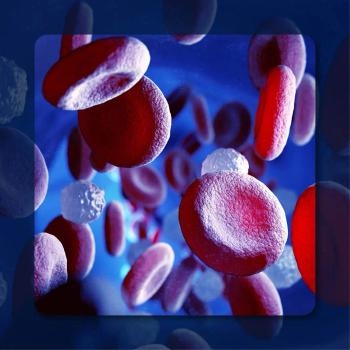
AJ1-11095 is being evaluated in patients with primary myelofibrosis, post-polycythemia vera myelofibrosis, and post-essential thrombocythemia.

Sattava S. Neelapu, MD, discusses updated data from the 5-year follow-up analysis evaluating axi-cel in relapsed/refractory indolent non-Hodgkin lymphoma.
Guillermo Garcia-Manero, MD, discusses the developmental progress of emavusertib for the treatment of acute myeloid leukemia and myelodysplastic syndromes.

A phase 2 study demonstrated that TAK-007 had a favorable safety profile with early efficacy in relapsed/refractory B-cell non-Hodgkin lymphoma.

Cisplatin/paclitaxel showed trend towards improved DFS vs cisplatin alone in advanced-stage ovarian cancer.

An observational cohort study determined that discordance exists between p53 protein expression and TP53 mutation status in high-risk endometrial cancer.

The European Commission has approved blinatumomab as consolidation therapy for Ph-negative, CD19-postive B-cell precursor acute lymphoblastic leukemia.

A final analysis of the LIGHT trial showed olaparib demonstrated higher OS rates in patients with relapsed ovarian cancer who had germline or somatic BRCA mutations.
R. Lor Randall, MD, FACS, discusses the utility of routine intraoperative frozen section in soft tissue sarcomas and the impact of added costs.
Peter Riedell, MD, details the safety and efficacy of rapcabtagene autoleucel in relapsed/refractory diffuse large B-cell lymphoma.