

A phase 1b trial is investigating the novel GCN2 kinase activator NXP800 in patients with platinum-resistant, ARID1A-mutated ovarian cancer.

Chris Ryan joined OncLive in November 2021 as a senior editor and became the website's managing editor in October 2023. Before arriving at MJH Life Sciences, he spent nearly a decade covering professional and high school sports—including the New Jersey Devils and the NHL from 2016 to 2021—for The Star-Ledger and NJ.com. Email: [email protected]
A phase 1b trial is investigating the novel GCN2 kinase activator NXP800 in patients with platinum-resistant, ARID1A-mutated ovarian cancer.

Liquid nitrogen–based cryoablation elicited a 5-year local RFS rate of 96.39% in patients with low-risk, early-stage breast cancer.
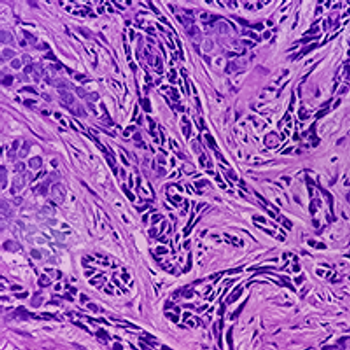
China’s NMPA has approved tunlametinib for the treatment of patients with NRAS-mutated advanced melanoma after prior anti–PD-1/PD-L1 therapy.

Social determinants of health were associated with geographical variations in the rates of cervical cancer in the United States.

The FDA’s Oncologic Drugs Advisory Committee voted in favor of idecabtagene vicleucel for patients with early relapsed/refractory myeloma.
The FDA’s Oncologic Drugs Advisory Committee voted in favor of ciltacabtagene autoleucel for patients with early relapsed/refractory myeloma.

Nina Sanford, MD, discusses how radiation could help improve QOL for patients with rectal cancer and situations when radiation or surgery could be omitted.

A new drug application seeking the approval of Dato-DXd for pretreated HR-positive, HER2-negative advanced breast cancer has been filed in Japan.

First-line niraparib maintenance was not associated with worsened health-related quality of life outcomes vs placebo in advanced ovarian cancer.
The FDA has accepted a new drug application for ensartinib in metastatic ALK-positive non–small cell lung cancer.
The FDA has granted orphan drug designation to LYT-200 for the treatment of acute myeloid leukemia.

TNO155 plus spartalizumab or ribociclib was well tolerated and demonstrated disease control in patients with advanced solid tumors.
The FDA has lifted a partial clinical hold on a phase 1 trial evaluating NX-2127 in relapsed/refractory B-cell malignancies

The addition of UV1 to nivolumab/ipilimumab failed to improve PFS in the frontline treatment of unresectable or metastatic melanoma.
The FDA granted accelerated approval to zanubrutinib in combination with obinutuzumab for select patients with relapsed/refractory follicular lymphoma.

ABSK061 was well tolerated and elicited responses in patients with advanced solid tumors harboring FGFR2/3 alterations.
Avutometinib alone or in combination with defactinib has received an orphan drug from the FDA for recurrent low-grade serous ovarian cancer.

Iopofosine plus EBRT elicited a 64% CR rate and was well tolerated in patients with locoregionally recurrent/metastatic head and neck cancer.
The FDA has approved the biosimilars denosumab-bddz (Wyost) and denosumab-bddz (Jubbonti) for use in all indications of the reference medicines denosumab (Xgeva) and denosumab (Prolia).
The partial clinical hold placed on the phase 2 IOV-LUN-202 trial of LN-145 in non–small cell lung cancer has been lifted by the FDA.
China’s NMPA has approved zevor-cel for the treatment of adult patients with relapsed/refractory multiple myeloma after at least 3 lines of therapy.

HIPEC was not associated with additional complications or worse survival in patients with FIGO stage IV ovarian cancer vs those with stage III disease.

Most oncology drugs approved by the EMA recover research and development costs within a few years, even if the drug is providing little added benefit.
The FDA has granted fast track designation to IDP-023 for the treatment of patients with non-Hodgkin lymphoma and multiple myeloma
The FDA granted fast track designation to 9MW2821 for potential use in advanced, recurrent, or metastatic esophageal squamous cell carcinoma.
Bezuclastinib plus BSC improved mast cell burden and total symptom score vs placebo plus BSC in adult patients with nonadvanced systemic mastocytosis.
The FDA has granted breakthrough therapy designation to NVL-520 for pretreated, metastatic ROS1-positive non–small cell lung cancer.

The FDA has granted priority review to the sBLA of epcoritamab for relapsed/refractory follicular lymphoma.

Howard I. Scher, MD, took a passion for improving cancer care and patient outcomes in prostate cancer and turned it into an extraordinary and explosive field of clinical research.
The FDA has approved the FoundationOne® CDx for use as a companion diagnostic to identify patients with advanced hormone receptor–positive, HER2-negative advanced breast cancer who may be eligible for treatment with the combination of capivasertib and fulvestrant.