

The European Commission has approved isatuximab plus VRd in transplant-eligible newly diagnosed multiple myeloma.

Editor, OncLive
Courtney Flaherty started working for OncLive in 2022. Leveraging an educational background in the life sciences and prior experience conducting interviews in a university setting, she plays a key role in shaping social media and email strategy, covering live conferences, and producing multimedia content for both print and digital platforms. Email: [email protected]
The European Commission has approved isatuximab plus VRd in transplant-eligible newly diagnosed multiple myeloma.

The European Commission has approved cabozantinib for the treatment of patients with pancreatic and extrapancreatic neuroendocrine tumors.

Laura Huppert, MD, outlines additional information needed to implement the SERENA-6 approach in hormone receptor–positive breast cancer.
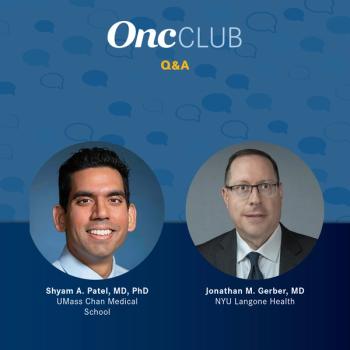
Shyam A. Patel, MD, PhD, and Jonathan M. Gerber, MD, discuss the use of IHC testing for earlier identification of TP53 mutations in MDS and AML.
R. Lor Randall, MD, FACS, discusses global disparities in sarcoma care during Sarcoma Awareness Month.
Hetty E. Carraway, MD, MBA, highlights the evolving molecular classification of MDS and novel agents in the therapeutic arsenal.
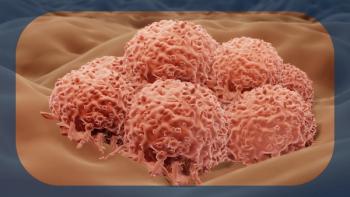
Among patients with advanced melanoma and the target HLA type—representing 80% of the study population—treatment with iSCIB1+ yielded an ORR of 69%.
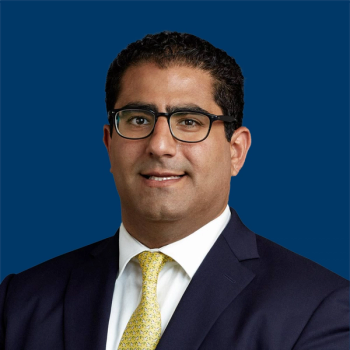
Joshua K. Sabari, MD, discusses the design of the phase 1/2 ARROS-1 study, as well as key efficacy data with zidesamtinib in ROS1 fusion–positive NSCLC.
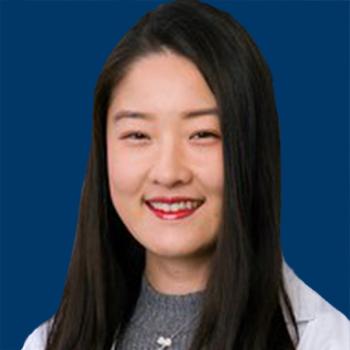
Qian (Janie) Qin, MD, discusses the importance of early molecular testing, evolving PARP inhibitor strategies, and the phase 2 HARMONY trial in mHSPC.
The FDA’s ODAC voted against the risk/benefit profiles of belantamab mafodotin–based combinations in relapsed/refractory multiple myeloma.

In patients with HPV16-positive HNSCC, CUE-101 plus pembrolizumab generated 2 complete responses and a 12-month overall survival rate of 88%.
Qian (Janie) Qin, MD, discusses the current arsenal of radioligand therapies in metastatic castration-resistant prostate cancer.
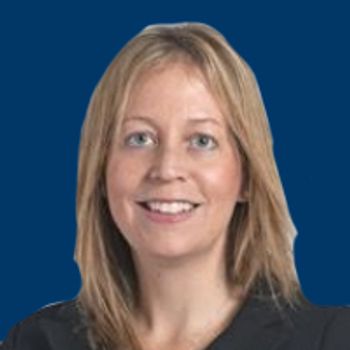
Hetty E. Carraway, MD, MBA, discusses shifting treatment paradigms in AML from the Bridging the Gaps in Leukemia, Lymphoma, and Multiple Myeloma Conference.

After 3 years of follow-up, dostarlimab plus chemotherapy was effective and tolerable in patients aged 70 years or older with endometrial cancer.

Results from the GoldiLox trial showed high complete and MRD-negative responses with glofitamab plus pirtobrutinib in covalent BTK inhibitor–exposed MCL.
TRE-515 has received FDA fast track designation in combination with radioligand therapy for PSMA-positive mCRPC.

Naval G. Daver, MD, and Eytan M. Stein, MD, discuss how menin inhibitors may transform the treatment paradigm in NPM1-mutant and NUP98 fusion AML.

Efficacy results from a MAIC suggest potential benefit with nivolumab/ipilimumab over other first-line IO-based regimens in first-line unresectable HCC.

A survey of UK and German physicians found that OS gains were needed to accept increased toxicities or treatment burden with third-line regimens in mCRC.

Douglas B. Johnson, MD, MSCI, discusses clinical questions, unmet needs, and exciting therapeutic developments with immuno-oncology in melanoma.
Ronan J. Kelly, MD, discusses efficacy and safety data from the phase 3 CheckMate 577 study of adjuvant nivolumab in esophageal/GEJ cancer.

Long-term survival signals with Temferon in 2 patients with newly diagnosed glioblastoma multiforme suggest potential mediation of disease progression.
Phase 2 findings from NAUTILUS supported the potential combinatorial activity of binimetinib plus bocodepsin in NRAS-mutant melanoma.

Alexander Chehrazi-Raffle, MD, discusses the efficacy of tivozanib monotherapy after receipt of upfront IO/TKI or ipilimumab/nivolumab in RCC.
Douglas B. Johnson, MD, MSCI, discusses the importance of Cancer Immunotherapy Awareness Month and the utility of immunotherapy across tumor types.

Alexey Danilov, MD, PhD, highlights the importance of re-evaluating sequencing strategies amid a growing arsenal of targeted therapies in DLBCL.
Alexey Danilov, MD, PhD, shares key developments and areas of debate from the Bridging the Gaps in Leukemia, Lymphoma, and Multiple Myeloma Conference.

Serplulimab is now the only anti–PD-1 monoclonal antibody approved by the MHRA for patients with extensive-stage small cell lung cancer in the first line.
Emil Lou, MD, PhD, FACP, discusses the potential applicability of CRISPR-Cas9–mediated CISH knockout to bolster TIL responses in drug-refractory GI tumors.

Adjuvant ribociclib plus endocrine therapy has gained Canadian approval for HR-positive/HER2-negative early breast cancer at high risk of recurrence.