
The in vivo, BCMA-directed CAR T-cell therapy produced initial MRD-negative responses and persistent CAR T-cell expansion in 4 patients with relapsed/refractory myeloma.

Editor, OncLive
Courtney Flaherty started working for OncLive in 2022. Leveraging an educational background in the life sciences and prior experience conducting interviews in a university setting, she plays a key role in shaping social media and email strategy, covering live conferences, and producing multimedia content for both print and digital platforms. Email: [email protected]
The in vivo, BCMA-directed CAR T-cell therapy produced initial MRD-negative responses and persistent CAR T-cell expansion in 4 patients with relapsed/refractory myeloma.

The FDA has approved the HSCT therapy for patients 6 years or older with SAA following reduced-intensity conditioning who do not have a compatible donor.
Triplet therapy with tagraxofusp/azacitidine/venetoclax led to high remission rates and had a safety profile similar to that of tagraxofusp alone in BPDCN.

The durable survival advantage seen with the regimen after 6 years of follow-up supports its use as a first-line treatment in nasopharyngeal carcinoma.
The “all-antibody–based” doublet generated high VGPR or better rates and had a favorable safety profile in the front line for this patient population.
In the CaDAnCe-101 study, BGB-16673 was tolerable, effective, and showed sustained disease control in high-risk, heavily pretreated, relapsed/refractory CLL/SLL.
Findings from an exploratory analysis of IMvigor011 support the use of serial ctDNA testing to guide atezolizumab use in MIBC.

At 48 months, the majority of patients with VHL disease–associated tumors remained in response following treatment with belzutifan.
Ahead of the 2025 ASH Annual Meeting, experts in myeloproliferative neoplasms share the most anticipated research being presented during the meeting.

Data from a comparative cohort study suggest that venous congestion is a modifiable driver of renal dysfunction in patients with RCC and IVC thrombosis.

The FDA has granted traditional approval to pirtobrutinib for covalent BTK inhibitor–exposed, relapsed/refractory CLL or SLL.

Interim data from ADVANCED-2 show 6- and 12-month CR rates of 69.2% and 50%, respectively, with TARA-002 in this patient population.
The NCCN guidelines for AML have been updated to include ziftomenib as a category 2A recommendation for NPM1-mutant, relapsed/refractory AML management.

DPTX3186, a first-in-class oral condensate modulator, has received FDA fast track designation in gastric cancer.

Alexander Drilon, MD, summarized approaches to TKI selection in NSCLC displaying oncogenic driver alterations for both TKI-pretreated and -naive patient populations.
Joshua K. Sabari, MD, discusses the FDA approval of lurbinectedin plus atezolizumab as first-line maintenance therapy in extensive-stage SCLC.
Charles M. Rudin, MD, PhD, discussed evolving standards of care and emerging therapeutics of interest in the SCLC treatment paradigm.
Yuan Yuan, MD, PhD, expands on several key studies informing the current and evolving use of ADCs and dual-pathway targeting in HER2-positive breast cancer.
Lu Xie, MD, discusses phase 2 efficacy and safety data with the B7-H3–targeted ADC HS-20093 in relapsed/refractory sarcomas.
The FDA has approved pertuzumab-dpzb as the first interchangeable biosimilar for pertuzumab across several indications in HER2-positive breast cancer.

Initial activity and safety with the investigational ADC TUB-040 in ovarian cancer have renewed interest in NaPi2b as a target for ADC development.
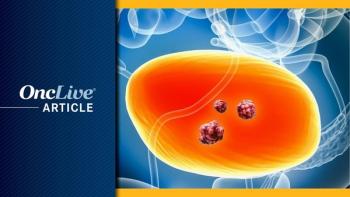
Findings from the preliminary cohort show 3- and 6-month CR rates of 56% and 62%, respectively, with detalimogene in this patient population.
R. Lor Randall, MD, FACS, advocates for precision-based survivorship models in pediatric/AYA sarcoma to address disparities and improve long-term outcomes.
Erika P. Hamilton, MD, discusses initial efficacy and safety data with the TROP2-targeted ADC DB-1305/BNT325 in pretreated metastatic TNBC.

The phase 3 PEAK trial met its primary PFS end point with bezuclastinib plus sunitinib in imatinib-resistant/intolerant gastrointestinal stromal tumors.
Kevin Kalinsky, MD, MS, FASCO, discusses treatments and targeted therapies in the post–CDK4/6 inhibitor setting of HR+ breast cancer.

The phase 3 ASCENT-07 trial did not meet its primary PFS end point with first-line sacituzumab govitecan in hormone receptor–positive, HER2-negative breast cancer.

Three experts spotlight key trials from the 2025 ESMO Congress investigating novel cancer vaccines across solid tumors.
Nicoletta Colombo, MD, PhD, discusses clinical implications for integrating immunotherapy into the treatment arsenal for platinum-resistant ovarian cancer.

In the phase 1 ANTLER study, vispa-cel demonstrated ORRs of 82% and 86% among patients in the confirmatory and optimized cohorts, respectively.