
A supplemental BLA for nogapendekin alfa inbakicept plus BCG for BCG-unresponsive NMIBC with papillary-only disease is under review by the FDA.

Editor, OncLive
Courtney Flaherty started working for OncLive in 2022. Leveraging an educational background in the life sciences and prior experience conducting interviews in a university setting, she plays a key role in shaping social media and email strategy, covering live conferences, and producing multimedia content for both print and digital platforms. Email: [email protected]
A supplemental BLA for nogapendekin alfa inbakicept plus BCG for BCG-unresponsive NMIBC with papillary-only disease is under review by the FDA.

The FDA has granted fast track designation to suplexa in MSI-H CRC.

Polls highlighted key abstracts of interest from the upcoming ASCO Annual Meeting.
Ahead of the 2026 ASCO Annual Meeting, experts in GI malignancies share the most anticipated research being presented during the meeting.

Aparna R. Parikh, MD, emphasizes the feasibility of immunotherapy trials in SCAC and the need for better treatment options in the second line and beyond.

Phase 1/2 data showed an ORR of 35% with daraxonrasib in second-line RAS G12-mutated pancreatic ductal adenocarcinoma.

R. Lor Randall, MD, FACS, discusses how the introduction of systemic therapies such as pimicotinib in TGCT enables a tumor biology–informed approach to care.

Pelareorep plus bevacizumab and FOLFIRI showed a 33% response rate and 19.5-month median response duration in RAS-mutant MSS CRC.

A one-stop-shop for regulatory updates across GI malignancies from the past month.

The FDA has permitted expanded access to daraxonrasib for patients with previously treated metastatic pancreatic ductal adenocarcinoma.

Ozekibart plus FOLFIRI produced ORRs that exceed historical benchmarks for standard later-line CRC regimens.
Peter Enzinger, MD, discusses diagnostic pathways, the role of surgery, and ongoing trials of interest in esophageal cancer in this clinician-focused FAQ.

The investigational pan-RAS inhibitor generated robust responses across 2 phase 1 dose-escalation studies that numerically exceeded historical benchmarks.

Tovecimig plus paclitaxel improved PFS vs paclitaxel alone in COMPANION-002, though crossover effects complicated OS outcomes.
The agency has set a target action date of August 25, 2026, for the sBLA, which is supported by data from the phase 3 HERIZON-GEA-01 trial.

Translational analyses from NEOPRISM-CRC also link ctDNA clearance/kinetics and TCR clonality with pCRs, supporting biomarker-guided treatment selection.

Phase 1/2 data from 2 separate studies have shown signals of improved survival and safety with the agent, supporting its evaluation in a phase 3 trial.

Colton Jones, MD, and Joel Saltzman, MD, discuss the potential role of GLP-1 receptor agonists in CRC prevention based on retrospective data.

The brain-penetrant, noncovalent EGFR TKI produced an ORR of 87.5% in 8 efficacy-evaluable patients with EGFR-mutant NSCLC.

Dallas Gallagher, DNP, FNP-C, AOCNP, discusses individualized chemotherapy selection and the importance of a "person-first" approach to pancreatic cancer care.
The CSF-1R–targeting monoclonal antibody emactuzumab met key end points in the phase 3 TANGENT study, setting the stage for a BLA submission.

ECOG PS should be evaluated before initiating this agent, as patients with poorer PS may experience shorter life expectancy than reported in trials.
R. Lor Randall, MD, FACS, highlights a recent meta-analysis comparing 2 approaches to surgical management for patients with femoral metastases.

Single-agent rezatapopt showed efficacy and safety irrespective of patients' platinum status, prior bevacizumab or PARP inhibitor exposure, or FRα expression.
Results from NRG-GY019 establish chemotherapy followed by letrozole as the definitive SOC for newly diagnosed stage II-IV low-grade serous ovarian carcinoma

Zosia Piotrowska, MD, MHS, discusses potential new TKIs, continued challenges, and ongoing frontline trials in EGFR exon 20 insertion–positive NSCLC

Experts highlight ctDNA-guided strategies, ADCs, and targeted therapies shaping CRC research in the first quarter of 2026.
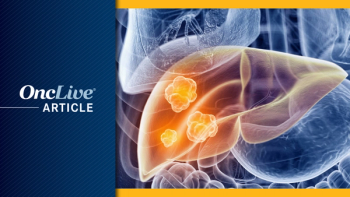
A trend toward improved OS was also observed when the dual immunotherapy regimen was added to TACE and lenvatinib in this patient population.

Shubham Pant, MD, MBBS, discusses recent treatment advancements across gastrointestinal malignancies.
Jeremy Kortmansky, MD, discusses early-onset CRC, the importance of molecular profiling, and emerging therapeutic targets in this clinician-focused FAQ.