Articles by Hatim Husain, MD
Targeted ADCs vs Chemotherapy in Heavily Pretreated NSCLC: Clinical Benefits and Challenges
ByJonathan Riess, MD, MS, UC Davis Comprehensive Cancer Center,Christine Bestvina, MD, University of Chicago,Hatim Husain, MD,Joshua Reuss, MD, Georgetown Lombardi Comprehensive Cancer Center,Julia K. Rotow, MD This episode discusses the urgent need for more effective and tolerable therapies for patients with EGFR-mutated NSCLC who have exhausted targeted treatments, comparing the clinical benefits of a targeted ADC approach vs chemotherapy, with a focus on the TROPION-Lung01 study of Dato-DXd vs docetaxel for heavily pretreated advanced/metastatic NSCLC with actionable genomic alterations.
Tailoring Treatment by Stage: Insights From ADAURA for Stage IB to IIIA EGFR-Mutated NSCLC
ByJonathan Riess, MD, MS, UC Davis Comprehensive Cancer Center,Christine Bestvina, MD, University of Chicago,Hatim Husain, MD,Joshua Reuss, MD, Georgetown Lombardi Comprehensive Cancer Center,Julia K. Rotow, MD This episode highlights the significance of third-generation EGFR TKIs in delaying subsequent therapies for resectable, stage IB to IIIA EGFR-mutated NSCLC, explores the risks of postresection treatments for disease progression, and discusses treatment considerations for patients across different stages, focusing on the ADAURA trial outcomes for stage IB to IIIA NSCLC.
Osimertinib in Resected Stage IB to IIIA NSCLC: Perspectives on Its Use for Less Common EGFR Mutations
ByJonathan Riess, MD, MS, UC Davis Comprehensive Cancer Center,Christine Bestvina, MD, University of Chicago,Hatim Husain, MD,Joshua Reuss, MD, Georgetown Lombardi Comprehensive Cancer Center,Julia K. Rotow, MD Although the NCCN guidelines recommend osimertinib as an adjuvant therapy option, what is your position on its use for completely resected stage IB to IIIA NSCLC with less common EGFR activating mutations, such as exon 20 insertion?
ADAURA Trial Findings: Outcomes and CNS Involvement in EGFR-Mutated NSCLC
ByJonathan Riess, MD, MS, UC Davis Comprehensive Cancer Center,Christine Bestvina, MD, University of Chicago,Hatim Husain, MD,Joshua Reuss, MD, Georgetown Lombardi Comprehensive Cancer Center,Julia K. Rotow, MD This episode reviews the key takeaways from the ADAURA trial, discusses strategies for protecting the CNS in EGFR-mutated NSCLC, and examines the impact ADAURA had on recurrence rates in patients with completely resected EGFR-mutated NSCLC who were previously treated with adjuvant chemotherapy.
Optimizing Treatment for Advanced EGFR-Mutated NSCLC: FLAURA2, Toxicity Management, and ctDNA
ByJonathan Riess, MD, MS, UC Davis Comprehensive Cancer Center,Christine Bestvina, MD, University of Chicago,Hatim Husain, MD,Joshua Reuss, MD, Georgetown Lombardi Comprehensive Cancer Center,Julia K. Rotow, MD This episode delves into expert perspectives on the safety and tolerability of combining osimertinib with chemotherapy in untreated, advanced EGFR-mutated NSCLC, resistance to third-generation EGFR TKIs, the superiority of concurrent versus sequential therapy from the FLAURA2 study, the role of ctDNA in managing additional EGFR mutations, and decision-making in utilizing FLAURA2 for treatment selection.
Clinical Insights on Osimertinib in Frontline Therapy for EGFR-Mutated NSCLC
ByJonathan Riess, MD, MS, UC Davis Comprehensive Cancer Center,Christine Bestvina, MD, University of Chicago,Hatim Husain, MD,Joshua Reuss, MD, Georgetown Lombardi Comprehensive Cancer Center,Julia K. Rotow, MD This episode explores expert insights on the clinical use of osimertinib in the frontline setting for EGFR-mutated NSCLC, the impact of combining osimertinib with platinum-based chemotherapy on progression-free survival (PFS), and the significance of extending PFS by nearly 9 months in patients with advanced NSCLC who are not candidates for curative treatment.
Hatim Husain, MD, discusses developments in ALK-positive non–small cell lung cancer.
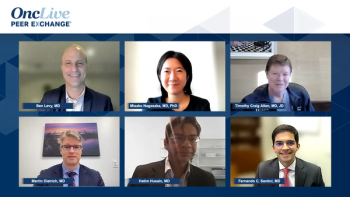
Closing Expert Perspectives on Treatment in Advanced NSCLC
ByBenjamin Levy, MD,Misako Nagasaka, MD, PhD,Timothy Craig Allen, MD, JD, FCAP,Martin Dietrich, MD, PhD,Hatim Husain, MD,Fernando C. Santini, MD Lung cancer experts share final thoughts on their thorough discussion of treatments in NSCLC and what to look for in the future.
Emerging Antibody Drug Conjugates in the Lung Cancer Treatment Landscape
ByBenjamin Levy, MD,Misako Nagasaka, MD, PhD,Timothy Craig Allen, MD, JD, FCAP,Martin Dietrich, MD, PhD,Hatim Husain, MD,Fernando C. Santini, MD Dr Martin Dietrich gives an overview of novel antibody-drug conjugates in the NSCLC treatment landscape.
Recent Advances in Treatment of ROS1-Rearranged NSCLC
ByBenjamin Levy, MD,Misako Nagasaka, MD, PhD,Timothy Craig Allen, MD, JD, FCAP,Martin Dietrich, MD, PhD,Hatim Husain, MD,Fernando C. Santini, MD Hatim Hussain, MD, explains emerging data on ROS1 rearrangements in NSCLC and his approach to treatment in his clinical practice.
Updates in Treatment of NSCLC with ALK Rearrangements
ByBenjamin Levy, MD,Misako Nagasaka, MD, PhD,Timothy Craig Allen, MD, JD, FCAP,Martin Dietrich, MD, PhD,Hatim Husain, MD,Fernando C. Santini, MD Oncologists review data from the ALTA-1L clinical trial and CROWN study on therapies for the treatment of ALK rearrangements.
Treatment Selection and Sequencing for Patients with NTRK Fusions in Clinical Practice
ByBenjamin Levy, MD,Misako Nagasaka, MD, PhD,Timothy Craig Allen, MD, JD, FCAP,Martin Dietrich, MD, PhD,Hatim Husain, MD,Fernando C. Santini, MD A panel of lung cancer experts illustrate their personal clinical experience with treatment selection and sequencing for treating patients who have NTRK fusions.
Recent Advances in Treatment of NSCLC with NTRK Fusions
ByBenjamin Levy, MD,Misako Nagasaka, MD, PhD,Timothy Craig Allen, MD, JD, FCAP,Martin Dietrich, MD, PhD,Hatim Husain, MD,Fernando C. Santini, MD Misako Nagasaka, MD, PhD, provides an overview of clinical trial data on treatments for NTRK fusion–positive lung cancer.
Treatment of KRAS G12C Mutant NSCLC
ByMisako Nagasaka, MD, PhD,Timothy Craig Allen, MD, JD, FCAP,Benjamin Levy, MD,Martin Dietrich, MD, PhD,Hatim Husain, MD,Fernando C. Santini, MD Benjamin Levy, MD, explains KRAS G12C mutations in non–small cell lung cancer, and Hatim Husain, MD, provides insight into the mechanism of action of G12C inhibitors.
Recent Advances in Treatment of MET Exon 14 Skipping Mutations in NSCLC
ByBenjamin Levy, MD,Misako Nagasaka, MD, PhD,Timothy Craig Allen, MD, JD, FCAP,Martin Dietrich, MD, PhD,Hatim Husain, MD,Fernando C. Santini, MD Dr Martin Dietrich provides an overview of how to treat MET exon 14 skipping mutations in non–small cell lung cancer.
Updates in Treatment of HER2 Mutant NSCLC
ByBenjamin Levy, MD,Misako Nagasaka, MD, PhD,Timothy Craig Allen, MD, JD, FCAP,Martin Dietrich, MD, PhD,Hatim Husain, MD,Fernando C. Santini, MD Dr Misako Nagasaka reviews clinical trial data presented at ESMO 2021 on therapies for NSCLC harboring HER2 exon 20 mutations.
Recent Advances in Treatment of EGFR Exon 20 Insertion Mutations in NSCLC
ByBenjamin Levy, MD,Misako Nagasaka, MD, PhD,Timothy Craig Allen, MD, JD, FCAP,Martin Dietrich, MD, PhD,Hatim Husain, MD,Fernando C. Santini, MD Dr Fernando Santini explains EGFR exon 20 insertion mutations in NSCLC and the best approaches for treating these cases.
Updates in Treatment of NSCLC with Classical EGFR Mutations
ByBenjamin Levy, MD,Misako Nagasaka, MD, PhD,Timothy Craig Allen, MD, JD, FCAP,Martin Dietrich, MD, PhD,Hatim Husain, MD,Fernando C. Santini, MD A discussion on EGFR mutations in non-small cell lung cancer and the combination treatment strategies for sensitizing mutations.
Challenges Associated with Molecular Testing in NSCLC
ByBenjamin Levy, MD,Misako Nagasaka, MD, PhD,Timothy Craig Allen, MD, JD, FCAP,Martin Dietrich, MD, PhD,Hatim Husain, MD,Fernando C. Santini, MD A look at the challenges associated with different molecular testing methods and the barriers that patients with non–small cell lung cancer face in getting tested.
Molecular Testing in NSCLC: What is the Optimal Sample and Time of Testing?
ByBenjamin Levy, MD,Misako Nagasaka, MD, PhD,Timothy Craig Allen, MD, JD, FCAP,Martin Dietrich, MD, PhD,Hatim Husain, MD,Fernando C. Santini, MD A panel of thought leaders describe the optimal sample to use in molecular testing in NSCLC and the appropriate time to perform testing in clinical practice.
Liquid Biopsies in the NSCLC Molecular Testing Algorithm
ByBenjamin Levy, MD,Misako Nagasaka, MD, PhD,Timothy Craig Allen, MD, JD, FCAP,Martin Dietrich, MD, PhD,Hatim Husain, MD,Fernando C. Santini, MD Experts in lung cancer explain their views on the critical role of liquid biopsy in molecular testing in non–small cell lung cancer.
Testing Approaches for Actionable Mutations in NSCLC in Clinical Practice
ByBenjamin Levy, MD,Misako Nagasaka, MD, PhD,Timothy Craig Allen, MD, JD, FCAP,Martin Dietrich, MD, PhD,Hatim Husain, MD,Fernando C. Santini, MD Oncologists provide insight into what actionable mutations they look for when they order molecular testing for patients with advanced non-small cell lung cancer.
Hatim Husain, MD, discusses common misconceptions that still exist with regard to lung cancer.
Hatim Husain, MD, discusses the evolution of liquid biopsies in lung cancer.
Hatim Husain, MD, medical oncologist and associate professor of medicine, Moores Cancer Center, University of California, San Diego (UCSD), discusses ongoing research efforts evaluating plasma-based testing in lung cancer.
Hatim Husain, MD, discusses the increased use of and challenges with utilizing liquid biopsies.
Hatim Husain, MD, discusses the utility of liquid biopsy versus tissue biopsy in non–small cell lung cancer.
Hatim Husain, MD, assistant professor of Medicine, Moores Cancer Center, University of California, San Diego, discusses plasma-based testing in lung cancer.
Hatim Husain, MD, assistant professor of Hematology-Oncology at the University of California San Diego Moores Cancer Center, discusses the future of monitoring the emergence of EGFR T790M circulating tumor DNA in urine from EGFR-mutated non–small cell lung cancer (NSCLC).
Hatim Husain, MD, assistant professor of Hematology-Oncology at The University of California San Diego Moores Cancer Center, discusses his study on monitoring the emergence of EGFR T790M ctDNA in urine from EGFR-mutated NSCLC.
