

Jonathan Wesley Riess, MD, MS, discusses the evolving landscape of KRAS inhibitors, including the distinction between KRAS(OFF) and (ON) inhibitors.
Jonathan Wesley Riess, MD, MS, discusses the evolving landscape of KRAS inhibitors, including the distinction between KRAS(OFF) and (ON) inhibitors.
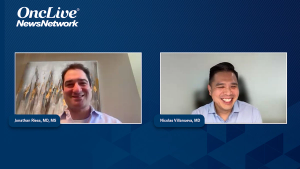
Jonathan Riess, MD, MS, and Nicholas Villanueva, MD, discuss the future of personalized treatment in EGFR-mutant NSCLC.
Jonathan Riess, MD, MS, and Nicholas Villanueva, MD, discuss how antibody-drug conjugates are shaping treatment strategies after progression.
Jonathan Riess, MD, MS, and Nicholas Villanueva, MD, discuss treatment sequencing following progression on intensified regimens.
Jonathan Riess, MD, MS, and Nicholas Villanueva, MD, outline the role of ctDNA in guiding treatment decisions.
Jonathan Riess, MD, MS, and Nicholas Villanueva, MD, examine how high-risk disease is defined and applied in clinical practice.
Jonathan Riess, MD, MS, and Nicholas Villanueva, MD, examine how overall survival data from recent trials are influencing treatment decisions.
Jonathan Riess, MD, MS, and Nicholas Villanueva, MD, discuss key inflection points in frontline treatment of EGFR-mutant NSCLC.
Experts discuss the evolving landscape of HER2-targeted therapies in non-small cell lung cancer, emphasizing the need for more data and innovative treatments.
Experts discuss the evolving treatment landscape for HER2-mutated non-small cell lung cancer, focusing on trastuzumab deruxtecan and zonertinib efficacy.
Explore the latest strategies in treating HER2-mutated non-small cell lung cancer with antibody-drug conjugates and targeted therapies.
Explore the latest insights on sevobertnib and zonertinib in treating HER2-mutated non-small-cell lung cancer, focusing on efficacy and toxicity differences.
Explore the latest insights on sevobertnib and zonertinib in treating HER2-mutated non-small-cell lung cancer, focusing on efficacy and toxicity differences.
Explore the latest advancements in HER2 testing and treatment strategies for non-small cell lung cancer, enhancing patient outcomes and options.
Explore the latest advancements in HER2 testing and treatment strategies for non-small cell lung cancer in this insightful discussion.
Experts discuss the importance of HER2 IHC testing and tissue management in cancer treatment, emphasizing its role in personalized therapy.
Experts discuss the latest advancements in HER2 testing and treatment strategies for non-small cell lung cancer, enhancing clinical practice and patient outcomes.
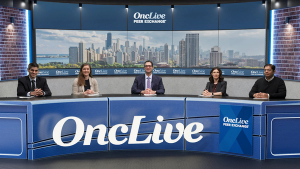
Panelists discuss how novel agents and emerging strategies may further optimize sequencing and outcomes for EGFR PACC-mutated NSCLC.
Panelists discuss how the FURTHER trial demonstrated firmonertinib’s efficacy and safety in patients with PACC mutations.
Panelists discuss how firmonertinib shows promise as a next-generation TKI with broad EGFR activity and favorable tolerability.
Panelists discuss how current TKI therapies offer limited efficacy for PACC mutations, necessitating individualized and trial-based approaches.
Panelists discuss how advanced genomic profiling techniques are vital for accurate detection of PACC mutations.
Panelists discuss how classifying EGFR mutations into molecular subgroups, including PACC, refines diagnosis and informs targeted treatment decisions.
This episode focuses on exploring additional therapeutic options for managing previously treated advanced or metastatic EGFR-mutated NSCLC, highlighting strategies to optimize patient survival across various stages of disease progression.
This episode discusses the desired outcomes from the HERTHENA-Lung02 trial that would justify using HER3-DXd before platinum and pemetrexed chemotherapy while also exploring the potential benefits of amivantamab, including its PFS advantage and the observed trend toward improved OS in this treatment setting.
This episode summarizes the HERTHENA-Lung02 trial and examines the average duration of response to platinum-based chemotherapy in patients with advanced EGFR-mutated NSCLC who have previously undergone multiple lines of EGFR TKI therapy, discusses strategies for community oncologists to tackle diverse resistance mechanisms to third-generation TKIs, and evaluates the importance of tolerability in sparing platinum-based chemotherapy compared with using ADCs in subsequent treatment lines.
This episode explores management strategies for hematologic toxicities arising within the first 3 weeks of treatment with HER3-DXd, discusses the potential integration of HER3-DXd into clinical practice upon approval, and identifies unmet needs and suitable patient populations for future clinical trials evaluating HER3-DXd based on insights from the HERTHENA-Lung01 trial results.
This episode reviews the response rates reported in the HERTHENA-Lung01 trial among patients with advanced NSCLC exhibiting various resistance mechanisms, evaluates the clinical significance of responses to HER3-DXd based on HER3 expression scores, discusses the relevance of the reported overall DOR, median PFS, and OS, and examines the CNS ORR among patients with baseline brain metastases in relation to the ORRs.
This episode addresses strategies for mitigating and managing adverse events associated with Dato-DXd in patients with advanced NSCLC, explores how the drug’s structure may help prevent acquired resistance mechanisms that are common with TKIs, and discusses the broader implications of integrating Dato-DXd and other ADCs into the treatment landscape for this patient population.
This episode discusses the impressive ORR of more than 40% from the phase 2 TROPION-Lung05 trial of Dato-DXd in patients with EGFR-mutated advanced NSCLC, its clinical impact on those treated with 3 or more prior therapies, and explores the potential of Dato-DXd as a practice-changing therapy, given the median DOR of 7 months and DCR of 79%.
April 13th 2026
March 30th 2026
April 6th 2026
December 3rd 2024