
Dr Luke discusses the rationale for evaluating IMA203 in cutaneous melanoma and what the PRAME trial findings may mean for the future of TCR therapy.

Jason Luke, MD, associate director for clinical research and director of the Immunotherapy and Drug Development Center at Hillman Cancer Center, University of Pittsburgh.
Dr Luke discusses the rationale for evaluating IMA203 in cutaneous melanoma and what the PRAME trial findings may mean for the future of TCR therapy.
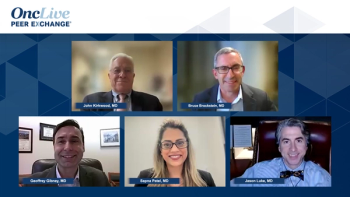
Panelists discuss the complexities of selecting among second- and third-line therapies such as tumor-infiltrating lymphocyte (TIL), T-cell receptor T-cell (TCR-T), and oncolytic viruses, emphasizing that treatment choice will depend on emerging data, patient factors, practical considerations, and quality of life, with ongoing trials and clinical experience guiding optimal sequencing.
Panelists discuss the promising systemic responses of RP1, an oncolytic virus therapy for melanoma, emphasizing its expanded applicability through visceral tumor injection and the need for further data to optimize dosing strategies and confirm durability compared with other treatments.
Panelists discuss the emerging role of PRAME-targeted T-cell receptor T-cell (TCR-T) therapies in melanoma, highlighting a novel clinical trial comparing TCR-T and tumor-infiltrating lymphocyte (TIL) treatments that focuses on HLA-A*02:01-positive patients and aims to provide patient-friendly, outpatient-compatible options with faster manufacturing timelines.
Panelists discuss the distinctions among tumor-infiltrating lymphocyte (TIL), chimeric antigen receptor (CAR) T-cell, and T-cell receptor T-cell (TCR-T) therapies in melanoma, emphasizing TIL therapy’s polyclonal nature and regulatory challenges while highlighting the promise of engineered TCR-T cells and the need to balance scientific validation with clinical feasibility to maintain access to innovative treatments.
Panelists discuss the need for early, coordinated, and multidisciplinary care to ensure timely access to tumor-infiltrating lymphocyte (TIL) therapy, highlighting the importance of integrated communication, patient-centered planning, and shared decision-making—especially for older patients navigating complex treatment choices.
Panelists discuss the critical importance of early referral and coordinated communication between community oncologists and treatment centers to ensure timely evaluation and access to tumor-infiltrating lymphocyte (TIL) therapy, emphasizing outreach efforts to raise awareness and streamline patient pathways.
Panelists discuss 5-year data from a trial of lifileucel, a tumor-infiltrating lymphocyte (TIL) therapy, highlighting its promising long-term survival benefits and growing role in standard care for advanced cancers, especially in patients unresponsive to prior treatments.
Panelists discuss the challenges of managing brain metastases in patients with melanoma after frontline therapy, highlighting the roles of localized treatments, targeted therapies for actionable mutations, limited options for symptomatic cases, and the urgent need for improved strategies for central nervous system (CNS) and leptomeningeal disease (LMD) management.
Panelists discuss expanding treatment options beyond frontline therapy for metastatic melanoma, emphasizing the use of targeted therapies, combination immunotherapies, and emerging modalities such as oncolytic virus and adoptive cell therapy while highlighting the balance between efficacy, toxicity, patient-centered outcomes, and practical challenges in clinical decision-making.
Panelists discuss the evolving role of circulating tumor DNA (ctDNA) in metastatic melanoma management, recognizing its potential as a minimal residual disease (MRD) marker and monitoring tool while emphasizing current limitations, investigational status, and the need for further research to define its clinical utility.
Panelists discuss emerging strategies to reduce toxicity in dual immune checkpoint blockade for metastatic melanoma, focusing on promising early data with anti–IL-6 agents such as sarilumab. They acknowledge challenges around scalability, cost, and validation in broader populations and emphasize the importance of ongoing research and clinical trials to optimize tolerability without compromising efficacy.
Panelists discuss treatment sequencing for BRAF-mutated metastatic melanoma, highlighting evidence from the DREAMseq trial that supports starting with immunotherapy for better long-term survival while acknowledging clinical scenarios where rapid-response targeted therapy may be appropriate and emphasizing the need for flexibility based on patient condition and emerging data.
Panelists discuss frontline treatment preferences for metastatic melanoma, emphasizing the durability of combination immunotherapies like nivolumab plus ipilimumab, the emerging role of nivolumab plus relatlimab, and the importance of tailoring therapy based on disease characteristics, toxicity profiles, and individual patient factors.
Panelists discuss modern approaches to metastatic melanoma, focusing on recent advances in immunotherapy and cell therapies, individualized frontline treatment strategies, and evolving clinical data to guide clinicians in optimizing patient outcomes.
Jason Luke, MD, discusses IMA203 vs investigator’s choice of standard therapy in patients with previously treated advanced cutaneous melanoma.

OncLive® will be LIVE with OncLive® News Network: On Location at the 2023 ASCO Annual Meeting. Each day, we will broadcast a series of interviews with top thought leaders, to learn their thoughts and reactions to data presented across hematologic oncology during the conference.
Jason J. Luke, MD, FACP, discusses initial results from the phase 1 GLIMMER-01 trial of E-602 in advanced solid tumors.
Jason Luke, MD, FACP, discusses the importance of a multidisciplinary approach in basal cell carcinoma.
Jason J. Luke, MD, FACP, discusses the toxicities with targeted therapy vs immunotherapy and management strategies for patients with melanoma.
Jason J. Luke, MD, FACP, discusses the results of the phase 3 KEYNOTE-716 trial in high-risk stage II melanoma.
Jason J. Luke, MD, FACP, compares predictive and prognostic biomarkers in melanoma.
Jason J. Luke, MD, FACP, discusses the role of molecular testing in melanoma.
Jason J. Luke, MD, FACP, discusses the role of targeted therapy in melanoma.
Jason J. Luke, MD, FACP, discusses the importance of BRAF in melanoma.
Jason Luke, MD, assistant professor of medicine at the University of Chicago Medicine, discusses the clinical trial landscape for melanoma
Jason Luke, MD, assistant professor of medicine at the University of Chicago Medicine, discusses the future of immunotherapy combinations for patients with melanoma.
Jason Luke, MD, assistant professor of medicine at the University of Chicago Medicine, discusses the combination of pembrolizumab (Keytruda) and talimogene laherparepvec (T-VEC; Imlygic) for the treatment of patients with melanoma.
Jason Luke, MD, assistant professor of medicine, University of Chicago Medicine, discusses the combination approach of a PD-1 antibody plus an IDO inhibitor for patients with melanoma.
Jason Luke, MD, an assistant professor of medicine at the University of Chicago Medicine, discusses impactful data in the field of melanoma.
November 4th 2020
January 5th 2021
October 28th 2020


