

Adjuvant chemotherapy improved survival rates in women with isolated local or regional breast cancer recurrence, according to results from the CALOR trial.
Adjuvant chemotherapy improved survival rates in women with isolated local or regional breast cancer recurrence, according to results from the CALOR trial.

Targeted focal therapy offers some men with localized prostate cancer a solution between active surveillance and definitive treatment with surgery and/or radiation.

The tyrosine kinase inhibitor cabozantinib met its primary endpoint of progression-free survival in patients with advanced medullary thyroid cancer.

The oral multikinase inhibitor regorafenib extended OS in patients with metastatic colorectal cancer and improved PFS in patients with gastrointestinal stromal tumors.

The novel agent OGX-427 delayed disease progression in chemotherapy-naïve patients with metastatic castration-resistant prostate cancer, according to the preliminary results.

The newer and more expensive breast cancer treatments nab-paclitaxel and ixabepilone, failed to demonstrate superior efficacy versus standard care with weekly paclitaxel.

The oral multikinase inhibitor regorafenib reduced the risk of disease progression by 73% in patients with gastrointestinal stromal tumors who had exhausted all other treatment options.

T-DM1 extended progression-free survival by 3.2 months in women with HER2-positive locally advanced or metastatic breast cancer.

Combining bevacizumab with standard chemotherapy reduced the risk of disease progression by 52% in patients with platinum-resistant ovarian cancer.

Focal therapy offers some men with localized prostate cancer a solution between active surveillance and definitive treatment with surgery and/or radiation.

Leonard G. Gomella, MD, discusses the public policy and medical implications of the US Preventive Services Task Force's draft recommendation on PSA screening.

Combined neoadjuvant treatment with abiraterone acetate (Zytiga) plus standard hormonal therapy before prostatectomy eradicated or nearly eradicated tumors in 34% of patients with localized high-risk prostate cancer.
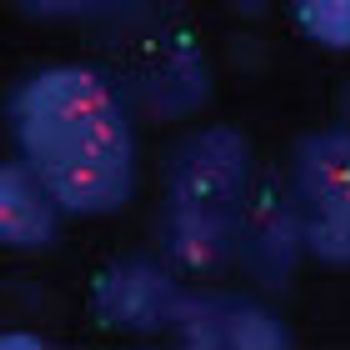
Standards for identifying appropriate populations for treatment with HER2-targeted therapies are evolving.

All oncology nurses-not just nurse researchers-will need to understand the fundamentals of clinical trials as patient access to the studies continues to expand.

A pilot study has demonstrated a lag in the integration of genetics and genomics into nursing practice, which is an increasingly required professional skill for oncology nurses.
Supportive care is a crucial component of personalized oncology care.

Novel therapeutics, including thalidomide, lenalidomide (Revlimid), and bortezomib (Velcade), have revolutionized the treatment of multiple myeloma.

The treatment of diffuse large B-cell lymphoma continues to evolve, as researchers seek to improve upon the current standard of care.

Antiresorptive medicines used to reduce the loss of bone mass related to bone metastases or treatment toxicity are associated with an increased risk of ONJ.

Awareness and treatment of oncofertility have been given a tremendous boost over the past 5 years by the Oncofertility Consortium.

At NCONN 2011, Sean Grimm, MD, discussed the management of Glioblastoma multiforme, the most common malignant primary brain tumor.
Treatment with Herceptin, chemotherapy, or surgery extended the lives of patients with HER2-positive MBC following a diagnosis of CNS metastases.
In the phase III EXIST-1 trial, Afinitor reduced the size of SEGAs-benign brain tumors associated with TSC-by ≥50% in one-third of patients.

Nearly half of older women with advanced breast cancer in the United States failed to receive radiation following a mastectomy.

The FDA recently approved a new drug formulation, mandated label changes for cigarettes and sunscreens, and issued an opinion on breast implants.

Honorary Mistress of Ceremonies Cynthia Nixon kicked off the festivities for the 2011 CURE magazine Extraordinary Healer Award.

According to the World Health Organization, NCDs, such as cancer, comprise 63% of annual global mortalities, claiming the lives of 7.6 million people each year

Screening for prostate cancer does work, despite controversy about its efficacy

Increased prostate cancer screening has led to overtreatment and has not significantly reduced mortality rates in prostate cancer.
Cabozantinib (XL184), a novel tyrosine kinase inhibitor, caused the deaths of 6 patients in a phase II clinical trial.