
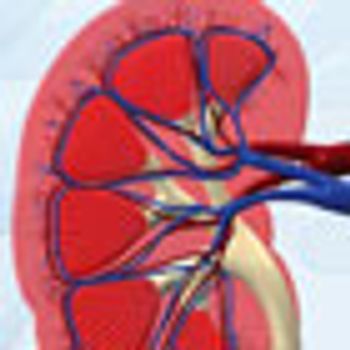
Partial nephrectomy is associated with better overall survival than radical nephrectomy in older patients with early-stage kidney cancer.
Partial nephrectomy is associated with better overall survival than radical nephrectomy in older patients with early-stage kidney cancer.

The oral hedgehog pathway inhibitor vismodegib is effective for both the prevention and treatment of basal-cell carcinoma in patients with the rare disorder known as basal-cell nevus syndrome.

Lenalidomide used continuously after autologous hematopoietic stem cell transplantation significantly prolonged the time to disease progression and overall survival in patients with multiple myeloma.

Colonoscopy is effective for the prevention of colorectal cancer deaths, according to the results of a large, population-based, case-control study.
A "substantial minority" of radiation oncologists report that surgeons fail to include them in the breast cancer treatment decision-making process before definitive surgery.

The nonsteroidal anti-inflammatory drug naproxen significantly decreases the incidence, severity, and duration of pegfilgrastim-induced bone pain in patients diagnosed with a nonmyeloid cancer.
Preliminary data suggest a promising role for sipuleucel-T as a treatment for African-American men with metastatic castration-resistant prostate cancer (mCRPC).

Patients with prostate cancer can expect better sexual function after a robotic-assisted radical prostatectomy (RARP) if they maintain a healthy lifestyle.

Field-directed treatment with the investigational topical agent ingenol mebutate has been shown to be effective for actinic keratoses on the head and body.

Marital status is an independent predictor of disease-related mortality and overall mortality in men with prostate cancer.

Women who have been previously treated for early-stage breast cancer are much less likely to complain of hot flashes if they remain within 10% of their prediagnosis weight.

The administration of nab-paclitaxel plus carboplatin results in a significantly higher ORR than conventional solvent-based paclitaxel with carboplatin in previously untreated patients with advanced NSCLC.

More than a third of cancer survivors report ongoing symptoms of posttraumatic stress disorder several years after being diagnosed with cancer.

New data appears to undercut prior research by suggesting that neither NSAIDs nor statins influence the development of renal cell carcinoma.

The addition of bevacizumab to first-line carboplatin-paclitaxel did not prolong survival in Medicare recipients with advanced non–small cell lung cancer.

Young women who have recently used DMPA for at least 1 year have more than twice the risk of invasive breast cancer as young women who do not report recent use of the injectable contraceptive.

Semuloparin significantly decreases the risk of thromboembolic events in cancer patients initiating chemotherapy compared with placebo, and without a hike in major bleeding.

Liver surgery for colorectal cancer hepatic metastases has, for the most part, a minimal and brief negative impact on patient-reported outcomes.

Breast cancer survivors who are younger, closer to the time of surgery, or have upper-extremity lymphedema may be less likely to undergo repeat mammography.

Within a given county in the United States, the presence of a dermatologist is associated with a lower melanoma mortality rate compared with counties where there is no dermatologist.

Patients are less likely to complete colorectal cancer screening if their physician recommended colonoscopy rather than recommending fecal occult blood testing.

Roughly one-third of women with early-stage breast cancer develop intolerable adverse effects during aromatase inhibitor therapy.

In men with primary squamous cell carcinoma of the penis who have undergone surgery that removed all glanular epithelium a maximum 12-month follow-up period is recommended.

Men with low-risk prostate cancer who have opted for active surveillance are about half as likely to experience pathologic progression or abandon active surveillance if they take a 5-ARI.

US investigators have found that suicide rates in recent years have significantly increased in patients with oral cavity and oropharyngeal cancer.

Dutasteride may postpone disease progression in men with low-risk prostate cancer who have opted for an active surveillance strategy.

Minimally invasive transoral robotic surgery, used alone or combined with adjuvant therapy, provides good functional and oncologic outcomes in patients with oropharyngeal squamous cell carcinoma.

Coronary artery disease and prostate cancer have been shown to share several modifiable and nonmodifiable risk factors including age, race, family history, and possibly diet.

The addition of thalidomide to chemoradiotherapy provides no survival benefit and increases toxicity in patients with unresectable stage III non-small cell lung cancer.

Cutaneous melanoma is becoming increasingly common in young adults, with an 8-fold increase among young adult females and a 4-fold increase among young adult males.