Priyanka Sharma, MD, discusses potential neoadjuvant de-escalation strategies in HER2-positive breast cancer.
Priyanka Sharma, MD, discusses potential neoadjuvant de-escalation strategies in HER2-positive breast cancer.

W. Fraser Symmans, MD, discusses data on the current state of AI-driven digital pathology in HR+ breast cancer.

Heather A. Parsons, MD, MPH, shares growing evidence for the prognostic value of circulating tumor DNA in early-stage breast cancer.
Treating with targeted therapy for the first 4 cycles showed potential curative intent without impacting patient response to subsequent chemotherapy.

Epcoritamab plus R-mini-CHOP delivered deep responses with manageable safety in elderly, high-risk patients with newly diagnosed DLBCL.
The AGAVE-201 trial showed successful transition from axatilimab 0.3 mg/kg biweekly to 0.6 mg/kg monthly in cGVHD.
Nivolumab plus ipilimumab improved PFS and response rates vs nivolumab alone in MSI-H/dMMR mCRC, with no new safety concerns.
Sacituzumab govitecan plus pembrolizumab may maintain quality of life in patients with previously untreated, PD-L1–positive metastatic TNBC.

Sacituzumab govitecan reduced the risk for disease progression or death by 38% vs chemotherapy in previously untreated, locally advanced, unresectable or metastatic triple-negative breast cancer.

Gedatolisib plus fulvestrant, with or without palbociclib, improved PFS in pretreated, HR-positive, HER2-negative, PIK3CA wild-type advanced breast cancer.

RNAseq-defined clusters guided treatment selection in metastatic ccRCC in the phase 2 OPTIC trial, yielding a 76% ORR with cabozantinib plus nivolumab.

The evaluation of diverse biomarkers via a machine learning approach demonstrated improved prediction of clinical outcomes vs individual biomarkers in RCC.

Adding induction toripalimab to chemotherapy followed by definitive chemoradiotherapy and consolidation therapy reduced risk for disease progression by 74%.
Treatment with the oral TKI showed promising responses among 2 subgroups of patients with advanced, HER2-mutant non–small cell lung cancer.

A fruquintinib regimen appeared safe and effective when used as a frontline treatment in esophageal squamous cell carcinoma.

Sara A. Hurvitz, MD, FACP, offers insight on the use of (neo)adjuvant therapies in HER2-positive early breast cancer, and how to best optimize treatment.

Aspirin reduced the risk of disease recurrence in colorectal cancer harboring PI3K pathway alterations.
Acalabrutinib plus venetoclax, with or without obinutuzumab, improved PFS over SOC chemoimmunotherapy in patients with treatment-naive CLL.

Subcutaneous daratumumab reduced the risk for disease progression or death vs active monitoring in intermediate- or high-risk smoldering multiple myeloma.

Daratumumab plus VRd improved MRD responses and progression-free survival in transplant-ineligible or -deferred newly diagnosed multiple myeloma.

Revumenib demonstrated meaningful responses in patients with relapsed or refractory KMT2Ar acute leukemia.

When evaluating real-world experience, differences in race/ethnicity and among elderly patients with DLBCL appeared different from those seen in clinical trials, highlighting the need for consideration in these patient populations.
Zipalertinib demonstrates safety and efficacy in heavily pretreated patients with NSCLC EGFR exon 20 insertion mutations who progressed on or after amivantamab.
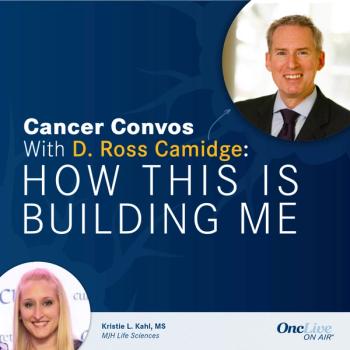
Camidge and Kahl reflect on the steps in Kahl’s communications career that paved the way for her to become a leader in the medical journalism field.

Datopotamab deruxtecan demonstrated comparable intracranial activity and safety in pretreated patients with NSCLC with or without brain metastases.
Tucidinostat plus R-CHOP improved efficacy and was safe in previously untreated DLBCL expressing MYC and BCL2.

Compared with standard-of-care chemotherapy, adagrasib significantly improved PFS and tumor responses in KRASG12C-mutated locally advanced or metastatic NSCLC.

Hope S. Rugo, MD, FASCO, shares progress made with ADCs and the interest in moving these agents up in the HR-positive/HER2-negative breast cancer paradigm.
Long-term androgen deprivation therapy plus radiation therapy led to survival benefits without increased toxicity in high-risk prostate cancer.

Pembrolizumab plus lenvatinib produced survival outcomes that were consistent with previous findings from the phase 3 LEAP-002 trial along with an extended duration of response.