Articles by Kristie L. Kahl

Idecabtagene vicleucel demonstrated a statistically significant and clinically meaningful improvement in progression-free survival and objective response compared with standard of care approaches in patients with triple-class-exposed relapsed/refractory multiple myeloma.

Patients with multiple myeloma who were treated with autologous stem cell transplantation were found to be utilizing chronic opioids at high rates, in turn leading to worse overall survival outcomes at 6 months of follow-up.

The addition of 24 months of androgen deprivation therapy to postoperative radiotherapy after radical prostatectomy provided a metastasis-free survival benefit and improved time to salvage therapy in patients with prostate cancer.

Tucatinib plus trastuzumab improved radiographic response rates in patients with metastatic HER2-positive colorectal cancer initially treated with tucatinib monotherapy who later crossed over to receive doublet therapy.
The triplet regimen of cabozantinib plus standard-of-care nivolumab and ipilimumab reduced the risk of disease progression or death by 27% vs placebo in patients with advanced renal cell carcinoma.
Cemiplimab produced pathologic complete responses as a neoadjuvant treatment in more than half of patients with resectable, stage II to IV cutaneous squamous cell carcinoma.
The combination of adjuvant nivolumab and ipilimumab did not elicit a significant disease-free survival benefit vs placebo in patients with localized, renal cell carcinoma at high risk for relapse after nephrectomy.

The frontline combination of tremelimumab plus durvalumab and chemotherapy generated a long-term overall survival benefit in patients with metastatic non–small cell lung cancer.

The addition of abemaciclib to trastuzumab, with or without fulvestrant, provided a numerical overall survival improvement over standard-of-care trastuzumab plus chemotherapy in patients with hormone receptor–positive, HER2-positive advanced breast cancer, according to data from the monarcHER trial.

Increased exposure to particulate matter may be a mechanistic driver for EGFR-positive non–small cell lung cancer, prompting a focus on limiting exposure to air pollutants and an increased need for molecular testing.

Although the primary end points of the phase 3 LEAP-002 trial did not meet prespecified statistical significance with regard to survival benefit achieved with lenvatinib plus pembrolizumab, the median overall survival observed with lenvatinib monotherapy supports its role as a standard of care in frontline advanced hepatocellular carcinoma treatment.

Two years of olaparib maintenance therapy elicited a long-term overall survival benefit vs placebo in patients with newly diagnosed advanced ovarian cancer harboring a BRCA mutation.
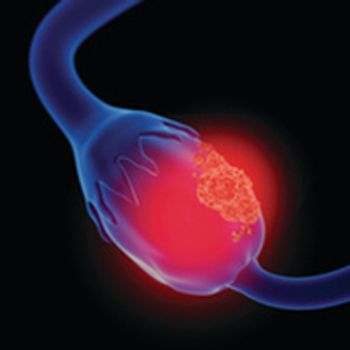
Maintenance olaparib plus bevacizumab following first-line standard-of-care treatment improved overall survival in patients with newly diagnosed advanced ovarian cancer, particularly those with homologous recombination deficiency.

Single-agent dostarlimab generated durable antitumor activity in patients with advanced or recurrent endometrial cancer with mismatch repair deficient/microsatellite instability–high or mismatch repair proficient/mismatch stable disease.

A combination comprised of cobimetinib and vemurafenib demonstrated evidence of antitumor activity in patents with advanced solid tumors harboring BRAF V600E and other mutations who are not otherwise eligible to receive other FDA-approved therapies.
Adagrasib led to early onset and deep responses translating to encouraging survival as a single agent in previously treated patients with KRAS G12C–mutated non–small cell lung cancer, according to results from cohort A of the phase 1/2 KRYSTAL-1 trial.

The addition of the selective oncolytic adenovirus CG0070 to pembrolizumab showed encouraging activity and safety in Bacillus Calmette-Guerin–unresponsive non-muscle invasive bladder cancer, according to early data from the phase 2 CORE1 trial.
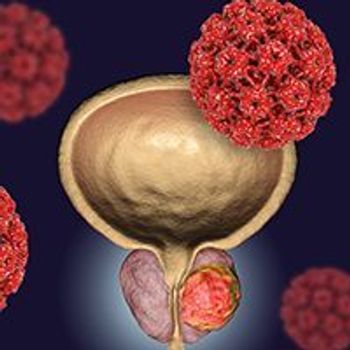
The genetic adjustment of prostate-specific antigen could reduce over-diagnosis, de-escalate invasive testing, and improve the detection of aggressive disease in patients with prostate cancer.

As part of its CURE Speaking Out video series, CURE spoke with Rebecca Moroose, MD, from Orlando Health Cancer Institute, and Virginia G. Kaklamani, MD, from UT Health San Antonio, about shared-decision making with the NCCN guidelines on metastatic triple-negative breast cancer.
CURE discusses the National Comprehensive Cancer Network guidelines and what they mean for patients with metastatic triple-negative breast cancer.
The addition of ibrutinib to fludarabine, cyclophosphamide, and rituximab resulted in a higher rate of complete responses with bone marrow undetectable minimal residual disease in younger, fit patients with chronic lymphocytic leukemia.

Minimal residual disease, assessed through next-generation sequencing was found to inform treatment selection and duration with daratumumab plus carfilzomib, lenalidomide, and dexamethasone following autologous transplant in patients with newly diagnosed multiple myeloma.
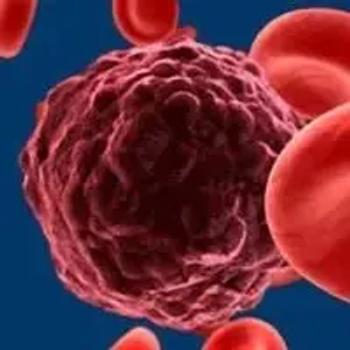
The addition of eryaspase to chemotherapy demonstrated biological efficacy and tolerability in patients with acute lymphoblastic leukemia who are at risk of developing hypersensitivity reactions to Escherichia coli–derived pegylated asparaginase.
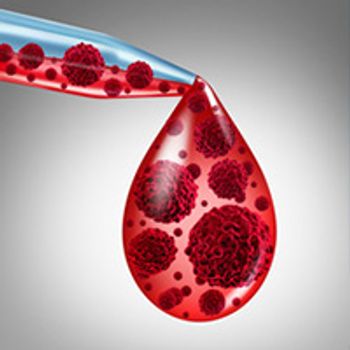
Ibrutinib plus rituximab and mini-CHOP failed to demonstrate a statistically significant improvement in overall survival at 2 years but led to an improvement in progression-free survival, quality of life, and function in elderly patients with diffuse large B-cell lymphoma.

The addition of subcutaneous daratumumab to standard-of-care bortezomib, cyclophosphamide, and dexamethasone (D-VCd) continued to elicit stronger hematologic and organ responses vs VCd alone in patients with newly diagnosed light chain amyloidosis.

Adding adjuvant palbociclib to standard endocrine therapy did not improve outcomes in patients with stage II to III hormone receptor–positive, HER2-negative early breast cancer.

Baseline tumor immunogenicity may be associated with higher pathologic complete response rates and favorable outcomes in hormone receptor-positive, HER2-positive early stage breast cancer when comparing de-escalated neoadjuvant ado-trastuzumab emtansine with or without endocrine therapy, vs trastuzumab plus endocrine therapy.

First-line sunitinib was found to improve efficacy compared with placebo in patients with malignant pheochromocytoma and paragangliomas.
18F-DCFPyL, a PET prostate specific membrane antigen targeting agent, demonstrated statistically significant potential in detecting biochemical recurrence in men with prostate cancer.
