

The FDA has approved sacituzumab govitecan monotherapy and in combination with pembrolizumab in frontline TNBC.

Kyle Doherty joined MJH Life Sciences in 2021 and is the lead editor for Oncology Fellows. He also produces print content for OncologyLive, as well as news and conference updates for OncLive.com. Email: [email protected]
The FDA has approved sacituzumab govitecan monotherapy and in combination with pembrolizumab in frontline TNBC.
The FDA has approved palbociclib plus trastuzumab, with/without pertuzumab, and ET as maintenance in HR+, HER2+ metastatic breast cancer.

The European Commission approved perioperative pembrolizumab plus enfortumab vedotin for patients with cisplatin-ineligible resectable MIBC.
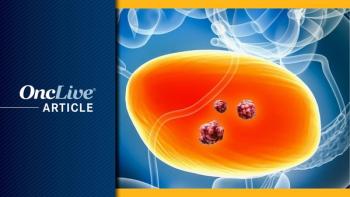
The NCCN has included tumor-informed multiplex PCR ctDNA-MRD testing in the treatment approach for patients with MIBC.

Neoadjuvant nivolumab yielded a 68.2% clinical complete response rate in patients with resectable mismatch repair–deficient endometrial cancer.

The FDA has accepted a sBLA for subcutaneous mosunetuzumab plus polatuzumab vedotin in R/R LBCL.

Lung cancer experts convened at an OncLive® Scientific Interchange and Workshop to discuss treatment sequencing in HER2+ NSCLC.
Alicia Morgans, MD, MPH, discusses findings from ARACOG trial of the cognitive effects of darolutamide vs enzalutamide in prostate cancer.

External validation of a circulating immune protein signature model confirmed its prognostic value for OS in recurrent ovarian cancer.
Experts in lung cancer gathered at an OncLive® Scientific Interchange and Workshop during the 2026 ASCO Annual Meeting to discuss HER2-mutated NSCLC.

Fred Saad, MD, CQ, FRCS, FCAHS, discusses data from subgroup analyses of the PSMAddition trial by disease volume and in de novo/recurrent mHSPC.

Cadonilimab plus axitinib demonstrated an ORR of 51.6% and manageable safety in frontline advanced nccRCC.
The FDA has approved adjuvant belzutifan plus pembrolizumab for patients with ccRCC at intermediate-high or high risk of recurrence.

Baseline ctDNA positivity was associated with inferior DFS regardless of treatment arm in the phase 3 KEYNOTE-564 trial.
Alexander Kutikov, MD, FACS, discusses the role of focal therapy in RCC management.

Pavlos Msaouel, MD, PhD, discusses a study of panitumumab-based EGFR blockade in SMARCB1-deficient RMC.
FDA approved generic gallium Ga 68 gozetotide injection for PET imaging of PSMA-positive lesions in prostate cancer.
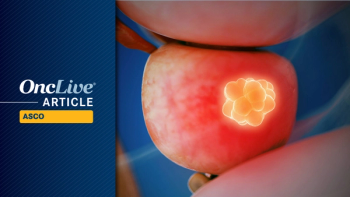
ASCO 2026 genitourinary experts unpack key prostate and bladder cancer data, revealing practice-changing takeaways and what they mean for patient care.

Aglatimagene besadenovec plus ERBT displayed an accumulating benefit in high-risk prostate cancer after extended follow-up.

Long-term follow-up data showed ePLND significantly reduces the risk of metastasis in ISUP GG 3-5 prostate cancer with radical prostatectomy.
The FDA will review data for adjuvant giredestrant in ER-positive, HER2-negative early-stage breast cancer after positive iDFS data from LidERA.

Dato-DXd led to benefits in terms of TFST, PFS2, and TSST vs chemotherapy in frontline TNBC.
OncLive spoke with urothelial cancer experts during Bladder Cancer Awareness Month to understand the current and future treatment landscape.

Prespecified biomarker analyses of ASCENT-03 and ASCENT-04 showed longer PFS with sacituzumab govitecan–based regimens vs comparators in TNBC.

Abemaciclib markedly improved PFS vs placebo in patients with advanced dedifferentiated liposarcoma.

Adjuvant durvalumab plus tremelimumab significantly improved DFS vs active monitoring in both high- and intermediate-risk resected RCC.

Amivantamab plus lazertinib led to a median OS of 41.0 months in EGFR-mutated advanced NSCLC.

Nicholas Zorko, MD, PhD, discusses B7-H3 targeting in lung, GU, and gynecologic malignancies.

OncLive spoke with experts in the field of GU oncology to gain their insights on the most notable presentations from the 2026 AUA Annual Meeting.
The FDA priority review of neladalkib for TKI-pretreated ALK-positive NSCLC is supported by data from the phase 1/2 ALKOVE-1 trial.