Fixed-duration systemic therapies have gained some traction in hematologic malignancies, where advances in drug development and sequencing strategies have afforded investigators the opportunity to conduct trials.
Fixed-duration systemic therapies have gained some traction in hematologic malignancies, where advances in drug development and sequencing strategies have afforded investigators the opportunity to conduct trials.

The pandemic appears to have caused or contributed to a number of lasting changes in the way oncologists provide clinical care to their patients.

The COVID-19 pandemic spurred the launching or expansion of in-home cancer therapy infusion programs at several oncology centers around the United States, drawing a surge of interest throughout the field as well as opposition from oncologists who are concerned about the implications for patient safety and the potential impact on community practices that provide in-house infusion services.
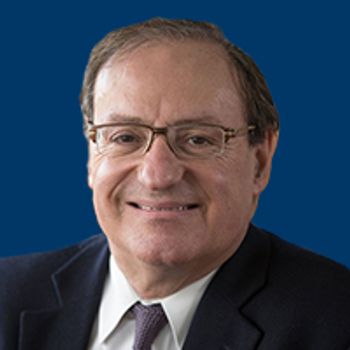
The achievements of Roman Perez-Soler, MD, include studies of anti-EGFR therapies and topoisomerase inhibitors, extensive research on liposomal delivery systems, and early work on patient-derived xenografts in mice.

The subspecialty of cardio-oncology has grown in recent years as improved cancer survival rates have expanded the population of long-term survivors with heightened risk of cardiovascular disease and drawn more attention to the need for preventive strategies and disease management.

During the past 12 months, the treatment landscape for patients with non–small cell lung cancer has expanded dramatically with FDA approvals of the first drugs directed at KRAS G12C and EGFR exon 20 mutations as well as continued progress in developing new therapies for subsets of patients with other molecularly targetable alterations and with PD-L1–high disease.
Because hematological cancers are rarer than solid tumors, information on treatment practices is somewhat less available, so hematologists are particularly interested in learning what their peers are doing.
The success of the COVID-19 vaccines based on messenger RNA has led to a surge of interest from investigators, pharmaceutical companies, and investors in similar technology for other diseases, including a number of oncology indications.

When the coronavirus disease 2019 pandemic started upending health care services throughout the United States a year ago, the oncology community moved quickly to develop guidance on selecting therapies and setting treatment schedules for many cancers to allow for less frequent in-patient visits to clinics and infusion centers.

The landscape for pediatric oncology drugs expanded dramatically last year, with 8 new drugs or indications specifically approved for children compared with just 47 for treatment and supportive care products from the early 1950s through 2019.

Having patients go on drug holidays or intermittent therapy is a common strategy during treatment of prostate cancer and several other malignancies, whether to provide temporary relief from adverse effects influencing quality of life, to prevent long-term health impacts, or to lessen drug resistance that would render the therapy ineffective.

Hundreds of trials are under way, 3 CAR T-cell therapies for hematologic malignancies are on the market, and 2 new products may receive FDA approval in the next several months, including a BCMA–directed therapy that is poised to help transform treatment of multiple myeloma.

Results from the first FDA-approved in-human trial of CRISPR-edited T cells for cancer treatment suggest that such therapies can be used safely in patients, allaying some of the concerns about potential AEs and advancing progress toward the development of more effective cell-based immunotherapies.

Although the development of chemotherapy-free regimens is a major thrust of oncology research, improvements to traditional cytotoxic therapy are actively being explored, with a focus on new formulations and delivery methods for agents that have been used for decades.
Innovative clinical trials designed to exploit the explosion of data on the drivers of cancer are demonstrating value as tools to explore potential signals of efficacy across tumor types, according to oncology experts. These studies have become a feature of the drug discovery landscape in oncology and are likely to remain part of the fabric of clinical research in the genomic era.

Updated guidelines from the United States Preventive Services Task Force on BRCA1/2 genetic testing recommend risk assessment, counseling, and genetic test-ing for women who meet certain criteria but fall short of encompassing important groups of individuals who are at risk for developing BRCA1/2 mutation–driven disease
For nearly a decade, immunotherapy and molecularly targeted agents have been the focus of intense development. Now emerging evidence suggests that both modalities can deliver long-term benefits for patients, but the findings may prompt additional questions of how best to fit these transformative therapies into treatment landscapes.
Using up-front, broadpanel genomic tests that include hundreds of genes can save money and, in some cases, improve outcomes compared with other diagnostic approaches, especially in lung cancer but also increasingly in breast, colorectal, skin, and other cancers.

Although diagnostic techniques have improved over the past several decades, cancers of unknown primary origin are a lingering feature of clinical practice, frustrating attempts to develop new protocols through molecularly driven strategies.
Identifying patients with DCIS who are more likely to develop invasive breast cancer remains a challenge. However, two major areas of study are the appropriate use of active surveillance and the use of biomarkers observed in the DCIS microenvironment to determine risk.
Improved outcomes such as longer survival have increased interest among patients in pursuing fertility preservation options, and advances in techniques have made it possible for more patients to have children after treatment.

Convincing data have made the case for the use of immunotherapy in the frontline for advanced renal cell carcinoma, ushering in a second revolution in slightly more than a decade.
Identifying patients with ductal carcinoma in situ who are more likely to develop invasive breast cancer remains a challenge, despite decades of research and the development of stratification methods to predict progression and recurrence.

The treatment of patients with advanced HER2-positive breast cancer could be reshaped in the next several years as clinical trials of several exciting new drugs begin to yield results.
Advocates for sipuleucel-T point out that the public has become more aware of and interested in immunotherapy now, and they believe the product has the potential to benefit a larger group of patients.
Although many new drugs have been introduced for treating patients with hematologic malignancies, stem cell transplantation remains a vital part of the therapeutic paradigm, particularly for multiple myeloma and non-Hodgkin lymphoma.
After more than 2 decades of change in the epidemiology of oropharyngeal cancers, the choice of optimal treatment for patients with human papillomavirus–positive disease remains elusive.

Technological advancements in molecular tumor profiling are starting to make a difference in pediatric oncology, where the search for new therapies is challenging and frustrating.

Patients with cancer have high rates of comorbidities, but hard data are often lacking about the interaction of specific regimens with such health conditions. Experts say more inclusive clinical trials and broader use of risk assessment tools would help improve care.

Novel combination regimens anchored by pembrolizumab (Keytruda), atezolizumab (Tecentriq), or nivolumab (Opdivo) are opening the door to new options and an opportunity to personalize therapy in non–small cell lung cancer.

March 12th 2021

March 24th 2017

March 18th 2016