
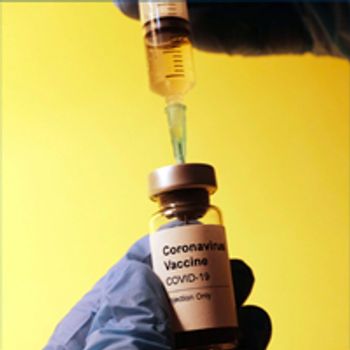
Before New Year’s Day, millions of Americans had received the coronavirus disease 2019 vaccine, including frontline physicians and health care providers and nursing home patients, our most vulnerable citizens.
Before New Year’s Day, millions of Americans had received the coronavirus disease 2019 vaccine, including frontline physicians and health care providers and nursing home patients, our most vulnerable citizens.
It can be tough running a community-based oncology practice. Hospitals are expanding their oncology operations, there is a shortage of oncologists—particularly business-minded oncologists—and public and private payers have made it more difficult to get paid.
With cancer being such a difficult disease to understand, treat, and—of course—cure, any knowledge that advances practice is invaluable.
It was just 6 years ago that options for patients with metastatic melanoma began to expand. In 2011, the approval of ipilimumab (Yervoy), the pioneering checkpoint immunotherapy for patients with unresectable or metastatic disease, marked the first milestone.
Chimeric antigen receptor T-cell therapy may soon hit the market, and numerous cancer care centers are poised to offer this for what may be the first FDA-approved indication: relapsed/refractory B-cell acute lymphoblastic leukemia.
The American Urological Association Annual Meeting features stellar research, engaging panel discussions, and informative lectures from experts in the field, but it also offers an opportunity for urologists from around the world to gather.
State-of-the-art technology is as valuable in oncology as it is everywhere else. However, new technology is not always available to providers, and when it is, it may not be used to its fullest potential.
Although the past few months have seen several androgen receptor resistance, and described drug approvals for bladder cancer therapies, a wealth of research also is moving the field of prostate cancer forward, since gaining a better understanding of the disease is the best way to find out how to optimally treat—and perhaps ultimately cure—prostate cancer.
Although there has been much discussion in recent months about the promise of precision medicine to improve outcomes for patients with cancer, the challenges and complexities of reaching that goal become strikingly evident as soon as we start trying to individualize therapies based on molecularly identified targets.
The clock is ticking on the anticipated implementation of the US Pharmacopeial Convention Chapter 800 (USP ) standards for hazardous drug management, which are expected to become widely enforceable starting July 1, 2018.
In recent years, immunotherapy advancements have generated much excitement in oncology, and that is no different in the urologic arena.
Although biosimilar versions of branded medicines have been proliferating in other parts of the world for more than a decade, we’re still getting accustomed to the introduction of these new therapeutic options in the United States.
Survivorship care for patients who have had cancer is a relatively new phenomenon in the oncology field. After all, the transformation of many cancers from fatal to chronic conditions has occurred in less than a decade. Not surprisingly, then, the science of survivorship care is still evolving, too.
The relentless pace of change in cancer research and care is hardly news to practicing oncologists. It is worthwhile, however, to pause at times and ponder the implications of the speed and complexity of those developments.
When it comes to achievements in the war against cancer, there’s much to celebrate, ASCO said in its fourth annual report on the state of cancer care in America, which we discuss in our lead story this month for Oncology Business ManagementTM.
One of the most gratifying aspects of the current age of discovery in anticancer therapy is the evolution of once-fatal malignancies into chronic diseases. The pace of progress, however, has not been equal across tumor types.
As cancer therapy becomes increasingly high tech, it is often easy to overlook the contributions that individual oncologists make to advancements in the eld simply by being top-notch clinicians who are observant and concerned about their patients.
Although the concept of using genetically engineered T cells to fight cancer has been under study for more than 50 years, the most dramatic strides in designing new therapies have come in the past several years.
The Affordable Care Act has given rise to healthcare upon which many now depend. Those with an ear to the tracks in Washington, DC, believe that something new is definitely on the way.
It is always a balancing act to describe the introduction of new technology in the medical field. We seek to juggle enthusiasm for the potential of an exciting new platform with the complexities of the long road ahead that adopting new technology usually bring.
The field of genitourinary (GU) cancers is starting to undergo some of the same changes that have been shifting treatment paradigms so dramatically in other malignancies. The most significant change can be summed up in one word: immunotherapy.
With ambitious goals to improve outcomes and lower the cost of care, CMS has placed a lot of faith in its Oncology Care Model, an alternative payment model.
The power of that ability to analyze cancers over broad populations has generated much excitement in the drug development arena and it’s not hard to understand the reasons.
Although lung cancer still causes more deaths than any other type of malignancy not only in the United States but throughout the world, there’s a sense of excitement in the air these days when it comes to helping people with this disease.
Watson for Oncology is the name of the new iteration from IBM. It achieved 90% concordance with tumor boards at the Manipal Comprehensive Cancer Center in Bengaluru, India, according to results presented at the 2016 San Antonio Breast Cancer Symposium.
Although it’s easy to become jaded about the prospects for positive change in any bureaucracy, we are feeling decidedly upbeat about the developments underway on the federal level concerning the cancer research behemoth.
The tail-end of this year saw 2 annual conferences occurring at the same time: the 2016 Large Urology Group Practice Association annual meeting in Chicago, and the 15th annual International Kidney Cancer Symposium in Miami. Both are covered in this issue’s Conference Highlights section, featuring key stories and landmark research in their respective fields.
These days, no one is talking about finding such a simplistic answer for what we now understand is a set of diseases whose complexity continues to unfold. Instead, it has become the norm to think about emerging oncology paradigms in terms of combination therapies.
Value-based reforms from CMS have been received like extra work at the end of a long hard day. It hasn’t helped that making the leap to patient-centered care has involved grappling with a new set of quality metrics and wringing higher levels of performance out of electronic health reporting systems.
June 1st 2016
June 4th 2016
May 16th 2016
June 10th 2016
June 5th 2016
July 5th 2016