Articles by N. Arvind Dasari, MD, MS

Panelists discuss how important clinical pearls include early genomic profiling, emphasizing lifestyle modifications like exercise programs that can reduce recurrence by 7%, and using olanzapine as the most effective antiemetic for delayed chemotherapy-related nausea.
Panelists discuss how immunotherapy generally provides better quality of life compared to traditional chemotherapy, particularly noting that microsatellite instability-high patients on immune checkpoint inhibitors report significantly better experiences than those on FOLFOX regimens.
Panelists discuss how they assess quality of life in clinical practice by asking simple questions like “What do you do for fun?” and “How was your week?” rather than relying solely on formal quality of life questionnaires.
Panelists discuss how they’re excited about future combination therapies, particularly TAS-102 with fruquintinib and novel immunotherapy approaches targeting patients with liver metastases who are typically checkpoint inhibitor refractory.
Panelists discuss how they approach rechallenge with chemotherapy, considering it primarily in patients who never truly progressed on oxaliplatin-based therapy or those who might benefit from EGFR antibody reintroduction after a drug holiday.
Panelists discuss how they manage fruquintinib dosing by starting at lower doses (3 to 4 mg) in patients with poor performance status or frailty, then titrating up as tolerated rather than starting at the full 5-mg dose.
Panelists discuss how they modify dosing schedules for TAS-102 (trifluridine/tipiracil), with some preferring every-other-week dosing instead of the standard 2-weeks-on schedule to reduce neutropenia and improve tolerability.
Panelists discuss how clinical trials remain the preferred option in third-line treatment, while acknowledging that regorafenib may benefit from dose reduction strategies and potential combination with immunotherapy in select patients.
Panelists discuss how 3 drugs (regorafenib, TAS-102, and fruquintinib) offer modest but meaningful survival benefits in treatment-refractory colorectal cancer, with TAS-102 plus bevacizumab being the preferred combination when tolerated.
Panelists discuss how circulating tumor DNA testing serves as the best prognostic technology available, particularly useful for identifying high-risk stage II patients who would benefit from adjuvant therapy, though surveillance strategies for positive results remain unclear.
Panelists discuss how doublet immunotherapy with ipilimumab and nivolumab provides superior outcomes compared to single-agent PD-1 therapy or chemotherapy in microsatellite instability-high colorectal cancer, supporting the “hit hard, hit early” approach.
Panelists discuss how the BREAKWATER trial demonstrates that upfront treatment with encorafenib plus cetuximab significantly improves outcomes in BRAF V600E-mutated colorectal cancer, turning a historically poor prognostic marker into a targetable opportunity.
Panelists discuss how dihydropyrimidine dehydrogenase testing remains controversial with institutions debating whether to implement universal pharmacogenomic testing given the challenges of standardization, genotype-phenotype correlation, and low incidence of severe deficiency.
John L. Marshall, MD; Marwan G. Fakih, MD; Arvind N. Dasari, MD, MS; and Katrina S. Pedersen, MD, discuss how precision medicine has transformed metastatic colorectal cancer treatment through comprehensive molecular testing, targeted therapies like BRAF/EGFR inhibition and immunotherapy combinations for microsatellite instability-high tumors, and personalized approaches to treatment sequencing and dosing modifications that balance efficacy with quality of life considerations.
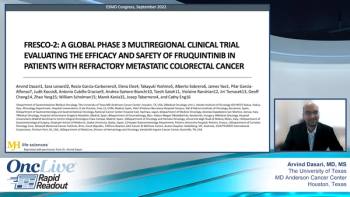
Arvind Dasari, MD, MS, presents data from the FRESCO-2 clinical trial evaluating fruquintinib in patients with refractory metastatic colorectal cancer, and provides insights on the clinical implications of the results.
Nageshwara Arvind Dasari, MD, discusses the patient population observed in the phase 3 FRESCO-2 trial in metastatic colorectal cancer.
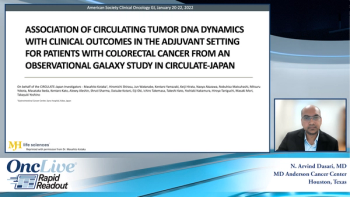
Insight on the observational GALAXY study, which analyzed the relationship between circulating tumor DNA and clinical outcomes in the adjuvant management of colorectal cancer.

Nageshwara Arvind Dasari, MD, discusses the eligibility criteria for the phase 3 FRESCO-2 trial, which examined the use of fruquintinib in patients with metastatic colorectal cancer.

Nageshwara Arvind Dasari, MD, discusses the rationale to evaluate fruquintinib in the ongoing, phase 3 FRESCO-2 trial in patients with metastatic colorectal cancer.

Nageshwara Arvind Dasari, MD, discusses the potential clinical implications with fruquintinib in metastatic colorectal cancer.