Nilanjan Ghosh, MD, reviews phase 3 data showing that tafasitamab plus lenalidomide and R-CHOP improved progression-free survival vs R-CHOP alone in patients with newly diagnosed high-risk DLBCL.
Nilanjan Ghosh, MD, reviews phase 3 data showing that tafasitamab plus lenalidomide and R-CHOP improved progression-free survival vs R-CHOP alone in patients with newly diagnosed high-risk DLBCL.
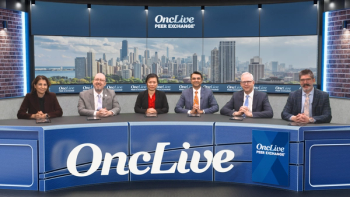
A reflection on key accomplishments in DLBCL treatment, highlighting pivotal developments that have shaped clinical practice, followed by a look ahead to 2025, focusing on areas poised for significant progress and personal goals for the coming year
A discussion of major challenges in using bispecific antibodies in the relapsed/refractory DLBCL setting, focusing on dosing, safety concerns like CRS, and step-up dosing strategies, along with insights on best practices for community clinics; followed by a review of sequencing bispecific antibodies and CAR T-cell therapies in third-line treatment, informed by recent studies on bispecific/CAR T sequencing
An overview of third-line treatment options for DLBCL, including choices for patients who did not receive CAR T-cell therapy or transplant in second-line, strategies for those who progress after CAR T-cell or transplant, and the impact of bispecific antibodies and ADCs, with insights from key studies on Glofit and Epcor in relapsed/refractory DLBCL and their implications for patient selection and care.
A discussion of current trials on bispecific antibody therapies in DLBCL, highlighting key takeaways from STARGLO on Glofit+GemOx in relapsed/refractory disease, the potential role of bispecifics in second-line treatment, and the patient populations and care settings most likely to benefit from these emerging options.
An overview of challenges with CAR T-cell therapy, including combating T-cell exhaustion, the pros and cons of outpatient administration, logistical barriers, and the role of polatuzumab in bridging therapy, along with a discussion of non-cellular second-line options such as pola+BR and findings from L-MIND compared to real-world data
A review of real-world outcomes for CAR T-cell therapies in the relapsed/refractory setting from ASH 2024, comparing them to clinical trial results and addressing safety management concerns, toxicities, and prophylactic treatment options in practice.
A review of studies on safety management with CAR T-cell therapy, focusing on CRS/ICANS in the relapsed/refractory setting, key takeaways from Cohorts 4 and 6, and the impact of ZUMA-24 preliminary analysis on second-line safety strategies.
An analysis of key updates on CAR T-cell therapy in DLBCL from ZUMA-7 and TRANSFORM trials, exploring its potential as a primary second-line option, along with insights into efficacy and safety data for transplant-ineligible patients from ALYCANTE and PILOT studies
A concise discussion of second-line treatment options for DLBCL, focusing on preferred regimens for transplant-eligible and ineligible patients, and tailored approaches based on relapse timing.
A concise discussion of second-line treatment strategies for DLBCL, highlighting preferred regimens for transplant-eligible and ineligible patients, as well as treatment approaches based on the timing of relapse.
An overview of key studies and updates from ASH 2024 offering new insights into subsequent treatment strategies and safety management in the first-line setting for DLBCL.
An exploration of how first-line treatment practices for DLBCL have evolved with new options, emphasizing the role of relapsed/refractory disease risk in guiding treatment selection.
An expert discussion on evolving first-line treatment strategies for newly diagnosed diffuse large B-cell lymphoma (DLBCL), incorporating insights from the 2024 NCCN guidelines, unmet needs in 1L therapies, and the impact of POLARIX trial updates on the use of Pola+R-CHP in clinical practice.
Matthew Matasar, MD and Nilajan Ghosh, MD, PhD, discuss first-line treatment strategies for DLBCL, including factors influencing treatment selection, unmet needs in first-line treatment options, the impact of the 2024 NCCN guideline updates, and practical guidance for community practitioners following insights from the POLARIX trial.
Nilanjan Ghosh, MD, PhD, discusses the low toxicity levels with lisocabtagene maraleucel that were seen in patients with relapsed/refractory large B cell lymphoma in the phase 3 TRANSFORM trial.
Nilanjan Ghosh, MD, PhD, discusses the potential advantages of moving CAR T-cell therapy into the frontline setting for patients with diffuse large B-cell lymphoma.
Nilanjan Ghosh, MD, PhD, director of the Lymphoma Program and a physician with Levine Cancer Institute, discusses unmet needs with CAR T-cell therapy in diffuse large B-cell lymphoma.
Nilanjan Ghosh, MD, PhD, discusses approved BTK inhibitors in B-cell malignancies.
Nilanjan Ghosh, MD, PhD, discusses remaining questions with BTK inhibitors in chronic lymphocytic leukemia and small lymphocytic lymphoma.
Nilanjan Ghosh, MD, PhD, compares different BTK inhibitors in B-cell malignancies.
Nilanjan Ghosh, MD, PhD, discusses global trials examining zanubrutinib in mantle cell lymphoma and non-Hodgkin lymphoma.
Nilanjan Ghosh, MD, PhD, discusses the role of minimal residual disease in chronic lymphocytic leukemia.
Nilanjan Ghosh, MD, PhD, discusses the utility of lisocabtagene maraleucel in relapsed/refractory non-Hodgkin lymphoma.
Nilanjan Ghosh, MD, PhD, discusses the safety results from the phase 2 PILOT study with lisocabtagene maraleucel in non-Hodgkin lymphoma.
Nilanjan Ghosh, MD, PhD, discusses efficacy results from the phase 2 PILOT trial in patients with high-risk relapsed/refractory B-cell non-Hodgkin lymphoma.
Nilanjan Ghosh, MD, PhD, discusses the need to develop novel therapies in diffuse large B-cell lymphoma.
Nilanjan Ghosh, MD, PhD, physician, Levine Cancer Institute, discusses the role of bleomycin in the treatment of patients with classical Hodgkin lymphoma.
Nilanjan Ghosh, MD, PhD, physician, Levine Cancer Institute, discusses frontline immunotherapy in Hodgkin lymphoma.
Nilanjan Ghosh, MD, PhD, physician, Levine Cancer Institute, discusses the future of chimeric antigen receptor (CAR) T-cell therapy in the treatment of patients with hematologic malignancies.
January 3rd 2025
September 10th 2020
December 1st 2020