
Opinion|Videos|February 10, 2025
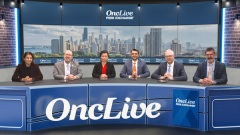
Additional Perspectives Beyond CAR T-cell Regimens in Relapsed/Refractory DLBCL.: Bispecifics
A discussion of current trials on bispecific antibody therapies in DLBCL, highlighting key takeaways from STARGLO on Glofit+GemOx in relapsed/refractory disease, the potential role of bispecifics in second-line treatment, and the patient populations and care settings most likely to benefit from these emerging options.
Advertisement
Episodes in this series
Video content above is prompted by the following:
Please discuss current trials using bispecific antibody therapies in DLBCL.
- What are key takeaways from Glofit + GemOx in RR DLBCL (
STARGLO: Gregory et al. ASH 2024 ). How do you foresee these results impacting future treatment choices?- What other emerging bispecific antibody therapy 2L trials are you excited about?
- Do you see a space for bispecific antibody therapy in 2L? If so, what patients do you think would most benefit from this potentially new option?
- Please comment on patient population and sites of care that would most benefit from bispecific antibodies in 2L.
Advertisement
Related to this article

Experts break down key melanoma data and trends from the 2026 ESMO Congress.

Did you catch all of this week's top oncology news? Test your knowledge with OncLive's Weekly News Quiz.

Experts break down key kidney cancer data and trends from the 2026 ESMO Congress.

Durvalumab plus BCG is now an approved first-line option for high-risk NMIBC, but better BCG delivery and biomarker-guided selection should shape its use.

The FDA has approved amivantamab and hyaluronidase-lpuj for metastatic head and neck squamous cell carcinoma.

A UCLA-led study suggests routine mammograms or other breast imaging may not benefit women after double mastectomy for DCIS.

Experts break down key gynecologic cancer data and trends from the 2026 ESMO Congress.
Are we ready to “take that fork in the road” and move palliative/supportive care into routine cancer care?
Advertisement
Advertisement
Trending on OncLive
1
FDA Approves Amivantamab and Hyaluronidase for Metastatic HNSCC
2
BCG Optimization Becomes a Priority as Durvalumab Gains a Role in High-Risk NMIBC
3
Dr Cai on the Rationale for Evaluating Rocbrutinib Plus R-CHOP in Non-GCB DLBCL and MCL
4
Dr Skoulidis on Divarasib vs Sotorasib or Adagrasib in KRAS G12C–Mutated NSCLC
5