
Opinion|Videos|February 17, 2025
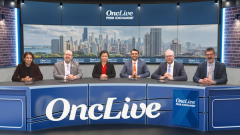
Academic Insights for the Treatment of Later Relapsed/Refractory DLBCL
An overview of third-line treatment options for DLBCL, including choices for patients who did not receive CAR T-cell therapy or transplant in second-line, strategies for those who progress after CAR T-cell or transplant, and the impact of bispecific antibodies and ADCs, with insights from key studies on Glofit and Epcor in relapsed/refractory DLBCL and their implications for patient selection and care.
Advertisement
Video content above is prompted by the following:
Please discuss current trials using bispecific antibody therapies in DLBCL.
Briefly discuss the available third-line (3L) options for treatment of DLBCL.
- Dr Miklos: What would you choose for patients that did not receive CAR T-cell therapy or transplant in the 2L?
- Dr Ghosh:What if patients progress after receiving CAR T-cell therapy or transplant in the 2L?
- Discuss the rationale for bispecific antibodies or antibody drug conjugates.
Dr Abdulhaq:Given the findings from bispecific antibodies in RR DLBCL, along with the FDA 3L approval of Glofit, how will 3L treatment choices change?
- Elaborate on the key takeaways from Glofit in RR DLBCL (
Dickinson et el. NEJM 2022 ) and Epcor in RR DLBCL (Thieblemont et al. JCO 2022 ). - ALL:How do these studies inform your care, and what patients are best suited for this type of regimen?
- When making treatment choices, what are the key differentiators between the two approved options that you consider?
Advertisement
Related to this article

The FDA has approved pirtobrutinib for the treatment of adult patients with previously untreated CLL or SLL harboring no known 17p deletion.

By finding a way to attack the most important human oncogene, KRAS, the UCSF chemical biologist launched a new era in cancer treatment.

TRE-515 earned fast track status in combination with KRAS inhibitors for G12C-mutated NSCLC after anti–PD-(L)1 therapy and platinum-based chemotherapy.

An NDA for zipalertinib in EGFR exon 20 insertion–positive NSCLC is being supported by phase 3 REZILIENT3 data.

Did you catch all of this week's top oncology news? Test your knowledge with OncLive's Weekly News Quiz.

Aglatimagene besadenovec plus EBRT was linked to a 41% lower risk of prostate cancer recurrence or death, alongside durable immune activity.

In case you missed any, read a recap of the episodes of OncLive On Air that aired in September 2026.

Japan approved Optune Pax plus gemcitabine and nab-paclitaxel for unresectable locally advanced pancreatic cancer.
Advertisement
Advertisement
Trending on OncLive
1
FDA Approves Pirtobrutinib for Previously Untreated CLL/SLL
2
Revisit Every OncLive On Air Episode From September 2026
3
Oral Azacitidine and Cedazuridine Meets Primary Pharmacokinetic End Point in MDS and CMML
4
UTRxMYCN M1-14 Nets FDA Dual Designations in Soft Tissue Sarcoma
5