




Breast Cancer
Latest News
Advertisement
Latest Videos






























































Advertisement
More News
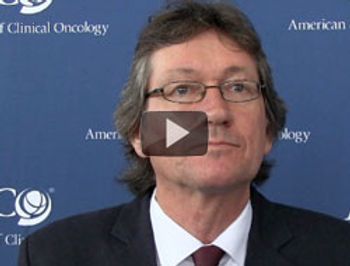
Richard G. Gray, MA, MSc, from the University of Oxford in Oxford, United Kingdom, discusses the phase III aTTom trial that explored a longer duration of treatment with tamoxifen in women with estrogen receptor-positive early breast cancer.

Joyce A. O'Shaughnessy, MD, the Co-Director of Breast Cancer Research at the Baylor Charles A. Sammons Cancer Center, describes potentially practice changing findings from the BOLERO-3 trial.

Max S. Wicha, MD, is an internationally renowned research expert in the field of breast oncology. His lab was part of the first team to discover stem cells in breast cancer, and he is among the most highly cited investigators in the field of cancer stem cells.

Martine Piccart, MD, PhD, director of medicine at the Jules Bordet Institute in Brussels, Belgium, discusses the success of trastuzumab for the treatment of breast cancer.

Some HER2-positive breast cancer patients may be able to receive targeted neoadjuvant therapy with lapatinib and trastuzumab without chemotherapy.
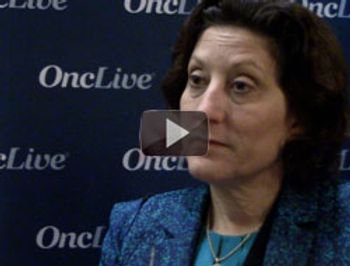
Hope S. Rugo, MD, professor of medicine and director of breast oncology and clinical trials education at the University of California, San Francisco, Helen Diller Family Comprehensive Cancer Center, discusses the treatment of patients with metastatic breast cancer with chemotherapy.

The decision about whether to get tested for a genetic mutation that may predispose a person to certain cancers is a difficult one for many patients to make. Even more difficult for mutation carriers is deciding whether to undergo a prophylactic surgical procedure.

Breast cancer clinicians today are faced with an ever-expanding number of older patients, yet determining the most appropriate treatment for these individuals can be challenging.

Patrick Borgen, MD, chair, Department of Surgery, director, Maimonides Breast Cancer Center, discusses a patient's decision to be tested for a BRCA gene.
Emanuel F. "Chip" Petricoin III, PhD, Co-Director, Center for Applied Proteomics & Molecular Medicine, Professor of Life Sciences, George Mason University, discusses the discovery of new biomarkers in breast cancer.

While chemotherapy might initially be effective in the treatment of patients with metastatic breast cancer, it is very common for patients to develop resistance to such agents.
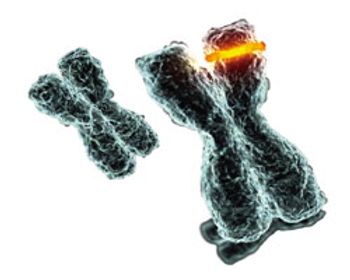
Researchers are attempting to determine if targeting more than one tyrosine kinase provide a greater benefit in several clinical trials involving the investigational drug afatinib.
A high-profile case of a medical decision being based primarily on the results of a genetic test has prompted a national discussion on the benefits and risks associated with acting on the results of such a test.

The technological advances in analyzing the human genome have spawned a new era in breast cancer as well as other types of malignancies that will affect oncology practice and will necessitate dramatic changes in the clinical trials system.

Anees Chagpar, MD, MSc, MA, MPH, Associate Professor of Surgery (Oncology), Director, The Breast Center at Smilow Cancer Hospital at Yale-New Haven, gives an overview of the discussion surrounding sentinel node biopsying before and after neoadjuvant chemotherapy.

The I-SPY trials are designed to test several different experimental therapies at once to determine which ones work best in which patients.

Despite progress in treating chemotherapy-induced nausea and vomiting, especially in the acute phase up to 24 hours after treatment, the condition is still one of the side effects patients fear most.

José Baselga, MD, PhD, Physician-in-Chief, Memorial Sloan-Kettering Cancer Center, discusses the need to fine tune mTOR and PI3K inhibitor doses.

For appropriate patients, postmastectomy radiation therapy is associated with improved locoregional control and better survival.

Hyman B. Muss, MD, Professor of Medicine, Director of Geriatric Oncology, Lineberger Comprehensive Cancer Center, discusses evaluation tools for treating older patients.
Due to the high lifetime risk of ovarian cancer and the poor ovarian cancer surveillance options available, women who carry BRCA1 or BRCA2 mutations are advised to remove their ovaries and fallopian tubes by age 40 or when childbearing is complete.

Gunter von Minckwitz, MD, PhD, discusses the current unsolved medical situation regarding patients with breast cancer who do not respond to treatment.

Debu Tripathy, MD, from the University of Southern California Norris Comprehensive Cancer Center, discusses the targeted therapies that are currently available for the treatment of patients with breast cancer.

Lisa A. Carey, MD, Professor of Medicine, University of North Carolina at Chapel Hill, discusses the present and future state of clinical trial design.
Experts provide an in-depth look at the treatment strategy in patients with solid tumors, specifically looking at the role of maintenance therapy.
Advertisement
Advertisement
Trending on OncLive
1
FDA Approves Tucatinib Plus Trastuzumab/Pertuzumab as First-Line Maintenance in Advanced HER2+ Breast Cancer
2
VIR-5500 Receives FDA Fast Track Designation in mCRPC
3
Iberdomide Plus Daratumumab/Dexamethasone Yields Significant PFS Benefit in R/R Myeloma
4
FDA Approves Atezolizumab Plus Chemo for Stage III dMMR Colon Cancer
5