



Breast Cancer
Latest News
Advertisement
Latest Videos
































































Advertisement
More News

Adding the tyrosine kinase inhibitor dasatinib to standard aromatase inhibitor therapy with letrozole doubled PFS compared with letrozole alone in women with HR-positive, HER2-negative metastatic breast cancer.
Carlos L. Arteaga, MD,discusses the CALGB 40603 trial, a neoadjuvant triple-negative breast cancer trial.

Women aged 65 and older with hormone receptor-positive, axillary node-negative breast cancer may be able to forego radiation therapy after breast conserving surgery if they are treated with hormonal therapy and considered to be at low risk for breast cancer recurrence.

C. Kent Osborne, MD, professor of medicine and molecular and cell biology, Baylor College of Medicine, discusses the impact of the results of the PRIME 2 trial, which looked at radiotherapy after surgery in women over 65 years old with breast cancer.

The benefit of screening mammography is more consistent across studies than has previously been thought, according to an analysis of key screening studies presented at the 2013 San Antonio Breast Cancer Symposium.

New evidence suggests that HER2-positive breast cancer may not only be immunogenic, but also that trastuzumab may relieve suppression of antitumor immunity.

Jennifer Litton, MD, associate professor, Department of Breast Medical Oncology, University of Texas, MD Anderson Cancer Center, discusses the results of the BETH trial.

Sherene Loi, MD, PhD, on the association between immune cells and a pathologic complete response in patients with breast cancer after being given chemotherapy and trastuzumab.

Most deaths from breast cancer occur in women who have not been regularly screened and whose tumors are diagnosed at a median age 49 years, confirming the need for the greater use of annual mammography in younger women, according to a recent study that marks the latest episode in the debate over screening guidelines.
Anne McTiernan, MD, PhD, research professor of epidemiology, University of Washington, member, Fred Hutchinson Cancer Research Center, discusses the biomarkers that are associated with poor prognosis in patients with breast cancer.
Richard S. Finn, MD, associate professor of medicine, Department of Medicine, Division of Hematology/Oncology, Geffen School of Medicine at UCLA, discusses using AMG900 to treat breast cancer.

Quest Diagnostics, a business founded 46 years ago in a medical resident's two-room apartment, has parlayed the exponential subsequent growth in medical testing into an operation worth $8.5 billion.

The new indication for pertuzumab (Perjeta) as part of a three-drug neoadjuvant regimen for patients with HER2-positive metastatic breast cancer marks the first time the FDA has authorized a therapy based on pathologic complete response.

Presentations at the 36th San Antonio Breast Cancer Symposium (SABCS) will tackle key topics and questions regarding the treatment of breast cancer.
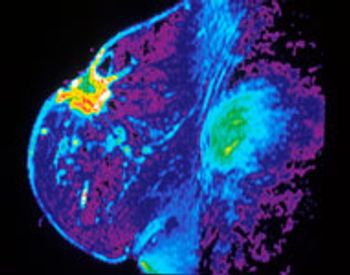
Two large cohort studies, suggest that the costly scan is being overused in women who won't benefit from it and underused in women who could gain benefit from it.

A Dutch team is recommending the continued use of primary granulocyte colony-stimulating factor (G-CSF) prophylaxis throughout all chemotherapy cycles in women with early breast cancer who are at high risk of febrile neutropenia (FN).
Richard S. Finn, MD, associate professor of medicine, Department of Medicine, Division of Hematology/Oncology, Geffen School of Medicine at UCLA, discusses current research in triple-negative breast cancer (TNBC).

New analyses of the BOLERO-2 trial found that everolimus and exemestane produced significantly longer progression-free survival than placebo and exemestane in several previously unstudied patient subgroups.

Lawrence N. Shulman, MD, chief of staff, senior vice president for medical affairs, director, Center for Global Cancer Medicine, director, Department of Regional Strategy and Development, chief, Division of General Oncology, Dana-Farber Cancer Institute, discusses the results of the CALGB 40101 trial.

Women with HER2-positive early breast cancer favor subcutaneous over intravenous (IV) administration of trastuzumab (Herceptin).

Torsten O. Nielsen, MD, PhD, FRCPC, a professor of pathology at the University of British Columbia, discusses the differences between the PAM50 assay and other approved molecular tests for patients with breast cancer.

Selecting the optimal treatment for postmenopausal patients with hormone receptor (HR)-positive metastatic breast cancer (MBC) remains a challenge, given a preponderance of data for several approved therapeutics

Minetta Liu, MD, Breast Cancer Specialist, Mayo Clinic, Rochester, Minnesota, describes the CellSearch CTC Test in breast cancer.
Michael Gnant, MD, professor of the Department of Surgery at the Medical University of Vienna in Vienna, Austria, discusses the four intrinsic subtypes of the PAM50 recurrence score test and a clinical trial comparing this test with OncotypeDX.

Patients with DCIS who received an MRI added to mammography before or immediately after receiving a lumpectomy did not experience an improvement in the rate of disease recurrence
Advertisement
Advertisement
Trending on OncLive
1
FDA Approves Tucatinib Plus Trastuzumab/Pertuzumab as First-Line Maintenance in Advanced HER2+ Breast Cancer
2
VIR-5500 Receives FDA Fast Track Designation in mCRPC
3
Iberdomide Plus Daratumumab/Dexamethasone Yields Significant PFS Benefit in R/R Myeloma
4
FDA Approves Atezolizumab Plus Chemo for Stage III dMMR Colon Cancer
5