


Precision Medicine in Oncology®
Latest News
Advertisement
Latest Videos































































Advertisement
More News
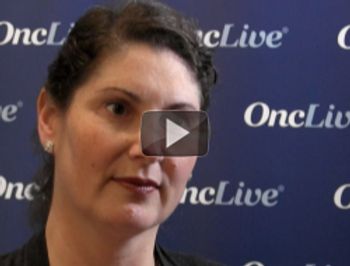
Ingrid A. Mayer, MD, co-leader and Clinical Director, Breast Cancer Research Program Chair, Data and Safety Monitoring Committee, Associate Professor of Medicine (Hematology/Oncology), medical oncologist, Vanderbilt-Ingram Cancer Center, discusses the use of targeted therapies in estrogen-receptor (ER)-positive breast cancer.
Expression of the apoptosis regulator protein BIM could help predict response to PD-1 blockade in patients with melanoma.

PD-1 and PD-L1 inhibition offers the possibility for precision immuno-oncology through the application of biomarkers that predict the immune systems response. This principle has been demonstrated by two of the most recent FDA approvals for patients with lung cancer.

The identification of the BRCA1 and BRCA2 tumor suppressor genes and the recognition that inherited loss of function (deleterious) mutations in one of these important genes places women at high risk for the development of breast, ovarian, and other cancers are major advances in women’s health research.

With technological advancements in genome sequencing, researchers are now gaining a more detailed picture of the genetic drivers of cervical cancer and the important role that the human papillomavirus, responsible for the vast majority of cervical cancer cases, plays in molding the genetic profile of this disease.
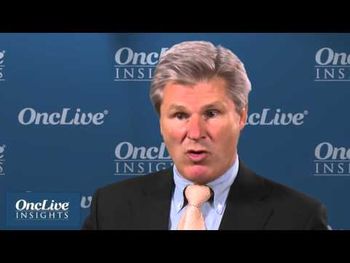

Steven A. Rosenberg, MD, PhD, chief, Surgery Branch, senior investigator, head, Tumor Immunology Section, National Cancer Institute, explains advancements in adoptive cell therapy for the treatment of melanoma.
There is an objectively rational and scientifically valid alternative to evaluate N-of-1 experiences, and there is a critical need for the continued development of such approaches, which the oncology community increasingly recognizes as a necessary step to replace the established but untenable randomized clinical trial paradigm.

One of the most widely talked about trends in healthcare is precision medicine, which uses detailed genetic information about a patient’s cancer to more precisely treat the disease, effectively targeting the tumor. This heightened awareness raises an important question: are precision medicine and pathways compatible?

Frontline treatment with afatinib reduced the risk of progression or death by 27% compared with gefitinib for patients with EGFR-mutant non–small cell lung cancer.
It is simply unrealistic and highly counterproductive to the future of cancer care to believe that the only acceptable approach to determining the absolute or relative clinical utility of a specific drug, regimen, device, or procedure, is through the conduct of a so-called evidence-based randomized trial.
Gargi D. Basu, PhD, senior director of Clinical Curation, Ashion Analytics, discusses a study that examined alterations in the cell cycle checkpoint pathway in patients with breast cancer.
Omid Hamid, MD, Chief, Translational Research and Immunotherapy, Director, Melanoma Therapeutics, The Angeles Clinic, discusses a recent trial investigating the combination of vemurafenib and atezolizumab in melanoma in patients with previously untreated BRAF-positive unresectable or metastatic melanoma.
Gregory Riely, MD Medical Oncologist, Vice Chair, Clinical Trials Office, Department of Medicine, Memorial Sloan Kettering, discusses the benefits and challenges of using next-generation sequencing to identify mutations in lung cancer.

With the rapid pace of change in precision medicine, insurance companies and federal policymakers are going to have to adjust for far more variance in the ways patients are treated, even though insurance plans and federal policy by nature require a measure of standardization.
Mark R. Gilbert, MD, senior investigator, chief, Neuro-Oncology Branch, National Cancer Institute, Center for Cancer Research, discusses the use of precision medicine in treating patients with glioblastoma.

The deployment of precision medicine to develop safe and effective therapies to treat malignant brain tumors is an effort that poses both opportunities and challenges.
Advertisement
Advertisement
Trending on OncLive
1
Ifinatamab Deruxtecan BLA Voluntarily Withdrawn in Previously Treated Extensive-Stage SCLC
2
Etentamig Improves Response and PFS vs Standard Therapies in Triple-Class Exposed Relapsed/Refractory Myeloma
3
Dr Voorhees on Eligibility Criteria for the CERVINO Trial in Multiple Myeloma
4
Long-Term PERSEUS Data Confirm Durable PFS Benefit With D-VRd in Transplant-Eligible Newly Diagnosed Myeloma
5