





Chronic Lymphocytic Leukemia
Latest News
Advertisement
Video Series
Latest Videos










Shorts

1:38
SOHO 2026 RECAP
a month ago
by
Riley Kandel(+1 more)

0:41
Comparing Mechanisms of Action for BTK Degraders and Inhibitors
2 months ago
by
Zulfa Omer, MD

0:43
Important Expectations With Later Lines of Therapy in Older Patients with CLL
3 months ago
by
Daniel A. Ermann, MD

2:09
Treatment Considerations Following Covalent BTK Inhibitors in CLL
6 months ago
by
Alexey V. Danilov, MD, PhD

4:12
OncLive News Roundup for the Week of 4/12
6 months ago
by
Chris Ryan(+1 more)
1:29
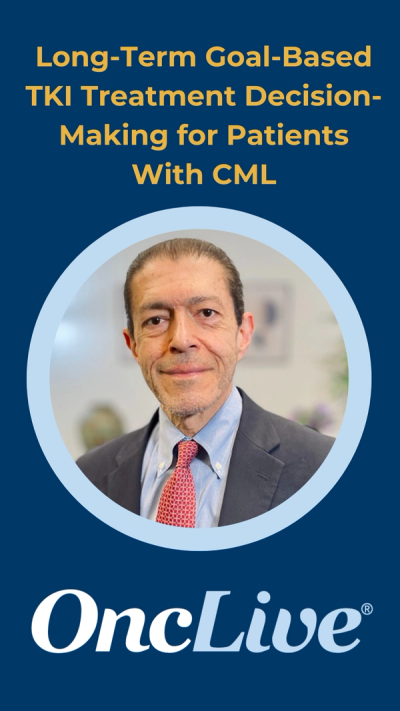
Long-Term Goal-Based TKI Treatment Decision-Making for Patients With CML
7 months ago
by
Jorge Cortes, MD

3:41
OncLive News Roundup for the Week of 2/15
8 months ago
by
Courtney Flaherty(+1 more)

0:52
The Evolving CLL Treatment Paradigm
a year ago
by
Aaron Gerds, MD, MS
Podcasts





























































Advertisement
More News

The FDA approved pirtobrutinib for untreated chronic lymphocytic leukemia, granted priority review to elinzanetant for breast cancer hot flashes, and more.

The FDA has approved pirtobrutinib for the treatment of adult patients with previously untreated CLL or SLL harboring no known 17p deletion.

The NMPA has approved pirtobrutinib in treatment-naive and previously treated CLL/SLL.

The top 5 OncLive TV videos of the week cover insights in breast cancer, PV, myeloma, and CLL.

Mary Ann Anderson, MBBS, FRACP, FRCPA, PhD, discusses recent CLL approvals, BTK and BCL-2 inhibitor safety, and individualizing frontline therapy.

Bexobrutideg produced responses across lines of therapy in chronic lymphocytic leukemia/small lymphocytic lymphoma.

Strong overall response rates with pirtobrutinib in relapsed/refractory CLL previously treated with covalent BTK inhibitors were shown in a pooled analysis.

Real-world tumor lysis syndrome occurred in less patients with CLL who received venetoclax-based regimens than those with MCL.
In the PIVOT-CLL trial, time-limited pirtobrutinib, venetoclax, and obinutuzumab produced deep, durable molecular remissions in treatment-naive CLL.

The top 5 OncLive TV videos of the week cover pancreatic cancer, gastric cancer, GIST, renal cell carcinoma, and chronic lymphocytic leukemia.

Pooled results from the phase 3 BRUIN CLL-313 and BRUIN CLL-314 trials confirmed the efficacy of pirtobrutinib in treatment-naive CLL.
A post hoc analysis found similar safety outcomes for fixed-duration regimens containing acalabrutinib/venetoclax across age groups in treatment-naive CLL.
In an OncLive Peer Exchange, experts discussed the evolving treatment landscape in CLL, spanning frontline selection to emerging next-generation agents.

In case you missed any, read a recap of the episodes of OncLive On Air that aired in July 2026.

Docirbrutinib generated responses in patients with relapsed/refractory CLL/SLL, MCL, and other non-Hodgkin lymphomas.
The top 5 OncLive TV videos of the week cover insights in bladder cancer, chronic myeloid leukemia, multiple myeloma, pancreatic cancer, and chronic lymphocytic leukemia.

Data for fixed-duration regimens in CLL suggest benefits over chemoimmunotherapy, but improvements for high-risk patients are still required.
Orelabrutinib produced efficacy improvements vs chemoimmunotherapy in previously untreated chronic lymphocytic leukemia.

Daniel Ermann, MD, discusses improvements shown in real-world data for zanubrutinib compared with acalabrutinib in treatment-naive CLL.

Matthew S. Davids, MD, MMSc, discusses how efficacy data for pirtobrutinib plus venetoclax and rituximab from BRUIN CLL-322 may affect relapsed/refractory CLL management.

Matthew S. Davids, MD, MMSc, discusses data from BRUIN CLL-322 that may shake up the CLL treatment paradigm.

CHMP recommends pirtobrutinib for CLL across all treatment lines after phase 3 trials showed strong efficacy and a favorable safety profile.

In a phase 2 study, adding venetoclax to ibrutinib rendered BTK C481X resistance mutations undetectable in patients with CLL.

Both the reactive and proactive ibrutinib dose-adjustment cohorts of the phase 2 TAILOR study met the primary ORR end point in previously untreated CLL.
The top 5 OncLive TV videos of the week cover insights in renal cell carcinoma, HER2+ breast cancer, multiple myeloma, and chronic lymphocytic leukemia.
Advertisement
Advertisement
Trending on OncLive
1
Adjuvant Giredestrant Preserves QOL With Sustained Tolerability in ER+, HER2– Early Breast Cancer
2
Arcotatug Tavatecan Improves Survival in CLDN18.2+ Advanced Gastric or GEJ Adenocarcinoma
3
Sacituzumab Govitecan Triplet Elicits Durable Responses in Treatment-Naive Metastatic Urothelial Cancer
4
Perioperative Enfortumab Vedotin Plus Pembrolizumab Improves ctDNA Clearance in Cisplatin-Eligible MIBC
5