



Gastrointestinal Cancer
Latest News

Chan Breaks Down the Need for Dose Escalation With Somatostatin Analogs in GEP-NETs
Advertisement
Video Series

Latest Videos


































































Advertisement
More News
Jaume Capdevila, MD, PhD, discusses the potential for 177Lu-edotreotide for the treatment of patients with neuroendocrine tumors.

Belzutifan-based combinations meet end points in RCC, imaging agent under review for SSTR-positive neuroendocrine tumors, and more.
OncLive® and the Ruesch Center at Georgetown Lombardi announce the 2025 Luminary Award winners in gastrointestinal cancers.
The FDA set a March 29, 2026, PDUFA date for LNTH-2501, a PET imaging agent targeting SSTR-positive neuroendocrine tumors.
The FDA granted orphan drug designation to DPTX3186 in gastric cancer.
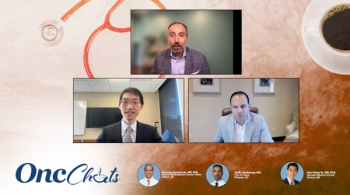

Experts discuss how AI can diagnose cancer from standard H&E slides while accounting for slide quality differences to support broader clinical use.
Revisit the most intriguing GI cancer data from the 2025 ESMO Congress.
TACE plus pembrolizumab and lenvatinib did not improve OS vs TACE alone in patients with unresectable HCC.
Dr Mahvash discusses the FDA approval of SIR-Spheres Y-90 resin microspheres for the treatment of patients with unresectable hepatocellular carcinoma.
Armeen Mahvash, MD, discusses how the FDA approval of SIR-Spheres Y-90 resin microspheres highlights the growing role of radioembolization in unresectable HCC.
Zenocutuzumab has received BTD from the FDA for patients with advanced unresectable or metastatic cholangiocarcinoma harboring an NRG1 gene fusion.
Armeen Mahvash, MD, discusses how the FDA approval of SIR-Spheres Y-90 resin microspheres highlights the growing role of radioembolization in unresectable HCC.
First-line cadonilimab plus chemotherapy demonstrated long-term efficacy benefits vs chemotherapy alone in patients with advanced gastric or GEJ adenocarcinoma.

Atezolizumab plus bevacizumab displayed preliminary signs of a TTFS benefit vs TACE in intermediate-stage HCC.
Zabilugene almadenorepvec plus SOC therapy was active in patients with treatment-naive metasatic PDAC.
Bemarituzumab/mFOLFOX6 produced an OS advantage over placebo/mFOLFOX6 in FGFR2b-overexpressing gastric/GEJ cancer; this was attenuated at longer follow-up.
Telisotuzumab adizutecan displayed early activity in locally advanced/metastatic PDAC.
The SKYSCRAPER-14 trial did not show a PFS benefit with tiragolumab plus atezolizumab and bevacizumab in untreated HCC, missing its coprimary end point.
212Pb-DOTAMTATE produced responses with a manageable safety profile in patients with SSTR-positive, PRRT-exposed, unresectable or metastatic GEP-NETs.
Tislelizumab plus induction chemotherapy and concurrent chemoradiation demonstrated efficacy worthy of further study in locally advanced ESCC.
177-Lu-edotretide significantly improved survival outcomes vs everolimus for the treatment of patients with grade 1/2 GEP-NETs.
The addition of durvalumab to FLOT prolonged overall survival vs FLOT alone in resectable gastric/gastroesophageal junction adenocarcinoma.

First-line treatment with lenvatinib, pembrolizumab, and chemotherapy did not improve OS vs chemoimmunotherapy in patients with advanced ESCC.
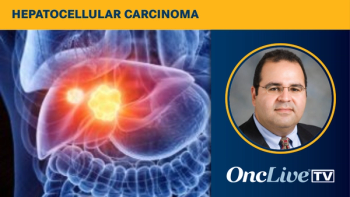
Armeen Mahvash, MD, discusses the clinical impact of the FDA approval of SIR-Spheres Y-90 resin microspheres for unresectable hepatocellular carcinoma.
Advertisement
Advertisement
Trending on OncLive
1
INBRX-106 Plus Pembrolizumab Improves Responses and PFS in First-Line PD-L1–Positive HNSCC
2
FDA Approves Pirtobrutinib for Previously Untreated CLL/SLL
3
Five Under 5: Top Oncology Videos for the Week of 9/27
4
AUA Releases Guideline Amendment for NMIBC
5