





Head & Neck Cancers
Latest News
Advertisement
Latest Videos

































































Advertisement
More News

Yungan Tao, MD, discusses the efficacy of avelumab plus cetuximab and radiotherapy in patients with head and neck squamous cell carcinoma.

Jared Weiss, MD, discusses outcomes with first-line Versamune HPV plus pembrolizumab in HPV16–positive recurrent or metastatic HNSCC.

Inavolisib triplet wins FDA approval in PIK3CA+ breast cancer, perioperative pembrolizumab improves EFS in head and neck cancer, and more from OncLive this week.

The 2023 cisplatin shortage led to shifts toward the use of alternative agents for use in head and neck cancer, as well as increased drug costs.

Perioperative treatment with pembrolizumab and adjuvant radiotherapy improved EFS vs adjuvant radiotherapy in locally advanced head and neck squamous cell carcinoma.
Lillian L. Siu, MD, FRCPC, discusses the background for evaluating first-line petosemtamab plus pembrolizumab in recurrent/metastatic PD-L1+ HNSCC.

First-Line Versamune HPV Vaccine Bolsters Responses With SOC Pembrolizumab in HPV16+ Recurrent HNSCC
Jared Weiss, MD, discusses survival benefits seen with the therapeutic cancer vaccine Versamune HPV plus first-line pembrolizumab in HPV16-positive HNSCC.
The FDA has granted traditional approval to selpercatinib (Retevmo) for advanced or metastatic medullary thyroid cancer with a RET mutation.
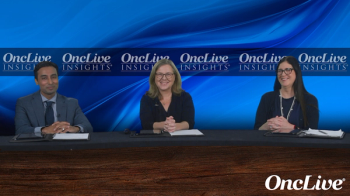
The panel provides clinical insights on the treatment of a patient with metastatic EBV-positive nasopharyngeal carcinoma.

The European Commission has approved toripalimab in indications for nasopharyngeal carcinoma and esophageal squamous cell carcinoma.
Shravan Kandula, MD, presents the case of a patient with locally recurrent nasopharyngeal carcinoma.
Victoria M. Villaflor, MD, discusses the integration of PD-1 inhibitors into standard treatment practices for patients with nasopharyngeal carcinoma.
Neoadjuvant chemotherapy improved organ preservation in nasal and paranasal sinus squamous cell carcinoma.
The panel provides clinical insights on nasopharyngeal carcinoma treatment practices and outlines unmet needs in the current therapeutic landscape.
Victoria M. Villaflor, MD, highlights ways to mitigate adverse events for patients receiving treatment for nasopharyngeal carcinoma.
A CD44 and total protein level detecting oral rinse-based test showed promise in identifying disease recurrence for patients with head and neck cancer.
Experts on nasopharyngeal carcinoma outline the role of immunotherapy and discuss external factors that inform treatment decisions.
Shravan Kandula, MD, reviews findings from the DIPPER trial, which is investigating adjuvant PD-1 blockade with camrelizumab in patients with nasopharyngeal carcinoma.
A medical oncologist discusses the value of PD-L1 as a biomarker in the treatment of patients with nasopharyngeal carcinoma.
Victoria M. Villaflor, MD, provides insights on the role of immune checkpoint inhibitors in treating nasopharyngeal carcinoma, focusing on the JUPITER and POLARIS-2 clinical trials.
The FDA has granted fast track designation to APG-157 for the neoadjuvant treatment of head and neck cancer.
Shravan Kandula, MD, reviews the current guidelines for the treatment of patients with nasopharyngeal carcinoma.
Experts on nasopharyngeal carcinoma (NPC) provide an overview of the disease, highlighting its incidence, how it’s differentiated from other head and neck cancers, and the benefits of multidisciplinary care.
Noah Kalman, MD, MBA, details new technology for treating head and neck cancer, and ongoing trials examining therapies at Miami Cancer Institute.
Rom S. Leidner, MD, discusses the rationale for studying DPV-001 plus PD-1 inhibition in advanced or metastatic head and neck squamous cell carcinoma.
Advertisement
Advertisement
Trending on OncLive
1
FDA Approves Nogapendekin Alfa Inbakicept Plus BCG for High-Grade, Papillary-Only BCG-Unresponsive NMIBC
2
SurVaxM Cancer Vaccine Shows Clinically Meaningful OS Signal in Newly Diagnosed Glioblastoma
3
VS-7375 Elicits Responses in KRAS G12D–Mutated Pancreatic Cancer
4
FDA Accepts BLA Resubmission for Tabelecleucel in EBV+ Post-Transplant Lymphoproliferative Disease
5