






Hematologic Oncology
Latest News
Advertisement
Latest Videos

















































Advertisement
More News

New options for patients with hematologic malignancies stemming from recent FDA approvals are making an impact on treatment strategies recommended in the National Comprehensive Cancer Network Clinical Practice Guidelines in Oncology.

The European Commission has approved brentuximab vedotin for use in combination with chemotherapy as a frontline treatment for adult patients with CD30+ stage IV Hodgkin lymphoma.
Robert L. Talley, MD, discusses current and potential future standards of care in idiopathic thrombocytopenic purpura and thrombotic thrombocytopenic purpura.
The European Commission has approved dasatinib in combination with chemotherapy for the treatment of pediatric patients with newly diagnosed Philadelphia chromosome-positive acute lymphoblastic leukemia.

The FDA has added 3 months to the review period for a supplemental new drug application for ruxolitinib for the treatment of patients with acute graft-versus-host disease who have had an inadequate response to corticosteroids, making the new action date May 24, 2019.

Jesus Berdeja, MD, director of Multiple Myeloma Research at Sarah Cannon Research Institute, discusses maintenance therapy in multiple myeloma.

The relative risk of developing a solid subsequent malignant neoplasm remained elevated in survivors of childhood Hodgkin lymphoma, according to extended follow-up of more than 25 years from the Late Effects Study Group cohort.

The FDA has approved the nanobody caplacizumab-yhdp in combination with plasma exchange and immunosuppression for the treatment of adult patients with acquired thrombotic thrombocytopenic purpura, making it the first FDA-approved therapy indicated for this patient population.

Leo I. Gordon, MD, Abby and John Friend Professor of Oncology Research, Northwestern University Feinberg School of Medicine, discusses the use of checkpoint inhibitors in the treatment of patients with Hodgkin lymphoma.
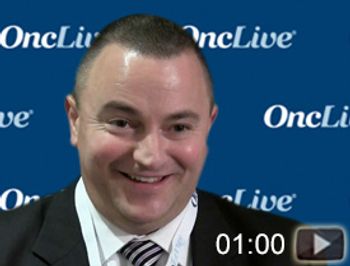
Jason Valent, MD, an oncologist at Cleveland Clinic, discusses ongoing research with immunotherapy, specifically checkpoint inhibitors, in the treatment of patients with multiple myeloma.
Srdan Verstovsek, MD, PhD, director of the Hanns A. Pielenz Clinical Research Center for Myeloproliferative Neoplasms at The University of Texas MD Anderson Cancer Center, discusses the benefit of ruxolitinib in polycythemia vera.

Neil Shah, MD, PhD, professor, Department of Medicine (Hematology/Oncology), University of California, San Francisco (UCSF) Program Leader, Hematopoietic Malignancies Program, UCSF Helen Diller Family Comprehensive Cancer Center, discusses investigational agents in chronic myeloid leukemia (CML).

Lawrence D. Kaplan, MD, clinical professor of medicine, director, Adult Lymphoma Program, Division of Hematology-Oncology, University of California, San Francisco Helen Diller Family Comprehensive Cancer Center, discusses the results of the phase III ECHELON-1 trial in Hodgkin lymphoma.



Stephen Oh, MD, PhD, assistant professor of medicine, Division of Hematology, Washington University School of Medicine in St. Louis, Siteman Cancer Center, discusses the differences between investigational JAK inhibitors and ruxolitinib (Jakafi) in the treatment of patients with myeloproliferative neoplasms (MPNs).
Patients with blood cancers face greater treatment costs than those with solid tumors. Furthermore, healthcare spending for these patients is already higher than average before diagnosis and does not return to prediagnosis levels even after successful treatment.
Advertisement
Advertisement
Trending on OncLive
1
FDA Accepts NDA for Daraxonrasib in Previously Treated Metastatic Pancreatic Cancer
2
FDA Approves Zidesamtinib in Pretreated ROS1+ NSCLC
3
Dr Patel on the Unmet Need in EGFR+ Transformed Small Cell Lung Cancer
4
Dr Galsky on Systemic Therapy Advances in Muscle-Invasive Bladder Cancer
5