

Hematologic Oncology
Latest News
Advertisement
Latest Videos















































Advertisement
More News
Although knowledge about the underlying biology of myelodysplastic syndromes has expanded rapidly in recent years, translating those findings into advances in the diagnosis and management of patients remains a significant challenge.

This pilot trial is the first of its type to investigate T cell receptor alpha/beta-depleted and CD19-depleted haploidentical stem cell grafts in relapsed/refractory lymphoma patients.
Inotuzumab ozogamicin demonstrated significantly improved progression-free survival and complete remission rates compared with chemotherapy for patients with relapsed or refractory acute lymphoblastic leukemia.

Patients with acute myeloid leukemia who are cured after allogeneic hematopoietic stem cell transplantation produce antibodies that destroy leukemia cells.
A host of novel agents that target distinct molecular targets are pushing complete remission rates beyond historical boundaries for patients with acute myeloid leukemia.
Frontline treatment with the CD33-directed antibody-drug conjugate vadastuximab talirine plus a hypomethylating agent induced deep and durable remissions for older patients with acute myeloid leukemia.

Tyrosine kinase inhibitors can safely be halted in select patients with chronic phase chronic myeloid leukemia followed a maintained deep molecular remission.

The median overall survival with the anti-CD19 immunotherapy blinatumomab was 7.7 months versus 4 months with standard chemotherapy in patients with Philadelphia chromosome–negative relapsed or refractory B-cell precursor acute lymphoblastic leukemia, according to results from the phase III TOWER study.

Pembrolizumab (Keytruda) is associated with an exceptional overall response rate in patients with relapsed/refractory Hodgkin lymphoma.
Single-agent nivolumab induced responses in 66% of patients with classical Hodgkin lymphoma who had progressed following autologous stem cell transplant and brentuximab vedotin.

CPX-351 reduced the risk of death by 31% compared with cytarabine and daunorubicin (7+3) for older patients with high-risk, secondary AML.
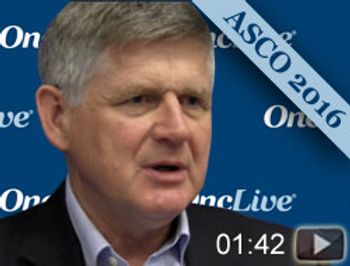
Andreas Hochhaus, MD, professor of Internal Medicine, Hematology and Oncology, interim head of the Department of Hematology and Medical Oncology, University Medical Center Jena in Germany, discusses results of the phase II ENESTFreedom study, which examined treatment-free survival (TFS) in patients with chronic myeloid leukemia (CML) who received frontline nilotinib (Tasigna).

Hematological practices can expect a slate of new generics to replace long-established brand drugs going off patent, as well as new blockbuster blood therapies that will significantly improve the treatment of some malignancies.
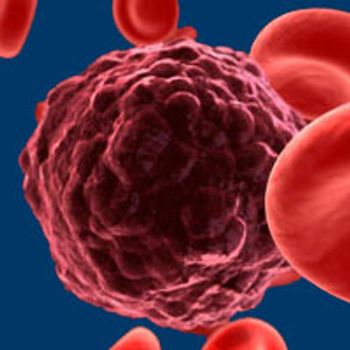
The EMA's Committee for Medicinal Products for Human Use has granted a positive opinion to brentuximab vedotin (Adcetris) for use as a consolidation therapy following autologous stem cell transplantation in patients with CD30-positive Hodgkin lymphoma at risk of relapse or progression.
The FDA has granted a breakthrough therapy designation to CPX-351 (Vyxeos) as a treatment for patients with therapy-related acute myeloid leukemia or AML with myelodysplasia-related changes.
The FDA approved nivolumab (Opdivo) for the treatment of patients with classical Hodgkin lymphoma that has relapsed or progressed after autologous hematopoietic stem cell transplantation and posttransplantation brentuximab vedotin (Adcetris).
Advertisement
Advertisement
Trending on OncLive
1
FDA Accepts NDA for Daraxonrasib in Previously Treated Metastatic Pancreatic Cancer
2
FDA Approves Zidesamtinib in Pretreated ROS1+ NSCLC
3
Dr Patel on the Unmet Need in EGFR+ Transformed Small Cell Lung Cancer
4
Dr Galsky on Systemic Therapy Advances in Muscle-Invasive Bladder Cancer
5