
Hematologic Oncology
Latest News
Advertisement
Latest Videos










































Advertisement
More News
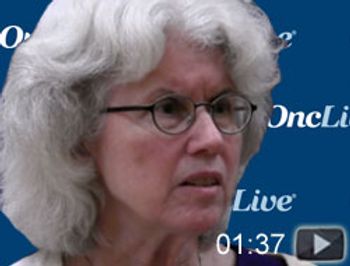
Madeleine Duvic, MD, professor of Medicine and Dermatology, Blanche Bender Professorship in Cancer Research, director of the Research Fellowship Program, Department of Dermatology, Division of Internal Medicine, The University of Texas MD Anderson Cancer Center, discusses the importance of classifying T-cell lymphomas and new targets in development. Duvic shared this insight during the 2016 OncLive State of the Science Summit on Hematologic Malignancies.

Guillermo Garcia-Manero, MD, professor of Medicine, chief, Section of Myelodysplastic Syndromes, in the Department of Leukemia, Division of Cancer Medicine, The University of Texas MD Anderson Cancer Center, discusses the potential of curing patients with myelodysplastic syndromes (MDS) and acute myeloid leukemia (AML). Garcia-Manero explained this reasoning in an interview during the 2016 OncLive State of the Science Summit on Treatment of Hematologic Malignancies.
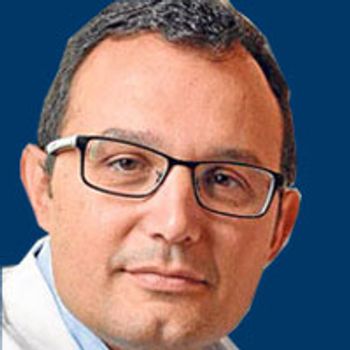
When envisioning the future treatment paradigms for myelodysplastic syndromes and acute myeloid leukemia, researchers predict that hypomethylating agents, immunotherapies, and multikinase and BCL-2 inhibitors are just a few examples of what the field can expect in the coming years.
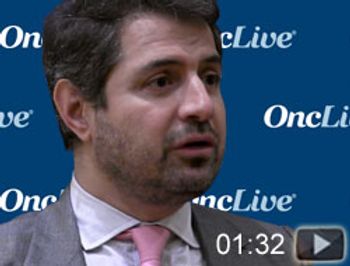
Elias Jabbour, MD, an associate professor in the Department of Leukemia at The University of Texas MD Anderson Cancer Center, discusses recent treatment advances and emerging subsets in acute lymphoblastic leukemia (ALL).
Novel agents being explored in the landscape of both peripheral and cutaneous T-cell lymphomas could lead to an expansion of treatment options for patients.
Updated results from the CheckMate-205 trial showed that nivolumab had an objective response rate of 73% in a cohort of patients with classical Hodgkin lymphoma who received brentuximab vedotin before and/or after autologous hematopoietic stem cell transplantation.
Ruben A. Mesa, MD, chair, Division of Hematology and Medical Oncology, deputy director, professor of Medicine, Mayo Clinic, discusses the NCCN guidelines for treatment of patients with myeloproliferative neoplasms (MPNs).

The latest company to suffer a public relations and stock price crisis based on its drug pricing strategy is Ariad Pharmaceuticals, which has been blasted by Sen. Bernard Sanders (I-VT) on Twitter and in a formal letter demanding justification for the price tag Ariad has attached to the chronic myelogenous leukemia drug ponatinib.
Craig B. Reeder, MD, assistant professor of Medicine, Mayo Clinic, discusses the role that R-CHOP will continue to have in the treatment of patients with aggressive lymphomas.
Allison C. Rosenthal, DO, hematology consultant, Mayo Clinic, discusses some of the treatment strategies for patients with indolent lymphomas.
The Committee for Medicinal Products for Human Use has recommended approval of nivolumab for the treatment of patients with relapsed/refractory classical Hodgkin lymphoma after autologous stem cell transplant and treatment with brentuximab vedotin.
Patients with large cell lymphomas have a standard approach of R-CHOP; however, those who fall under the activated B-cell-like (ABC) subtype are not likely to respond well to the regimen.
Increasing subsets of patients—both adult and pediatric—with acute lymphoblastic leukemia are being administered therapies designed to target their molecular subtypes, according to Elias Joseph Jabbour, MD.
Jerald P. Radich, MD, clinical research division, Fred Hutchinson Cancer Research Center, discusses which patients should receive the newly approval generic imatinib versus second-generation tyrosine-kinase inhibitors (TKIs) in chronic myeloid leukemia (CML).
Ruben Mesa, MD chair, hematology Mayo Clinic, MPN, discusses the significance of the new National Comprehensive Cancer Network (NCCN) guidelines for myeloproliferative neoplasms (MPN).
Erin Kopp, ACNP-BC, City of Hope Comprehensive Cancer Center, on managing the side effects of cutaneous T-cell lymphoma treatment.
Richard M. Stone, MD, chief of staff, program director, adult leukemia, institute physician, professor of medicine, Harvard Medical School, Dana-Farber Cancer Institute, discusses what is currently understood regarding the genetic landscape in acute myeloid leukemia (AML).
Steven M. Horwitz, MD, medical oncologist, Memorial Sloan Kettering, discusses the evolving role of CHOP in peripheral T-cell lymphoma. For years CHOP or a similar regimen has been the standard treatment for peripheral T-cell lymphoma.
Jessica K. Altman, MD, discussed the potential of agents poised to transform the landscape of acute myeloid leukemia.

As generic imatinib enters the market, new questions focus on a renewed role for the agent in conjunction with second-generation TKIs.
Jerald P. Radich, MD, clinical research division, Fred Hutchinson Cancer Research Center, discusses the impact of the approval of generic imatinib in chronic myelogenous leukemia (CML).
Advertisement
Advertisement
Trending on OncLive
1
FDA Accepts NDA for Daraxonrasib in Previously Treated Metastatic Pancreatic Cancer
2
FDA Approves Zidesamtinib in Pretreated ROS1+ NSCLC
3
Dr Galsky on Systemic Therapy Advances in Muscle-Invasive Bladder Cancer
4
Dr Patel on the Unmet Need in EGFR+ Transformed Small Cell Lung Cancer
5