


Hematologic Oncology
Latest News
Advertisement
Latest Videos




















































Advertisement
More News

Chimeric antigen receptor T-cell therapy has proven to be an effective adoptive cellular therapy against relapsed/refractory B-cell lymphoma.

Epcoritamab elicited a confirmed overall response rate of 82% by independent review committee assessment in patients with relapsed or refractory follicular lymphoma who received 2 or more prior systemic treatments, which exceeded the prespecified threshold for efficacy in the phase 1/2 EPCORE NHL-1 trial.

Ryan Jacobs, MD, expands on the initial efficacy and safety data seen with TNB-486, the need for more data on treatment-related CRS to improve toxicity management, and next steps planned for the investigation of this and other bispecific antibodies in relapsed/refractory follicular lymphoma.
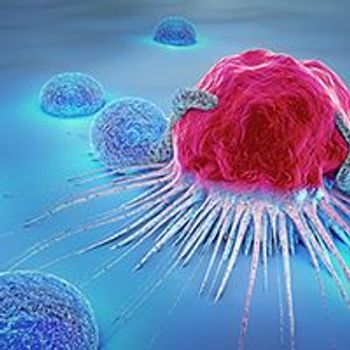
Fixed-duration treatment with single-agent mosunetuzumab resulted in a high complete response rate by end of treatment in patients with relapsed or refractory follicular lymphoma, according to updated data from the phase 2 GO29781 trial.

Harry Gill, MD, FRCP, FRCPath, discusses updated efficacy data and analysis of genomic characteristics for ropeginterferon alfa-2B in primary myelofibrosis.

Pau Montesinos, MD, PhD, discusses the preliminary results of the QUIWI trial, expands on the potential implications for the use of quizartinib plus chemotherapy in newly diagnosed patients with FLT3-ITD–negative acute myeloid leukemia, and details the next steps for this study and future research.

The addition of zanubrutinib to obinutuzumab produced superior clinical activity, prolonged survival, and had a favorable toxicity profile compared with obinutuzumab alone in heavily pretreated patients with relapsed/refractory follicular lymphoma.
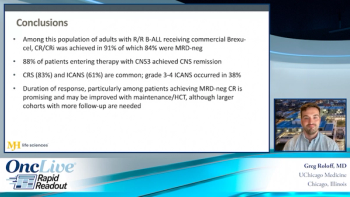
Greg Roloff, MD, reviews data on the outcomes of patients with relapsed/refractory B-ALL who received treatment with brexucabtagene autoleucel.
The CD20-targeted CAR T-cell therapy MB-106 led to responses and was well tolerated in patients with Waldenström macroglobulinemia who were refractory to a BTK inhibitor.

Single-agent treatment with the CDK9 inhibitor AZD4573 produced clinical activity in patients with relapsed/refractory peripheral T-cell lymphoma.

Panelists review data behind the combination of tafasitamab and lenalidomide in relapsed/refractory diffuse large B-cell lymphoma.
Amer Zeidan, MBBS, MHS, explains risk stratification in MDS, how the process has evolved over time, and the guidelines he typically follows.

Focused discussion on specific patient or disease factors that aid in the selection of therapy for patients with relapsed/refractory diffuse large B-cell lymphoma.

Hetty Carraway, MD, reviews how MDS is diagnosed and the common symptoms that patients who have MDS may present with.

Epcoritamab has been added to the National Comprehensive Cancer Network Clinical Practice Guidelines in Oncology for B-cell Lymphomas in the third- or later-line setting for the treatment of patients with diffuse large B-cell lymphoma, including patients with disease progression after transplant or CAR T-cell therapy, and as a category 2A preferred regimen for patients with histologic transformation of indolent lymphoma to DLBCL with no intention to proceed to transplant, including patients with disease progression after transplant or CAR T-cell therapy.

John M. Burke, MD, expands on the use of novel BTK inhibitor regimens in mantle cell lymphoma, treatment sequencing challenges and other unmet needs in diffuse-large B-cell lymphoma, the evolution of management strategies for myeloproliferative neoplasms, and the potential influence of new and emerging therapeutics in chronic lymphocytic leukemia.

The BrECADD combination had noninferior efficacy and superior tolerability compared with escalated BEACOPP in patients with advanced classical Hodgkin lymphoma, according to data from the phase 3 HD21 trial.

The FDA has issued a complete response letter to the new drug application seeking the approval of ADX-2191 for the treatment of patients with primary vitreoretinal lymphoma.
Ralph Boccia, MD, FACP, shares his clinical experience using luspatercept to treat patient with lower-risk MDS.
Expert oncologists discuss standard-of-care frontline treatments for patients with lower-risk MDS.
Matthew Frank, MD, PhD, discusses preliminary results from a phase 1 trial of a CD22-directed CAR-T therapy in relapsed/refractory large B-cell lymphoma.

The FDA has granted regular approval to blinatumomab (Blincyto) for the treatment of adult and pediatric patients with CD19-positive B-cell precursor acute lymphoblastic leukemia in first or second complete remission with minimal residual disease of at least 0.1%

The combination of favezelimab and pembrolizumab continued to demonstrate a manageable safety profile and antitumor activity in patients with relapsed/refractory classical Hodgkin lymphoma, irrespective of whether they received prior anti–PD-1 therapy.

A new drug application seeking the approval of imetelstat for use as a therapeutic option for transfusion-dependent anemia in adult patients with low- to intermediate-1 risk myelodysplastic syndrome who have not responded to, lost response to, or were not candidates for erythropoiesis-stimulating agents has been submitted to the FDA.
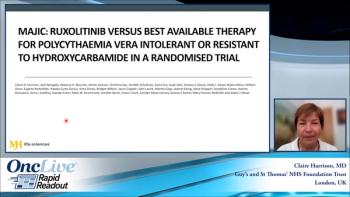
Claire Harrison, MD, reviews the use of ruxolitinib in patients who are ineligible for hydroxycarbamide for the management of polycythemia vera (PV).
Advertisement
Advertisement
Trending on OncLive
1
FDA Approves Bioequivalent Olaparib Across Previously Approved Cancer Indications
2
FDA Approves Zidesamtinib in Pretreated ROS1+ NSCLC
3
Sacituzumab Govitecan Yields Responses in Platinum-Resistant Ovarian Cancer
4
Dr Mardones on Giredestrant Plus Palbociclib in Estrogen Receptor+ Breast Cancer
5