




Hematologic Oncology
Latest News
Advertisement
Latest Videos
















































Advertisement
More News
Amer M. Beitinjaneh, MD, discusses updated results from phase 3 ALLELE trial investigating the use of tabelecleucel in Epstein-Barr Virus–positive post-transplant lymphoproliferative disease following allogeneic hematopoietic stem cell transplant or solid organ transplant after failure of rituximab with or without chemotherapy.
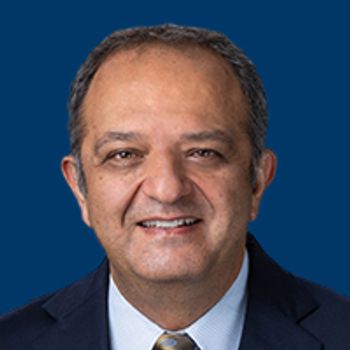
For patients with acute myeloid leukemia, advances in targeting minimal residual disease represents the next wave of advances in the field and is necessary to cure this disease.

Craig Sauter, MD, discusses prominent questions surrounding new and emerging therapies in the treatment of patients with hematologic malignancies.

Eunice Wang, MD, discusses reasons why some older patients with acute myeloid leukemia may not be eligible to receive hypomethylating therapy and highlights ongoing investigations within this older patient population

Andrew Ip, MD, delivers a keynote on the role for liquid biopsy and NGS in hematologic malignancies, including the barriers to implementing seamlessly into clinical practice.

Amandeep Salhotra, MD, discusses efficacy data from a phase 1 trial of Orca-Q in acute and chronic graft-vs-host disease.

Jorge E. Cortes, MD, discusses important questions in acute lymphoblastic leukemia to address, such as improved understanding of the role of allogenic stem cell transplant and the use of tyrosine kinase inhibitor combinations.

Expert hematologic oncologists discuss updates from the ASH 2022 Annual Meeting on emerging therapies for lower-risk MDS.
Following the ASH 2022 Annual Meeting, experts in hematologic oncology review updated data for luspatercept in lower-risk MDS.
Hematologic oncology experts give an overview of first- and second-line treatment options for lower-risk myelodysplastic syndromes.

Experts summarize recent updates on other approved or emerging second-line therapies for lower-risk MDS.
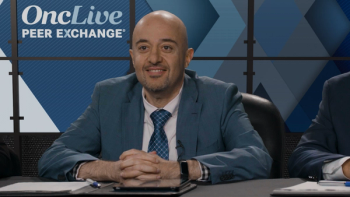
Dr Komrokji presents key data updates from the MEDALIST trial on luspatercept in patients with lower-risk MDS that were presented at the 2022 European Hematology Association (EHA) Congress and the 2022 ASH Annual Meeting.
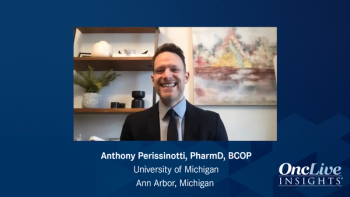
Guideline-directed treatment strategies available to patients with identified tumor lysis syndrome.
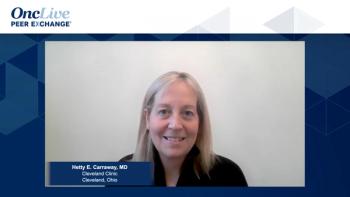
A brief overview of mainstay treatment options in the first-line setting of AML for patients deemed unfit for intensive chemotherapy.
An overview of the prophylactic strategies that may be utilized to reduce the likelihood of tumor lysis syndrome.
Expert oncologists highlight challenges in the setting of TP53-mutated AML and consider appropriate treatment strategies.
The addition of vedolizumab added to standard prophylaxis following unrelated allogeneic hematopoietic stem cell transplantation was superior to placebo at preventing lower gastrointestinal acute graft-vs-host disease.

Treatment with the cellular therapy Orca-T produced an improved graft-vs-host-disease and relapse-free survival rate in patients with high-risk myelodysplastic syndrome or acute leukemias.
Yago L. Nieto, MD, PhD, professor, Department of Stem Cell Transplantation and Cellular Therapy, Division of Cancer Medicine, The University of Texas MD Anderson Cancer Center, discusses findings from a phase 2 trial investigating panobinostat (Farydak), gemcitabine, busulfan, and melphalan plus autologous stem cell transplant (ASCT) in patients with high-risk or relapsed/refractory multiple myeloma.
Samer A. Srour, MB ChB, MS, discusses findings with Orca-Q, an investigational therapy consisting of enriched CD34+ stem cells plus T-cell subsets, in patients with high-risk hematologic malignancies eligible for myeloablative conditioning and allogeneic stem cell transplant.

Because of an economic burden on the healthcare system occurring through the per-patient cost of allogeneic hematopoietic cell transplant, novel treatments to replace transplant and prevent graft-vs-host disease are necessary.
A study did not find a correlation between the pharmacokinetics and pharmacodynamics of ruxolitinib for the treatment of patients 2 years of age and younger with graft-vs-host disease.

Orca-Q when using myeloablative conditioning with only tacrolimus monotherapy in the haploidentical stem cell transplant setting had acceptable safety and resulted in encouraging outcomes for patients with high-risk hematologic malignancies.
Checkpoint inhibitor–based salvage regimens significantly reduced the likelihood that patients with relapsed/refractory classic Hodgkin lymphoma undergoing transplant would need further salvage therapy vs conventional salvage regimens.
Orca-T produced a 100% overall survival rate in 8 patients with hematologic malignancies who received an allogeneic hematopoietic stem cell transplant with 7/8 non-permissive HLA mismatched donors.
Advertisement
Advertisement
Trending on OncLive
1
FDA Approves Zidesamtinib in Pretreated ROS1+ NSCLC
2
FDA Approves Bioequivalent Olaparib Across Previously Approved Cancer Indications
3
Sacituzumab Govitecan Yields Responses in Platinum-Resistant Ovarian Cancer
4
Ivonescimab Plus Chemotherapy Sustains OS Benefit Across Western and Asian Patients in Pretreated EGFR-Mutated NSCLC
5