




Hematologic Oncology
Latest News
Advertisement
Latest Videos





















































Advertisement
More News

Carmelo Carlo-Stella, MD, PhD, discusses the FDA approval of glofitamab for the treatment of patients with relapsed/refractory diffuse large B-cell lymphoma not otherwise specified or large B-cell lymphoma arising from follicular lymphoma, after at least 2 lines of systemic therapy.

Treatment with duvelisib led to a high response rate in patients with peripheral T-cell lymphoma, with activity favoring patients with PTCL not otherwise specified and angioimmunoblastic T-cell lymphoma.
Hetty Carraway, MD, highlights the importance of early diagnosis across all patients with MDS.
Ralph Boccia, MD, FACP, and Hetty Carraway, MD, review Myelodysplastic Syndromes [MDS] risk stratification criteria used in their practices.

Gregory W. Roloff, MD, discusses real-world outcomes from treatment with brexucabtagene autoleucel in adults with relapsed/refractory B-cell acute lymphoblastic leukemia.

Nidia Zapata, MD, discusses the role of triplet therapy in the treatment of patients with acute myeloid leukemia.

The phase 1 PLAT-08 trial investigating SC-DARIC33 in pediatric and young-adult patients with relapsed/refractory CD33-positive acute myeloid leukemia has been paused following the report of a grade 5 serious adverse effect.
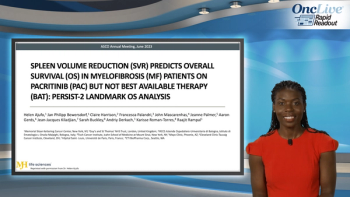
Expert Helen Ajufo, MD, reviews data from the PERSIST-2 overall survival analysis and its implications for the management of patients with myelofibrosis.

Nidia Zapata, MD, discusses the role of triplet therapy in the treatment of patients with acute myeloid leukemia.

Frontline treatment with the combination of brentuximab vedotin, nivolumab, doxorubicin, and dacarbazine led to an overall response rate of 98% and a complete response rate of 93% in patients with early-stage, classical Hodgkin lymphoma.

Zilurgisertib With or Without Ruxolitinib Shows Early Tolerability, Activity in Anemic Myelofibrosis
Administration of the selective ALK-2 inhibitor zilurgisertib alone or in combination with ruxolitinib was safe, well tolerated, and showed preliminary signals of clinical activity in patients with primary or secondary myelofibrosis and disease-related anemia.
Dr Phillips discusses the FDA approval of epcoritamab in patients with relapsed/refractory DLBCL key efficacy and safety findings from the EPCORE NHL-1 trial, and the potential future of bispecific antibodies in this setting.

OMS906, a MASP-3 inhibitor, normalized hemoglobin, lactate dehydrogenase, and reticulocytes levels in patients with paroxysmal nocturnal hemoglobinuria.
Gilteritinib led to a 48% reduction in disease recurrence for patients with FLT3-ITD–mutant acute myeloid leukemia and detectable minimal residual disease pre and post hematopoietic stem cell transplant compared with placebo, highlighting a role for treatment in this subgroup of patients.

The BET inhibitor BMS-986158 combined with ruxolitinib led to robust spleen volume reduction with acceptable tolerability in patients with myelofibrosis. When the BET inhibitor was combined with fedratinib, the safety profile was also determined to be manageable.

The novel SYK inhibitor cevidoplenib dosed at 400 mg twice per day led to robust platelet responses in patients with persistent or chronic primary immune thrombocytopenia who did not respond or relapsed after at least 1 prior therapy.
Mark J. Levis, MD, PhD, discusses data from the phase 3 BMT CTN 1506/MORPHO trial of gilteritinib as maintenance therapy following allogeneic stem cell transplant in patients With FLT3-ITD–positive acute myeloid leukemia.
Treatment with ponatinib plus reduced-intensity chemotherapy led to an improvement in minimal residual disease-negative complete remission rate compared with imatinib plus reduced-intensity chemotherapy in newly diagnosed patients with Philadelphia chromosome-positive acute lymphoblastic leukemia.

Harry Gill, MD, FRCP, FRCPath, discusses the investigation of an all-oral combination of arsenic trioxide, all trans retinoic acid, and ascorbic acid in patients with newly diagnosed acute promyelocytic leukemia.

Elias Jabbour, MD, discusses efficacy data from the phase 3 PhALLCON trial of ponatinib plus reduced-intensity chemotherapy vs imatinib plus reduced-intensity chemotherapy in newly diagnosed patients with Philadelphia chromosome–positive acute lymphoblastic leukemia.

Treatment with the combination of epcoritamab, rituximab, and lenalidomide led to responses and durable remissions in patients with relapsed/refractory follicular lymphoma.
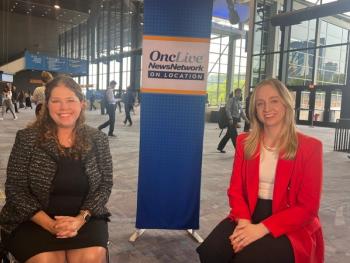
Gaining Ground in Gynecologic and Hematologic Cancers at ASCO 2023: Drs Herrera, Westin, and Jabbour
OncLive® will be LIVE with OncLive® News Network: On Location at the 2023 ASCO Annual Meeting. Each day, we will broadcast a series of interviews with top thought leaders, to learn their thoughts and reactions to data presented across hematologic oncology during the conference.
Nivolumab in combination with doxorubicin, vinblastine, and dacarbazine (AVD) resulted in prolonged progression-free survival (PFS) compared with brentuximab vedotin plus AVD in patients with advanced-stage classical Hodgkin lymphoma.

Claire Roddie, MD, discusses the patient population and topline efficacy findings from the phase 1/2 FELIX trial, which is investigating the CD19-directed CAR T-cell therapy obecabtagene autoleucel in patients with relapsed/refractory adult B-cell acute lymphoblastic leukemia.

Brexucabtagene autoleucel elicited high rates of complete remission with minimal residual disease negativity in real-world patients with relapsed or refractory B-cell acute lymphoblastic leukemia who received the CAR T-cell product as post-approval, standard-of-care treatment, according to data from a retrospective study.
Advertisement
Advertisement
Trending on OncLive
1
FDA Approves Zidesamtinib in Pretreated ROS1+ NSCLC
2
FDA Approves Bioequivalent Olaparib Across Previously Approved Cancer Indications
3
Sacituzumab Govitecan Yields Responses in Platinum-Resistant Ovarian Cancer
4
Ivonescimab Plus Chemotherapy Sustains OS Benefit Across Western and Asian Patients in Pretreated EGFR-Mutated NSCLC
5