


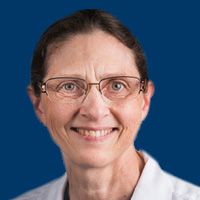






























































Edward S. Kim, MD, highlights efforts being made to overcome resistance to EGFR TKIs in patients with EGFR-mutated NSCLC and factors to consider when determining sequential treatment.
Edward S. Kim, MD, highlights efforts being made to overcome resistance to EGFR TKIs in patients with EGFR-mutated NSCLC and factors to consider when determining sequential treatment.

Effective early detection and optimal management are critical in preventing high-grade interstitial lung disease, a treatment-related adverse effect of fam-trastuzumab deruxtecan-nxki in patients with HER2-positive metastatic breast cancer.

Distinct gene signatures, with the exception of estrogen receptor signaling and BRCAness, are associated with pathologic complete response and invasive disease-free survival, in patients with HER2-positive breast cancer who received trastuzumab and pertuzumab alone or in combination with paclitaxel.

The differentiated TROP2-directed antibody-drug conjugate datopotamab deruxtecan was found to have promising antitumor activity with a manageable safety profile in heavily pretreated patients with triple-negative breast cancer.
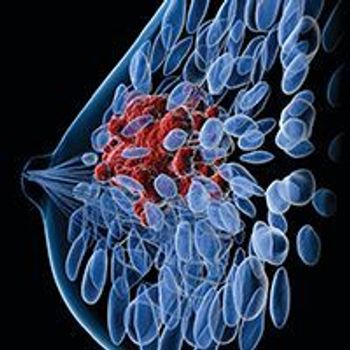
Approximately 30% of breast cancer tumors can covert from, or to, HER2-low status, underscoring the need to retest for HER2 expression upon relapse.

Thomas Bachelot, MD, discussed how to approach treatment of patients with HER2-positive breast cancer and CNS metastases and the impact of tucatinib in this population.

Although administering trastuzumab for 1 year in patients with HER2-positive early breast cancer continues to be standard, a 9-week de-escalation approach may be a reasonable option in a large proportion of the real-world HER2-positive population.
Ribociclib plus endocrine therapy improved overall survival and post-progression outcomes in pre- or postmenopausal patients with hormone receptor–positive, HER2-negative advanced breast cancer irrespective of age.

Treatment with atezolizumab plus carboplatin demonstrated early clinical activity in patients with metastatic invasive lobular breast cancer, with slight trends toward increased clinical benefit in patients with triple-negative ILC and responders with higher PD-L1 expression, according to initial findings of the non-randomized phase 2 GELATO trial.

Daratumumab plus lenalidomide and dexamethasone, or plus bortezomib and dexamethasone each led to higher rates of minimal residual disease negativity compared with lenalidomide plus dexamethasone or bortezomib plus dexamethasone alone in patients with relapsed/refractory multiple myeloma who were enrolled in the phase 3 POLLUX and CASTOR trials, translating to prolonged, durable remissions.

During this search for a breast cancer support system, my mother also investigated complementary therapies that peers had used to help cope with their fears, adverse effects, and feelings of helplessness.

The combination of durvalumab plus tremelimumab and platinum-based chemotherapy resulted in a significant improvement in overall survival compared with chemotherapy alone in the frontline treatment of patients with stage IV non–small cell lung cancer.
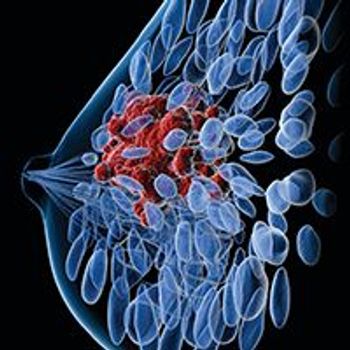
Post-treatment care for breast cancer survivors must be personalized to address each survivor’s unique experiences.

Erminia Massarelli, MD, MS, PhD, shares key updates in immunotherapy and targeted treatment for patients with NSCLC

Although the standard-of-care treatment for patients with metastatic pancreatic cancer remains largely unchanged with multi-agent chemotherapy, the role for multidisciplinary care has expanded significantly in recent years.

Ravi Salgia, MD, PhD, discusses pivotal trials that have shaken up the SCLC treatment paradigm and novel immunotherapy regimens under investigation.

The recently FDA-approved loncastuximab tesirine-lpyl has been added to the latest National Comprehensive Cancer Network Clinical Practice Guidelines for B-cell lymphomas.
Arsen Osipov, MD, discusses the potential for ongoing research with immunotherapeutic approaches in gastrointestinal malignancies, including CAR T-cell therapy, bispecific T-cell engagers, and vaccines.

Olwen Hahn, MD, discusses the clinical significance of the KATHERINE and FeDeriCa trials in the treatment of patients with early-stage HER2-postive breast cancer.

The FDA has granted priority review to applications that are seeking 2 approvals of pembrolizumab in combination with lenvatinib in advanced renal cell carcinoma and advanced endometrial carcinoma.

The highly heterogeneous nature of cholangiocarcinoma at the genomic, epigenetic, and molecular levels has led to the development of effective new treatments for patients with these rare malignant tumors.

Syed M. Quadri, MD, discusses the role of surgery in early-stage and locally advanced lung cancer, as well future directions with robotic and minimally invasive surgery.

The cancer-specific biomarker TRIM63 was highly expressed in all classes of microphthalmia-associated transcription factor family aberration–associated renal cell carcinoma compared with other subtypes of RCC, where TRIM63 expression was low or absent.

The FDA has approved pembrolizumab for use in combination with trastuzumab, fluoropyrimidine- and platinum-containing chemotherapy for the frontline treatment of patients with locally advanced unresectable or metastatic HER2 positive gastric or gastroesophageal junction adenocarcinoma.
Although checkpoint inhibition has been shown to benefit some patients with metastatic triple-negative breast cancer, there is not yet a role for immune-based treatment in the neoadjuvant setting.