






































The FDA has accepted a supplemental biologics license application for bevacizumab (Avastin) for the first-line treatment of advanced ovarian cancer.
The FDA has accepted a supplemental biologics license application for bevacizumab (Avastin) for the first-line treatment of advanced ovarian cancer.
Mark J. Truty, MD, discusses sequencing treatments and advances in imaging technology in pancreatic cancer.
Victoria M. Villaflor, MD, discusses driver mutations in NSCLC and remaining challenges in treating patients with targetable disease.
The FDA has approved intravenous rolapitant for use in combination with other antiemetic agents to treat delayed chemotherapy-induced nausea and vomiting in adults.
Ezra Cohen, MD, discusses the role of immunotherapy, the potential of entrectinib, and the importance of multidisciplinary teams for the treatment of patients with head and neck cancer.

Ten-year results from the TEAM trial on exemestane alone and sequential treatment with tamoxifen followed by exemestane for postmenopausal women with hormone receptor-positive breast cancer showed they were reasonable treatment options.
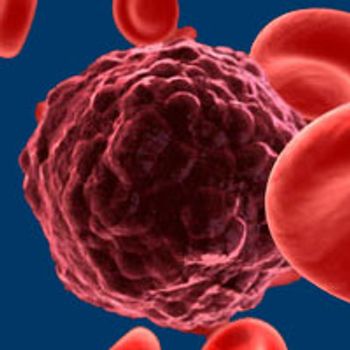
Treatment with prolonged native E. coli asparaginase therapy for children with acute lymphoblastic leukemia or non-Hodgkin lymphoma not only failed to improve survival versus the standard regimen, but also resulted in an increase in infections and allergy.
Andre Goy, MD, discusses the excitement surrounding novel therapies on the horizon in MCL.
Rachel A. Freedman, MD, discusses treating patients with HER2-positive breast cancer who develop CNS metastases, and the promise that neratinib holds in this patient population.
Alessandra Ferrajoli, MD, discusses the risks of developing secondary malignancies in patients with chronic lymphocytic leukemia.
The combination of clofarabine, cyclophosphamide, and etoposide reached an overall response rate of 41% in a small study of children and adolescents with relapsed/refractory acute myeloid leukemia.
Erika P. Hamilton, MD, discusses the current treatment landscape for patients with HER2-positive breast cancer.

Higher-dose, once-weekly carfilzomib (Kyprolis) demonstrated superior efficacy for patients with relapsed/refractory multiple myeloma compared with a lower-dose, twice-weekly regimen.
Daniel Zandberg, MD, discusses results from the HAWK study as well as current combination approaches for patients with head and neck cancer.
Reem Karmali, MD, discusses ongoing key trials of CAR T-cell therapy, the chronic safety concerns with the treatment, and what combinations have the most potential.
The presence of metastatic lymph nodes was directly correlated with poorer survival in patients with oral cancer, according to findings published in the Journal of Clinical Oncology.
Dmitriy Zamarin, MD, PhD, discusses the role of immunotherapy for patients with gynecologic malignancies.

Investigators sought to assess the efficacy of adjuvant surgery after concurrent chemoradiotherapy in patients with bulky squamous cell carcinoma of the uterine cervix

The FDA has awarded the combination of dabrafenib (Tafinlar) and trametinib (Mekinist) a breakthrough therapy designation for the adjuvant treatment of patients with stage III melanoma with a BRAF V600 mutation following complete resection.

The UK’s National Institute for Health and Care Excellence has issued guidelines recommending against nivolumab (Opdivo), lenvatinib (Lenvima), and sorafenib (Nexavar).
Daniel M. Geynisman, MD, discusses remaining challenges in the landscape of RCC, despite progress with systemic therapies and the pivotal ongoing studies combining immunotherapy and targeted therapy.

Adding the immune stimulator ImmunoPulse IL-12 to pembrolizumab (Keytruda) produced promising activity among patients with melanoma identified as unlikely responders to anti–PD-1 therapies.
Andre Goy, MD, discusses the recent success with CAR T-cell therapy, and what is on the horizon for this therapeutic option across hematologic malignancies.

Maintenance rituximab (Rituxan) following autologous stem-cell transplantation improved survival in younger patients with mantle cell lymphoma, according to the LyMa trial.
The FDA has approved the CD19-directed CAR T-cell therapy axicabtagene ciloleucel as a treatment for adults with relapsed or refractory non-Hodgkin lymphoma.