

Shortages of cancer drugs caused many oncologists and hematologists to choose suboptimal treatment plans for their patients last year, and government efforts have done little to boost the availability of the hard-to-find medications.
Shortages of cancer drugs caused many oncologists and hematologists to choose suboptimal treatment plans for their patients last year, and government efforts have done little to boost the availability of the hard-to-find medications.

A British study has confirmed that 10 years of adjuvant tamoxifen substantially reduces late breast cancer recurrence and mortality among women with estrogen receptor-positive disease.
Mark R. Gilbert, MD, from the University of Texas MD Anderson Cancer Center in Houston, Texas, discusses findings from the RTOG 0825 phase III trial evaluating bevacizumab in patients with newly diagnosed glioblastoma.

Bevacizumab combined with either of two chemotherapy backbones improved overall survival by 3.7 months versus chemotherapy alone in patients with advanced cervical cancer.
Antoni Ribas, MD, PhD, from UCLA's Jonsson Comprehensive Cancer Center, discusses preliminary results of an ongoing trial investigating the anti-PD-1 antibody lambrolizumab in patients with advanced melanoma.
Suresh S. Ramalingam, MD, from the Winship Cancer Institute, describes results from the phase II GALAXY-1 trial that explored the Hsp90 inhibitor ganetespib as a second-line treatment for patients with advanced lung adenocarcinoma.

Interim findings from a randomized, global, phase III study indicate that the multi-targeted drug sorafenib nearly doubled PFS for patients with differentiated thyroid cancer resistant to radioactive iodine therapy.

Adding bevacizumab to a standard treatment regimen for glioblastoma consisting of chemoradiation with temozolomide in newly diagnosed patients does not improve OS and did not significantly improve PFS.
Richard G. Gray, MA, MSc, from the University of Oxford in Oxford, United Kingdom, discusses the phase III aTTom trial that explored a longer duration of treatment with tamoxifen in women with estrogen receptor-positive early breast cancer.

Marcia Brose, MD, PhD, from the Abramson Cancer Center at the University of Pennsylvania, discusses the phase III DECISION study that explored sorafenib in radioactive iodine-resistant differentiated thyroid cancer.
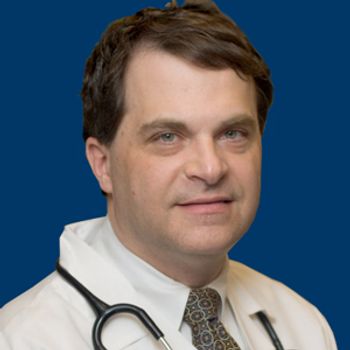
Adding the white blood cell booster granulocyte-macrophage colony-stimulating factor to the immunotherapy ipilimumab extended survival in patients with metastatic melanoma when compared with ipilimumab alone and may be a safer alternative than monotherapy.
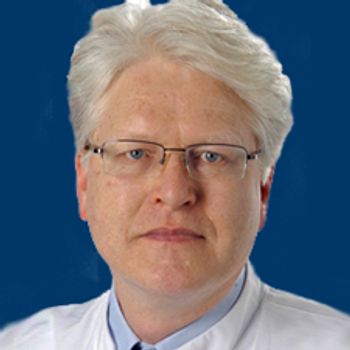
Volker Heinemann, MD, PhD, from the University of Munich, discusses results from the phase III FIRE-3 trial that looked at FOLFIRI plus bevacizumab or cetuximab as a first-line treatment for patients with wild-type KRAS metastatic colorectal cancer.

Patients with human papilloma virus–positive oropharyngeal cancer and their spouses may find some reassurance in a study that found that partners are no more likely to be infected by HPV than the general population.

An oral targeted drug already approved by the FDA for the treatment of kidney cancer and soft tissue sarcoma has been found to extend disease-free survival in women with advanced ovarian cancer.
Krishnansu S. Tewari, MD, from the University of California Irvine in Orange, California, discusses the effectiveness of bevacizumab in relapsed and metastatic cervical cancer.
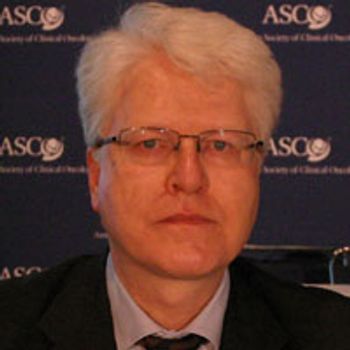
Frontline cetuximab plus FOLFIRI chemotherapy improved overall survival by 3.7 months versus bevacizumab plus FOLFIRI in patients with KRAS wild-type metastatic colorectal cancer.

Nivolumab has demonstrated an overall objective response rate of 31% with a median duration of two years in patients with advanced melanoma.
Mario Sznol, MD, from the Yale Cancer Center, discusses the long-term follow-up results from an expanded phase I study investigating the anti-PD-1 drug nivolumab in patients with advanced melanoma.
Gypsyamber D‘Souza, PhD, MPH, MS, from Johns Hopkins University, discusses the prevalence of oral HPV infections in the spouses of patients with HPV-positive oropharyngeal cancer.

Andreas du Bois, MD, from Kliniken Essen Mitte in Essen, Germany, discusses a phase III trial exploring the effectiveness of treatment with maintenance pazopanib for patients with advanced ovarian cancer.
Richard D. Carvajal, MD, a medical oncologist at Memorial Sloan-Kettering Cancer Center, describes the success of MEK inhibition in patients with advanced uveal melanoma using the agent selumetinib.

New data on emerging immunotherapies and fresh findings about established agents are likely to dominate clinical and marketplace news from this year's Annual Meeting of the ASCO, according to industry analysts.

Joyce A. O'Shaughnessy, MD, the Co-Director of Breast Cancer Research at the Baylor Charles A. Sammons Cancer Center, describes potentially practice changing findings from the BOLERO-3 trial.
The American Society of Clinical Oncology kicked off its 49th Annual Meeting with leaders urging all stakeholders in cancer care to vigorously oppose cuts to vital US biomedical research funding.
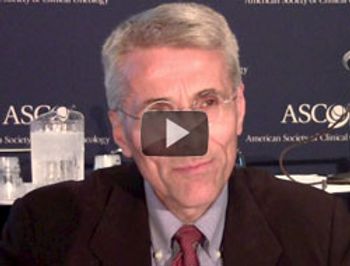
Richard Pazdur, MD, from the FDA's Center for Drug Evaluation and Research, emphasizes the importance of adequate data supporting proposals to the FDA for breakthrough therapy designations.

This article summarizes 4 abstracts that will be discussed at the 49th Annual ASCO Meeting, focused on the treatment of patients with head and neck cancer.

Combining the checkpoint antibodies ipilimumab and nivolumab led to deep tumor regression in approximately one-third of patients with advanced melanoma.

Men with a high level of cardiovascular fitness at middle age had a reduced risk of developing and dying from lung and colorectal cancer later in life.

The novel selective PI3K-delta inhibitor idelalisib produced rapid and prolonged tumor shrinkage in patients with relapsed or refractory chronic lymphocytic leukemia who received the drug as a monotherapy.

Active surveillance following radical orchiectomy is an effective treatment strategy for men with stage I seminoma.