
Alessandra Tedeschi MD, Department of Hematology, Azienda Ospedaliera Niguarda Ca' Granda in Milan, Italy, discusses the long-term findings of the phase III RESONATE-2 trial during the 2019 European Hematology Association Congress.
Alessandra Tedeschi MD, Department of Hematology, Azienda Ospedaliera Niguarda Ca' Granda in Milan, Italy, discusses the long-term findings of the phase III RESONATE-2 trial during the 2019 European Hematology Association Congress.

Othman Al-Sawaf, MD, discusses findings from the CLL14 trial, the rationale for exploring this proposed combination, and shares his thoughts on the emerging treatment paradigms in chronic lymphocytic leukemia.

The combination of rigosertib and azacitidine demonstrated improved response rates over single-agent azacitidine in patients with higher-risk myelodysplastic syndrome, including patients naïve to a hypomethylating (HMA) agent and those who were refractory to HMAs.

Naval G. Daver, MD, discusses the data that support quizartinib so far, ongoing investigations with this drug in the frontline setting, and the potential for the agent to be approved by the FDA.

Frontline therapy with ibrutinib was successfully administered for more than 60 months in patients with chronic lymphocytic leukemia aged 65 years and older and provided improved progression-free and overall survival compared with chlorambucil.
Imetelstat treatment may allow patients with debilitating anemia due to myelodysplastic syndrome to remain transfusion-free for extended periods of time.
The triplet regimen of elotuzumab plus pomalidomide and dexamethasone led to a 46% reduction in the risk of death compared with pomalidomide/dexamethasone alone in patients with relapsed/refractory multiple myeloma, according to updated findings of the phase II ELOQUENT-3 trial.
Simon Rule, MD, PhD, Plymouth University Medical School, discusses results of the phase III MabCute study evaluating subcutaneous rituximab as maintenance after standard subcutaneous rituximab induction and maintenance in patients who have relapsed or refractory indolent non-Hodgkin lymphoma.
Ajai Chari, MD, Icahn School of Medicine at Mount Sinai, discusses INSIGHT MM (NCT02761187), the largest global, prospective, non-interventional, observational study on multiple myeloma to date.
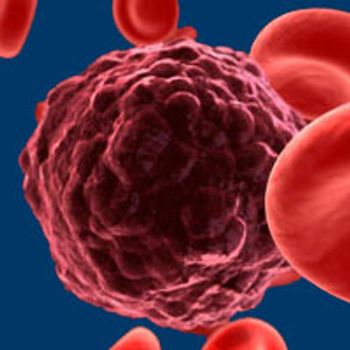
At a median follow-up of 14.1 months, the chimeric antigen receptor T-cell therapy tisagenlecleucel achieved an objective response rate of 52% in adult patients with relapsed/refractory diffuse large B-cell lymphoma.
David Sallman, MD, assistant member, Moffitt Cancer Center, discusses the combination of APR-246 and azacitidine as a treatment for patients with TP53-mutant myelodysplastic syndrome and acute myeloid leukemia.
Anthony R. Mato, MD, hematologic oncologist, director, CLL Program, Memorial Sloan Kettering Cancer Center, discusses the safety and efficacy of umbralisib in patients with chronic lymphocytic leukemia.
The addition of elotuzumab to pomalidomide and dexamethasone cut the risk of disease progression or death by 46% compared with pomalidomide and dexamethasone alone for patients with relapsed/refractory multiple myeloma.
The combination of duvelisib and fludarabine-cyclophosphamide-rituximab demonstrated efficacy as a frontline treatment for younger patients with chronic lymphocytic leukemia.
Quizartinib reduced the risk of death by 24% compared with salvage chemotherapy in patients with FLT3-ITD–positive relapsed/refractory acute myeloid leukemia after first-line treatment with or without hematopoietic stem cell transplantation.
The addition of polatuzumab vedotin to bendamustine and rituximab induced a higher rate of complete responses by PET scan compared with BR alone in patients with relapsed/refractory diffuse large B-cell lymphoma.
A CAR T-cell therapy specific for CD22 was safe and provided high response rates for pediatric patients with B-cell acute lymphoblastic leukemia who had failed chemotherapy and/or a CD19-targeted CAR T-cell treatment.
Jorge E. Cortes, MD, professor and deputy chair, Department of Leukemia, The University of Texas MD Anderson Cancer Center, discusses the results of quizartinib in patients with relapsed/refractory acute myeloid leukemia.
Matthew Davids, MD, MMSc, associate director, Center for Chronic Lymphocytic Leukemia, Dana-Farber Cancer Institute, discusses duvelisib plus fludarabine-cyclophosphamide-rituximab (FCR) as a frontline therapy for the treatment of younger patients with chronic lymphocytic leukemia.
A compound CLL1/CD33-targeted CAR T-cell therapy showed a complete remission with minimal residual disease (MRD) negativity in a single-patient case study from an ongoing phase I study for relapsed/refractory acute myeloid leukemia.
Ramon Garcia-Sanz, MD, PhD, clinician, department of Hematology, Hospital Universitario de Salamanca, discusses the results of brentuximab vedotin (Adcetris) plus ESHAP followed by autologous stem cell transplant in patients with relapsed/refractory Hodgkin lymphoma.
Susan E. Prockop, MD, pediatric oncologist, Memorial Sloan Kettering Cancer Center, discusses tabelecleucel in patients with Epstein-Barr virus (EBV)-associated post-transplant lymphomas.

PET can be safely used to guide treatment in patients with untreated advanced-stage classical Hodgkin lymphoma after 2 cycles of upfront de-escalated BEACOPP.

The combination of obinutuzumab and chlorambucil reduced the risk of death by 24% versus rituximab plus chlorambucil in treatment-naïve patients with chronic lymphocytic leukemia with comorbidities.
Paul A. Hamlin, MD, chief of the Medical Oncology Service at Memorial Sloan Kettering Cancer Center, discusses results of cerdulatinib in chronic lymphocytic leukemia (CLL), follicular lymphoma and T-cell lymphoma.
Christian Winther Eskelund, MD, Copenhagen University Hospital, Rigshospitalet, discusses TP53-mutated mantle cell lymphoma (MCL).
The first known trial of combined ublituximab (TG-1101), ibrutinib (Imbruvica), and umbralisib (TGR-1202) showed that the combination was well tolerated and had activity across heavily pretreated patients with high-risk B-cell malignancies.
Combination ibrutinib (Imbruvica) and venetoclax (Venclexta) set the bar high and aims to achieve eradication of minimal residual disease within a year of treatment in patients with relapsed or refractory chronic lymphocytic leukemia.
The combination of obinutuzumab and CC-122 was well tolerated and demonstrated promising response rates and durable remissions in patients with relapsed or refractory diffuse large B-cell lymphoma, follicular lymphoma, and marginal zone lymphoma.

Matthew J. Matasar, MD, discusses the potential of polatuzumab vedotin in patients with relapsed/refractory follicular lymphoma or diffuse large B-cell lymphoma.