

Earlier use of acalabrutinib was associated with improved survival in patients with chronic lymphocytic leukemia.
Earlier use of acalabrutinib was associated with improved survival in patients with chronic lymphocytic leukemia.

The administration of CAR T-cell therapy in the outpatient setting was deemed feasible and safe in patients with relapsed/refractory NHL.

Ponatinib, chemo, and alloHSCT offer long-term survival in adult Ph+ ALL, per 4-year PONALFIL trial data at 2024 EHA Congress.

Englumafusp alfa plus glofitamab showed activity and tolerability in patients with relapsed/refractory aggressive B-cell non-Hodgkin lymphoma.

Patients with new or worsening anemia from their myelofibrosis did not experience lessened clinical benefit of ruxolitinib treatment.

The CD7-targeted CAR T-cell therapy WU-CART-007 had a manageable safety profile and elicited preliminary efficacy signals in relapsed/refractory T-ALL/LBL.

Blinatumomab consolidation improved MRD clearance over chemotherapy in DS B-ALL patients, according to ALLTogether1 DS study results.

Time from diagnosis, elevated WBC count, and VAF were all significantly associated with an increased risk of disease progression of polycythemia vera.

Manali Kamdar, MD, discusses the results of the phase 3 TRANSFORM trial in relapsed/refractory large B-cell lymphoma (LBCL) that were presented during the 2021 ASH Annual Meeting & Exposition.

Ibrahim Aldoss, MD, discusses the impact of enhanced lymphodepletion on responses with WU-CART-007 in relapsed/refractory T-ALL/LBL.

HOVON-146 showed integrating blinatumomab into pre-phase and consolidation therapy improved outcomes in newly diagnosed B-ALL.

Over a 4-year period, most patients with lower-risk myelofibrosis experienced disease progression, according to the prospective MOST study.

Clinically meaningful activity was found across all subgroups in a posthoc subgroup analysis of patients with MCL treated with liso-cel.

Zanubrutinib/venetoclax elicited a 100% overall response rate in untreated chronic lymphocytic leukemia harboring 17p deletions or TP53 mutations.
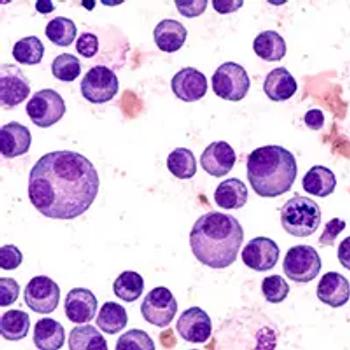
Ide-cel induced improved PFS outcomes in patients with relapsed/refractory multiple myeloma with characteristics including lower tumor burden.

Harry Gill, MD, discusses the importance of offering patients with APL an entirely oral treatment regimen, key efficacy findings from this trial, and the tolerability of this regimen.

Using polatuzumab vedotin instead of vincristine in a reduced-dose regimen of rituximab, cyclophosphamide, doxorubicin, and prednisone was not found to increase grade 3/4 hematologic toxicities, infection risk, or neuropathy in elderly patients with untreated diffuse large B-cell lymphoma.

OMS906, a MASP-3 inhibitor, normalized hemoglobin, lactate dehydrogenase, and reticulocytes levels in patients with paroxysmal nocturnal hemoglobinuria.

Ibrutinib did not prolong survival vs placebo and is linked with increased susceptibility to bleeding in patients with asymptomatic early-stage chronic lymphocytic leukemia, suggesting that a watch-and-wait approach should continue as the standard for this population.
Gilteritinib led to a 48% reduction in disease recurrence for patients with FLT3-ITD–mutant acute myeloid leukemia and detectable minimal residual disease pre and post hematopoietic stem cell transplant compared with placebo, highlighting a role for treatment in this subgroup of patients.

Treatment with fixed-duration venetoclax plus rituximab continued to show superior survival benefit vs bendamustine and rituximab in patients with relapsed/refractory chronic lymphocytic leukemia, according to 7-year follow up data from the phase 3 MURANO trial.

The BET inhibitor BMS-986158 combined with ruxolitinib led to robust spleen volume reduction with acceptable tolerability in patients with myelofibrosis. When the BET inhibitor was combined with fedratinib, the safety profile was also determined to be manageable.
Administration of a single infusion of ciltacabtagene autoleucel prolonged progression-free survival, generated sustained responses, and continued to demonstrate a manageable safety profile in patients with relapsed/refractory multiple myeloma who were heavily pretreated, according to final results from the phase 1b/2 CARTITUDE-1 study.

Rusfertide demonstrated freedom from phlebotomy, sustained hematocrit control, and 12-week treatment completion in 69.2% vs 18.5% of patients with phlebotomy-dependent polycythemia vera who received placebo, meeting the primary end point of the phase 2 REVIVE trial.
The novel SYK inhibitor cevidoplenib dosed at 400 mg twice per day led to robust platelet responses in patients with persistent or chronic primary immune thrombocytopenia who did not respond or relapsed after at least 1 prior therapy.
Mark J. Levis, MD, PhD, discusses data from the phase 3 BMT CTN 1506/MORPHO trial of gilteritinib as maintenance therapy following allogeneic stem cell transplant in patients With FLT3-ITD–positive acute myeloid leukemia.
Nikhil C. Munshi, MD, discusses the efficacy data from the final analysis of the phase 1b/2 CARTITUDE-1 trial of ciltacabtagene autoleucel in patients with relapsed/refractory multiple myeloma.

Ruxolitinib was found to improve spleen volume and tumor symptom score in patients with myelofibrosis, irrespective of their anemia and transfusion status, according to data from a post-hoc analysis of the phase 3 COMFORT-I and -II trials.

Although the event rate did reach the expected level and longer follow-up is needed to adequately assess long-term toxicities, data from the phase 3 IELSG37 trial support the omission of radiotherapy in patients with primary mediastinal large B-cell lymphoma who achieve a complete metabolic response following chemoimmunotherapy.
Mohamad Mohty, MD, PhD, discusses extended follow-up from cohort A of the phase 2 MagnetisMM-3 trial of elranatamab in patients with relapsed/refractory multiple myeloma.