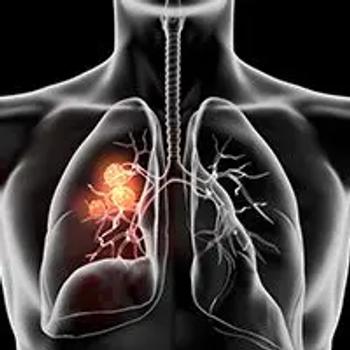
Updated data from a phase 2 trial presented at the 2021 World Conference on Lung Cancer showed that neoadjuvant osimertinib induced a pathologic complete response among patients with surgically resectable EGFR-mutant non–small cell lung cancer.

Your AI-Trained Oncology Knowledge Connection!


Updated data from a phase 2 trial presented at the 2021 World Conference on Lung Cancer showed that neoadjuvant osimertinib induced a pathologic complete response among patients with surgically resectable EGFR-mutant non–small cell lung cancer.

Mobocertinib demonstrated clinical activity in previously platinum-treated patients with EGFR exon 20 insertion mutation–positive non–small cell lung cancer whether or not they received a prior PD-1/PD-L1 inhibitor.

Nicholas Robert, MD, discusses the importance of evaluating trends in biomarker testing in metastatic non–small cell lung cancer.

Collin Blakely MD, PhD, discusses the rationale for utilizing osimertinib in resectable EGFR-mutant non–small cell lung cancer.

The combination of ado-trastuzumab emtansine and osimertinib demonstrated minimal antitumor effects on patients with EGFR-mutated non–small cell lung cancer, according to interim data of the phase 2 TRAEMOS trial.

Selpercatinib demonstrated robust and durable efficacy with a favorable safety profile in Chinese patients with advanced, RET fusion–positive non–small cell lung cancer.

Sotorasib elicited systemic durable anticancer activity with intracranial complete responses and continued intracranial stabilization in patients with KRAS G12C–mutated non–small cell lung cancer and stable brain metastases previously treated with radiation or surgery.

Approximately 20% of patients with malignant pleural mesothelioma were diagnosed with COVID-19 during the first year of the pandemic at the Vall d’Hebron University Hospital, leading to a high hospitalization and mortality rate.

Tislelizumab plus chemotherapy demonstrated clinically meaningful improvements in progression-free survival vs standard of care chemotherapy as a first-line treatment for patients with stage IIIB and those with stage IV advanced squamous non–small cell lung cancer.

The combination of osimertinib plus pelcitoclax demonstrated an acceptable safety profile and preliminary efficacy at the recommended phase 2 dose in patients with EGFR-positive non–small cell lung cancer that is resistant to third-generation EGFR inhibitors or treatment naïve.

In patients with advanced RET fusion–positive non-small cell lung cancer, pralsetinib demonstrated promising results regardless of previous therapies.

Mobocertinib improved patient-reported outcomes in those with previously treated non–small cell lung cancer whose tumors harbored EGFR exon 20 insertion mutations.

Margarita Majem, MD, PhD, discusses the safety profile of osimertinib in patients with EGFR-mutated non–small cell lung cancer.

Bob T. Li, MD, PhD, MPH, discusses the efficacy of sotorasib in patients with KRAS G12C–mutated advanced non-small cell lung cancer, as demonstrated in phase 2 cohort results of the phase 2 CodeBreaK 100 trial.

January 31, 2021 - Repotrectinib, a next-generation ROS1 and TRK TKI, has demonstrated encouraging objective responses with acceptable tolerability in patients with ROS1 fusion–positive non–small cell lung cancer.

January 31, 2021 - The latest data from the IMpower133 trial shows that maintenance therapy with atezolizumab plus carboplatin and etoposide improves overall survival and progression-free survival for patients with extensive stage small cell lung cancer.

Tepotinib demonstrated durable clinical activity in patients with MET exon 14 skipping non‒small cell lung cancer.

Byoung Chul Cho, MD, PhD, discusses the updated efficacy reported with repotrectinib in TKI-naïve patients with ROS1-positive non–small cell lung cancer.

Martin Reck, MD, PhD, discusses the efficacy of maintenance atezolizumab in patients with extensive-stage small cell lung cancer.

January 30, 2021 - Neoadjuvant atezolizumab followed by surgery resulted in a major pathologic response in 21% of patients with resectable stage IB-IIIB non–small cell lung cancer, as well as significant surgical outcomes with a high rate of R0 resection.

January 30, 2021 - Data from the phase 3 CONFIRM trial support single-agent nivolumab as an effective treatment approach for patients with previously treated malignant mesothelioma.

Stephen Liu, MD, discusses emerging research on antibody–drug conjugate in non–small cell lung cancer that were presented during the 2020 World Conference on Lung Cancer.

Vamsidhar Velcheti, MD, discusses the results from the primary analysis of the CodeBreaK 100, which examined sotorasib in patients with KRAS G12C–mutated non–small cell lung cancer.

January 29, 2021 - Health-related quality of life was maintained for patients with EGFR-positive non–small cell lung cancer who received treatment with adjuvant osimertinib versus placebo, with no clinically meaningful differences noted between study arms.

January 29, 2021 - Pembrolizumab plus ipilimumab did not improve survival and had higher rates of toxicity versus pembrolizumab monotherapy as a first-line treatment for patients with metastatic non–small cell lung cancer who had a PD-L1 tumor proportion score of 50% or greater, and did not harbor EGFR or ALK aberrations.

January 29, 2021 — Mobocertinib (formerly TAK-788) demonstrated clinically meaningful benefit and a manageable safety profile in previously treated patients with metastatic non–small cell lung cancer who have EGFR exon 20 insertion mutations.

January 29, 2021 - The investigational antibody-drug conjugate datopotamab deruxtecan demonstrated encouraging antitumor activity and a manageable safety profile in patients with advanced or metastatic non–small cell lung cancer.

January 29, 2021 - The HER3-directed antibody-drug conjugate patritumab deruxtecan continued to demonstrate clinically meaningful antitumor activity and a manageable safety profile at the recommended expansion dose of 5.6 mg/kg in pretreated patients with metastatic or unresectable EGFR-mutant non–small cell lung cancer.

January 29, 2021 - Thirty percent fewer new lung cancer cases have been diagnosed during the coronavirus disease 2019 pandemic versus pre-pandemic, with more symptomatic and severe cases of non–small cell lung cancer diagnosed during this period.

January 29, 2021 - Adjuvant osimertinib was found to improve disease-free survival in patients with EGFR-mutated non–small cell lung cancer, irrespective of previous adjuvant chemotherapy received or disease stage.