
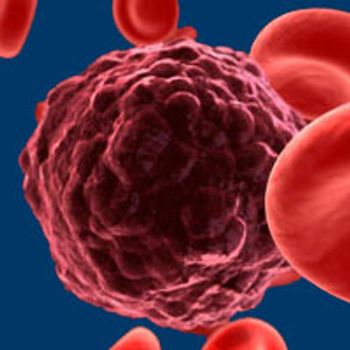
Early results from a Chinese study showed that 33 of 35 patients (94%) with relapsed or refractory multiple myeloma experienced clinical remission after treatment with chimeric antigen receptor T cells targeting B-cell maturation protein.
Early results from a Chinese study showed that 33 of 35 patients (94%) with relapsed or refractory multiple myeloma experienced clinical remission after treatment with chimeric antigen receptor T cells targeting B-cell maturation protein.

Dacomitinib, a second-generation EGFR inhibitor, reduced the risk of disease progression by more than 40% and resulted in an average 6.5-month improvement in response duration compared with gefitinib (Iressa) as a first-line treatment for patients with advanced, EGFR-mutant non–small cell lung cancer.
The addition of pertuzumab (Perjeta) to standard postoperative trastuzumab (Herceptin) therapy for patients with HER2-positive early breast cancer slightly improved the rate of recurrence overall but had a greater benefit for individuals with higher-risk disease, particularly as more time elapsed, according to early results from the phase III APHINITY trial.
Frontline treatment with nintedanib plus pemetrexed and cisplatin improved progression-free survival by 3.7 months for chemotherapy-naive patients with malignant pleural mesothelioma, according to data reported at the 2017 ASCO Annual Meeting.
Nivolumab as monotherapy or in combination with ipilimumab may present a new second- or third-line treatment option for patients with malignant pleural mesothelioma, based on preliminary findings from a phase II trial where nivolumab alone or in the combination improved disease control and prolonged survival in patients with this rare but aggressive cancer.

In patients with ALK-positive non-small cell lung cancer, the second-generation TKI inhibitor alectinib (Alecensa) delayed progression by an additional 15 months compared with the standard-of-care crizotinib (Xalkori).
Pembrolizumab (Keytruda) showed durable antitumor activity in patients with heavily pretreated metastatic triple-negative breast cancer (TNBC), according to findings from cohort A of the phase II KEYNOTE-086 trial presented at the 2017 ASCO Annual Meeting.
Sara M. Tolaney, MD, MPH, instructor of medicine, Harvard Medical School, attending physician of medical oncology, Dana-Farber Cancer Institute, discusses the results of a phase II trial exploring the efficacy of abemaciclib as a treatment of brain metastases that are secondary in patients with hormone receptor (HR)-positive,HER2-negative breast cancer.
Jeff Sharman, MD, medical director, Hematology Research, The US Oncology Network, discusses the phase III findings of the GENUINE study, the combination of ublituximab (TG-1101) and ibrutinib (Imbruvica) for patients with previously treated high-risk chronic lymphocytic leukemia (CLL).
Pembrolizumab continued to show promising signs of clinical activity as a treatment for patients with advanced gastric or gastroesophageal junction cancer in updated findings from the KEYNOTE-059 study.

Nivolumab plus ipilimumab demonstrated an intracranial response rate of 42% in asymptomatic patients with melanoma brain metastases who had not received prior local therapy to the brain.
Induction therapy with fludarabine and rituximab followed by lenalidomide consolidation therapy (FR-L) demonstrated a distinct plateau in overall survivalbeyond that seen with FR or FR plus cyclophosphamide (FCR) alone for patients with symptomatic, untreated non-del(11q) chronic lymphocytic leukemia.
Patients receiving treatment for metastatic cancer who used a web-based tool to report their symptoms either while at home or during clinic visits lived on average 5 months longer than their counterparts who had standard symptom monitoring, according to findings of a randomized trial reported at the 2017 ASCO Annual Meeting.
Most patients with low-risk advanced colon cancer would benefit from a 50% reduction in the oxaliplatin-containing chemotherapy they typically receive after surgery without notably increasing their risk of recurrence and while markedly decreasing the likelihood that they will develop neuropathy, according to an analysis that challenges the current standard of care and paves the way for a more personalized approach.

First-line treatment with lenvatinib (Lenvima) improved progression-free survival by 3.7 months and was noninferior for overall survival compared with sorafenib for patients with unresectable hepatocellular carcinoma.
Mark S. Soberman, MD, MBA, FACS, was elected as the 2017-2018 President of the Association of Community Cancer Centers (ACCC) discusses his vision for the next generation of multidisciplinary care in an interview during the 2017 ASCO Annual Meeting.
The PARP inhibitor olaparib (Lynparza) reduce the risk of disease progression by 42% versus standard chemotherapy in patients with BRCA-positive, HER2-negative breast cancer, according to findings from the phase III OLYMPIAD trial.
Combining the PD-1 inhibitor pembrolizumab (Keytruda) with the HDAC inhibitor entinostat demonstrated promising clinical activity and acceptable safety in patients with melanoma who were refractory to immune checkpoint inhibitors.

The combination of ublituximab and ibrutinib demonstrated an objective response rate of 78% for patients with previously treated high-risk chronic lymphocytic leukemia.
Andrea B. Apolo, MD, principal investigator and the head of the Bladder Cancer Section in the Genitourinary Malignancies Branch at the National Cancer Institute’s Center for Cancer Research, discusses the updated findings of the phase Ib JAVELIN trial exploring avelumab (Bavencio) for the treatment of patients with metastatic urothelial carcinoma.
Comprehensive genomic testing is not yet widespread, but a French study presented at the 2017 ASCO Annual Meeting suggested that DNA profiling can be of important value in advancing personalized medicine.

Deanna J. Attai, MD, assistant clinical professor of surgery at the David Geffen School of Medicine at the University of California Los Angeles (UCLA), breast surgeon at UCLA Health, discusses studies exploring the challenges with survivorship care plan implementation for patients with cancer in an interview during the 2017 ASCO Annual Meeting.
Three out of 4 patients representing a range of TRK fusion–positive solid tumors responded to the novel pan-TRK inhibitor larotrectinib (LOXO-101) and remain on treatment, setting the stage for the well-tolerated oral agent to become a standard of care for adults and children with any advanced tumor harboring this mutation.
Adding the CDK4/6 inhibitor abemaciclib to fulvestrant reduced the risk of disease progression or death by 45% versus fulvestrant alone in pretreated patients with HR+/HER2-negative breast cancer, according to findings presented at the 2017 ASCO Annual Meeting.
The frontline combination of pembrolizumab, pemetrexed, and carboplatin reduced the risk of progression or death by 50% and nearly doubled objective response rates compared with chemotherapy alone for patients with advanced non-squamous NSCLC.
A new, high-intensity genomic sequencing approach for circulating tumor DNA uncovered at least 1 genetic change in both the tumor DNA and the blood of 89% of patients, demonstrating a high rate of concordance between 2 approaches for detecting molecular aberrations, according to a study presented at the 2017 ASCO Annual Meeting.
Earlier intervention with abiraterone acetate (Zytiga) lowered the risk of death by nearly 40% for men with high-risk advanced or metastatic prostate cancer who were newly diagnosed or had not yet received hormone therapy in findings from 2 clinical trials presented at the 2017 ASCO Annual Meeting.
Women who have had early breast cancer, along with their doctors, often worry that pregnancy could cause disease recurrence. But according to the results of a new study, that’s not the case.
Wafik S. El-Deiry, MD, PhD, FACP, deputy cancer center director, Translational Research Program, co-leader, Molecular Therapeutics Program, professor, Department Hematology/Oncology, William Wikoff Smith Chair in Cancer Research, American Cancer Society Research Professor, discusses the importance of understanding tumor heterogeneity an interview during the 2017 ASCO Annual Meeting.

Arjun V. Balar, MD, assistant professor of medicine, Division of Hematology and Oncology, New York University Cancer Institute, NYU Langone Medical Center, discusses the mature clinical trial results and biomarker findings of KEYNOTE-052, first-line pembrolizumab (Keytruda) in patients with cisplatin-ineligible advanced urothelial cancer, during the 2017 ASCO Annual Meeting.