
Hope S. Rugo, MD, at the University of California, San Francisco, Helen Diller Family Comprehensive Cancer Center, discusses the standard for front-line chemotherapy in patients with breast cancer.

Your AI-Trained Oncology Knowledge Connection!
Hope S. Rugo, MD, at the University of California, San Francisco, Helen Diller Family Comprehensive Cancer Center, discusses the standard for front-line chemotherapy in patients with breast cancer.

An interview with Debu Tripathy, MD, summarizing noteworthy results from the 2012 ASCO Annual Meeting and SABCS, including clinical studies in local, adjuvant, and metastatic breast cancer therapies.

Capecitabine produces similar local disease control with lower toxicity versus gemcitabine when combined with radiotherapy following induction chemotherapy in patients with locally advanced pancreatic cancer.

FOLFOXIRI plus bevacizumab improved progression-free survival and response rates with a modest increase in side effects compared with FOLFIRI plus bevacizumab in patients with unresectable metastatic colorectal cancer.

Complete neoadjuvant treatment may represent a well-tolerated alternative to the current standard treatment sequence of adjuvant chemotherapy following chemoradiation and surgery.
William C. Huang, MD, from the New York University Langone Medical Center, discusses findings from a SEER database analysis that compared surveillance to surgical resection in elderly patients with small renal masses.
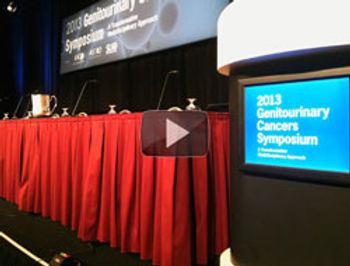
The 2013 Genitourinary Cancers Symposium was held at the Rosen Shingle Creek, Orlando, Florida, from February 14-16.
Matthew Cooperberg, MD, MPH, from the University of California, San Francisco, discusses the earlier administration of treatment with sipuleucel-T for men with prostate cancer.
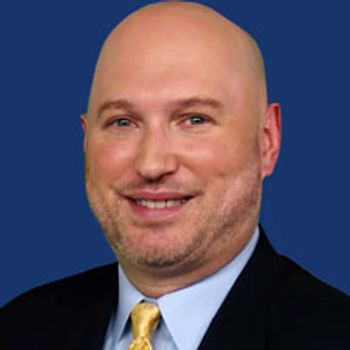
Axitinib did not demonstrate superiority over sorafenib as first-line therapy for patients with metastatic renal cell carcinoma, on the endpoint of progression-free survival.

Tivozanib did not show a significant difference in overall survival when compared with sorafenib in patients with renal cell carcinoma who received up to one prior line of therapy excluding targeted agents.
Nicholas J. Vogelzang, MD, from the Comprehensive Cancer Centers of Nevada, discusses an updated analysis of the phase III ALSYMPCA trial that examined radium-223 dichloride in patients who have CRPC with bone metastases.

Combination targeted therapy did not significantly extend progression-free survival compared with single-agent bevacizumab in patients with advanced renal cell carcinoma.
Howard I. Scher, MD, from Memorial Sloan-Kettering Cancer Center, discusses the impact of corticosteroids on outcomes for men with metastatic castration-resistant prostate cancer receiving treatment with enzalutamide.
Robert J. Motzer, MD, from Memorial Sloan-Kettering Cancer Center, discusses the overall survival results from the phase III TIVO-1 study that compared tivozanib to sorafenib in patients with renal cell carcinoma.

The addition of dasatinib to standard therapy with docetaxel failed to improve survival and most other clinical endpoints in men with metastatic castration-resistant prostate cancer in the phase III READY trial.

An updated interim analysis of the COU-AA-302 trial upholds the benefits of abiraterone acetate in mildly symptomatic or asymptomatic patients with progressive mCRPC untreated with prior chemotherapy.
Use of corticosteroids had a negative impact on outcomes with enzalutamide treatment as well as placebo treatment in men with metastatic castrate resistant prostate cancer.
William K. Oh, MD, from the Tisch Cancer Institute at Mount Sinai Medical Center, discusses the third interim analysis of the COU-AA-302 trial that examined abiraterone acetate before chemotherapy in mCRPC.
Abdenour Nabid, MD, from the Centre Hospitalier de Universitaire de Sherbrooke in Sherbrooke, Canada, discusses results of a phase III randomized study that compared 18 months of ADT to 36 in men with high-risk, localized prostate cancer.

Small renal masses identified in elderly patients can be safely managed by surveillance and maintain the same mortality risk as those who undergo surgery, suggesting that surgery could be avoided altogether in many patients.
Deepak A. Kapoor, MD, president of the Large Urology Group Practice Association, discusses the implications of a large study looking at the detection of prostate cancer using prostate biopsies.

Shortening the course of androgen blockade therapy from 36 months to 18 months when combined with radiation therapy does not appear to compromise outcomes in patients with high-risk prostate cancer

A large, retrospective study has found that high-risk prostate cancer that can only be detected through PSA testing is more likely to occur among men over the age of 75 and in African Americans.
Francesco Lo-Coco, MD, Hematology, University Tor Vergata, discusses a new emerging treatment, arsenic trioxide, in acute promyelocytic leukemia.
Ghassan K. Abou-Alfa, MD, from Memorial Sloan-Kettering Cancer Center, discusses a study that examined the utility of doxorubicin-eluting beads in hepatic arterial embolization as a treatment for hepatocellular carcinoma.

The 2013 Gastrointestinal Cancers Symposium was held at the Moscone West Building, San Francisco, CA, from January 24-26.

Adding nab-paclitaxel to gemcitabine improves survival compared with gemcitabine alone in patients with metastatic pancreatic cancer.
Ramucirumab significantly extended overall survival as a second-line agent in patients with metastatic gastric or gastroesophageal junction adenocarcinoma that progressed on first-line therapy.

Patients with metastatic colorectal cancer whose disease had progressed despite treatment with oxaliplatin experienced an improvement in survival by switching to a regimen of ziv-aflibercept plus FOLFIRI.
Axel Grothey, MD, from the Mayo Clinic, Rochester, Minnesota, discusses the time course of adverse events following treatment with regorafenib, as observed in the CORRECT study.