
Roy S. Herbst, MD, PhD, highlights the evolution of EGFR TKIs and the need for treatments improving DFS and OS outcomes in EGFR-mutant NSCLC.
Roy S. Herbst, MD, PhD, highlights the evolution of EGFR TKIs and the need for treatments improving DFS and OS outcomes in EGFR-mutant NSCLC.

Sandip Patel, MD, explores how AI and multiomics are transforming localized non–small cell lung cancer care.
Jorge J. Nieva, MD, compares treatment options for patients with ROS1-positive non–small cell lung cancer.
Karen L. Reckamp, MD, discusses the feasibility of future pragmatic clinical trials for patients with lung cancer.

Millie Das, MD, discusses first-line standards of care for patients with extensive-stage and limited-stage small cell lung cancer.

Hossein Borghaei, DO, MS, discusses novel approaches to overcoming immunotherapy resistance in patients with non–small cell lung cancer.
C. Ola Landgren, MD, PhD, discusses the current treatment paradigm for patients with smoldering multiple myeloma.
Alexey Danilov, MD, PhD, discusses frontline treatment selection for chronic lymphocytic leukemia.

Pasi A. Jänne, MD, PhD, discusses changes to the second-line treatment paradigm and treatment decision-making factors for patients with EGFR-mutated NSCLC.

Sukhmani Padda, MD, discusses ways in which evolving treatment paradigms are tailoring treatment to target atypical EGFR alterations in NSCLC.
Tony S.K. Mok, BMSc, MD, FRCP(C), FHKCP, FHKAM, FASCO, discusses first-line treatment decision-making for patients with BRAF-mutant non–small cell lung cancer.
Heather Wakelee, MD, discusses underlying resistance mechanisms and potential therapies for EGFR+ NSCLC following osimertinib.

Lyudmila A. Bazhenova, MD, discusses considerations for treatment intensification in patients with EGFR-mutated NSCLC.

Jorge Nieva, MD, discusses matched-adjusted indirect comparison data evaluating crizotinib vs alectinib, brigatinib, and lorlatinib in ALK-positive NSCLC.

Sandip P. Patel, MD, discusses toxicities associated with the use of immunotherapy-based combination regimens in patients with advanced NSCLC.

Elaine Shum, MD, discusses questions that remain regarding the first-line treatment paradigm for patients with EGFR-mutant non–small cell lung cancer.

Jessica Donington, MD, MSCR, discusses how updated data with perioperative nivolumab in NSCLC may affect future surgical decision-making.
Treatment with casdatifan in combination with cabozantinib produced responses and was safe in patients with pretreated clear cell renal cell carcinoma.
High levels of CD163-positive TAMs and exhausted CD8-positive TILs could potentially affect efficacy results in metastatic RCC by reprogramming TAMs.
KIM-1 levels have shown the ability to predict therapeutic benefit in patients with renal cell carcinoma.
Ritesh R. Kotecha, MD, discusses the rationale for targeting ENPP3 in clear cell renal cell carcinoma.

Findings from the KEYNOTE-B61 trial demonstrate antitumor activity across histologic subtypes, including those with papillary and chromophobe disease.

Karie Danielle Keera Runcie, MD, discusses treatment challenges after progression on adjuvant therapy and the potential role for zanzalintinib in renal cell carcinoma.
Treatment with belzutifan increased the time without progression or toxicity vs everolimus in patients with advanced RCC.
Metastasis-directed radiotherapy without systemic therapy demonstrated an improved safety profile vs immunotherapy and tyrosine kinase inhibitors.

Thomas Powles, MD, discusses results from a Q-TWiST analysis of belzutifan vs everolimus in previously treated advanced renal cell carcinoma.
Marc Machaalani, MD, discusses retrospective findings from a multi-platform analysis evaluating circulating KIM-1 as a biomarker in metastatic RCC.
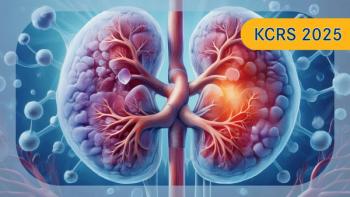
David A. Braun, MD, PhD, discusses findings from a study of personalized neoantigen vaccines in patients with high-risk, resectable ccRCC.

Research supports the use of novel CAR T-cell therapy targeting CAIX and CD70 for the treatment of patients with advanced ccRCC.
Paolo Tarantino, MD, details the role of ADCs in HER2-positive breast cancer, along with unmet needs that persist.