Sara A. Hurvitz, MD, FACP, discusses the SERENA-6 data and the case for an early ctDNA-guided switch to camizestrant in HR-positive breast cancer.

Sara A. Hurvitz, MD, FACP, is a medical oncologist, senior vice president, professor in, and director of the Clinical Research Division at Fred Hutchinson Cancer Center in Seattle, Washington. She also serves as the Smith Family Endowed Chair in Women’s Health.
Sara A. Hurvitz, MD, FACP, discusses the SERENA-6 data and the case for an early ctDNA-guided switch to camizestrant in HR-positive breast cancer.
Sara A. Hurvitz, MD, FACP, discusses the mechanism of action of evorpacept and data with the agent in pretreated HER2-positive metastatic breast cancer.
Sara A. Hurvitz, MD, FACP, discusses updated data with a switch to camizestrant upon detecting a ctDNA-emergent ESR1 mutation in metastatic breast cancer.

Panelists discuss how innovative HER2-targeted strategies and precision approaches will define the next era of breast cancer therapy.
Panelists discuss how new trial results from ASCENT-03 and TROPION-Breast02 are shaping next-generation TNBC therapies.
Panelists discuss how molecular characterization and novel agents are redefining the management of TNBC.
Panelists discuss how HER2-low and HER3-directed therapies are expanding precision treatment opportunities in metastatic breast cancer.
Panelists discuss how newer HER2-targeted therapies show promise for CNS disease control and broader metastatic management.
Panelists discuss how thoughtful sequencing of HER2-targeted agents maximizes benefit and extends survival in metastatic settings.
Panelists discuss how evolving first-line HER2-targeted combinations are improving outcomes and redefining standards in metastatic breast cancer..
Panelists discuss how ADCs are revolutionizing HER2-targeted therapy through precision delivery and improved tolerability across patient subgroups.
Panelists discuss how new trial data are optimizing early-stage HER2-positive breast cancer treatment through refined, evidence-based regimens.
Panelists discuss how the evolution of HER2 testing and classification has redefined treatment strategies and expanded therapeutic opportunities in breast cancer.
Sara A. Hurvitz, MD, FACP, shares efficacy and safety data from the VIKTORIA-1 study in endocrine-resistant HR-positive breast cancer.
Sara A. Hurvitz, MD, FACP, explains the clinical rationale for targeting the PI3K/mTOR pathways with gedatolisib in the VIKTORIA-1 trial.
Sara A. Hurvitz, MD, FACP, shares 5-year efficacy updates from the phase 3 NATALEE trial in HR-positive HER2-negative breast cancer.

Panelists discuss how the continued evolution of HER2-directed therapies, particularly the expanding role of trastuzumab deruxtecan (T-DXd) across different breast cancer settings, has transformed the treatment landscape, while emphasizing the importance of appropriate patient selection, optimal sequencing strategies, and the need for education around early adoption of promising therapies in community practice settings.
Panelists discuss how emerging data from trials such as DESTINY-Breast09, which is evaluating first-line trastuzumab deruxtecan (T-DXd) with or without pertuzumab, could potentially reshape the treatment paradigm for HER2+ metastatic breast cancer (mBC) by establishing new standards for initial therapy and optimal combination approaches.
Panelists discuss how sequential therapy selection for patients with HER2+ breast cancer with progressive brain metastases requires careful consideration of prior treatments, patterns of progression, symptom burden, and available clinical trials, while balancing the need for both systemic disease control and CNS -specific approaches.
Panelists discuss how the DESTINY-Breast12 trial evaluated trastuzumab deruxtecan (T-DXd) in patients with HER2+ metastatic breast cancer (mBC) with brain metastases, demonstrating encouraging intracranial responses and overall survival outcomes while maintaining a manageable safety profile consistent with previous T-DXd studies.
Panelists discuss how treatment selection for patients with HER2+ breast cancer with brain metastases requires careful consideration of factors such as metastatic burden, symptomatology, and prior therapies, typically incorporating both local approaches and systemic agents with CNS activity while accounting for individual patient characteristics such as performance status, comorbidities, and preferences in developing personalized treatment plans.
Panelists discuss how patients with HER2+ breast cancer frequently develop brain metastases, with recent pivotal trials such as HER2CLIMB and DESTINY-Breast03 demonstrating improved intracranial responses with newer agents such as tucatinib, and how trastuzumab deruxtecan leads to evolving standards of care (SOC) that now incorporate these targeted therapies alongside traditional local therapies.
Panelists discuss how trastuzumab deruxtecan’s (T-DXd's) key adverse events (AEs) include interstitial lung disease, neutropenia, and nausea/fatigue, emphasizing the importance of proactive monitoring, early intervention through coordinated multidisciplinary care, and comprehensive patient education with clear communication channels for reporting symptoms.
Panelists discuss how trastuzumab deruxtecan (T-DXd) demonstrated favorable patient-reported outcomes and quality of life measures in HER2-low hormone receptor-positive metastatic breast cancer patients in DESTINY-Breast06, suggesting it could be a well-tolerated therapeutic option that maintains patients' daily functioning while providing clinical benefit.
Panelists discuss how emerging data on HER2-ultralow breast cancer is informing treatment decisions, particularly regarding the potential role of trastuzumab deruxtecan, while acknowledging the need for careful patient selection and consideration of traditional treatment sequences.
Panelists discuss how DESTINY-Breast06 demonstrated meaningful clinical activity of trastuzumab deruxtecan in both HER2-low and ultralow metastatic breast cancer populations.
Panelists discuss how clinical trials like DESTINY-Breast04, TROPiCS-02, and TROPION-Breast01 have revolutionized treatment options for HER2-low advanced breast cancer by validating novel targeted therapies and antibody-drug conjugates.
Panelists discuss how evolving HER2 classification methods and recent trial data are reshaping treatment approaches for advanced breast cancer, particularly regarding the clinical significance of HER2-low and ultralow categories.
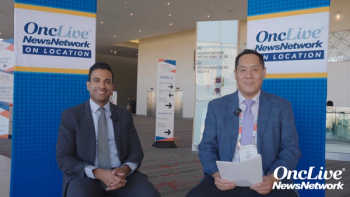
Sara Hurvitz, MD, of Fred Hutch Cancer Center, and Neil Iyengar, MD, of Memorial Sloan Kettering Cancer Center, sit down with Chandler Park, MD, FACP, to discuss the latest abstracts in breast cancer presented during the 2024 San Antonio Breast Cancer Symposium.