
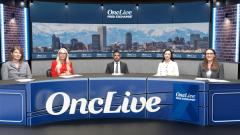
Opinion|Videos|February 26, 2025
SABCS Highlights and Future Directions in the Treatment of Breast Cancer
Panelists discuss how the continued evolution of HER2-directed therapies, particularly the expanding role of trastuzumab deruxtecan (T-DXd) across different breast cancer settings, has transformed the treatment landscape, while emphasizing the importance of appropriate patient selection, optimal sequencing strategies, and the need for education around early adoption of promising therapies in community practice settings.
Advertisement
Episodes in this series
Video content above is prompted by the following:
Before we wrap up, I’d like to hear your final thoughts and reflections on the strides we made throughout 2024—including new/exciting data presented at SABCS 2024.
- Let’s consider what opportunities/what we are looking forward to in 2025. Points to consider:
- Which developments stand out as pivotal in shaping clinical practice?
- What are you most excited about in 2025?
- What areas are primed for significant progress?
- What do you hope to achieve in the coming year?
- What advice would you offer to community oncologists who remain hesitant to use T-DXd in appropriate candidates or who prefer to reserve it for later lines of therapy?
Advertisement
Related to this article

China's approval of Dato-DXd for TNBC was supported by TROPION-Breast02 data showing a median OS of 23.7 months vs 18.7 months with chemotherapy.
Check out this September recap of OncLive’s coverage of the top news and expert insights in breast cancer.
Here is your cheat sheet to all therapeutic options that were cleared by the FDA in September 2026 spanning tumor types.

The FDA approved tucatinib plus trastuzumab and pertuzumab as maintenance for advanced HER2-positive breast cancer after induction.
The FDA approved pirtobrutinib for untreated chronic lymphocytic leukemia, granted priority review to elinzanetant for breast cancer hot flashes, and more.
Did you catch all of this week's top oncology news? Test your knowledge with OncLive's Weekly News Quiz.

In case you missed any, read a recap of the episodes of OncLive On Air that aired in September 2026.
Experts spotlight the variety of breast cancer research being presented at the 2026 ESMO Congress.
Advertisement
Advertisement
Trending on OncLive
1
FDA Approves Atezolizumab Plus Chemo for Stage III dMMR Colon Cancer
2
VIR-5500 Receives FDA Fast Track Designation in mCRPC
3
China’s NMPA Approves Adjuvant T-DXd for HER2+ Early Breast Cancer With Residual Invasive Disease
4
MAVERICK, B7-H3–Directed ADCs, and ADAURA Data Headline Key Lung Cancer Findings From WCLC 2026
5