
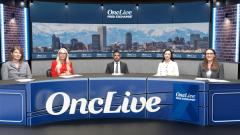
Opinion|Videos|February 26, 2025
Emerging Frontline, Adjuvant, and Neoadjuvant Strategies with T-DXd in HER2+ Breast Cancer
Panelists discuss how emerging data from trials such as DESTINY-Breast09, which is evaluating first-line trastuzumab deruxtecan (T-DXd) with or without pertuzumab, could potentially reshape the treatment paradigm for HER2+ metastatic breast cancer (mBC) by establishing new standards for initial therapy and optimal combination approaches.
Advertisement
Episodes in this series
Video content above is prompted by the following:
Briefly comment on other novel strategies currently under investigation in HER2+ metastatic breast cancer and discuss their potential impact on future management in this patient population.
• Dr Hurvitz: DESTINY-Breast09 – 1L T-DXd ± pertuzumab in HER2+ mBC
Advertisement
Related to this article
The FDA approved pirtobrutinib for untreated chronic lymphocytic leukemia, granted priority review to elinzanetant for breast cancer hot flashes, and more.
Did you catch all of this week's top oncology news? Test your knowledge with OncLive's Weekly News Quiz.

In case you missed any, read a recap of the episodes of OncLive On Air that aired in September 2026.

Experts spotlight the variety of breast cancer research being presented at the 2026 ESMO Congress.

FDA Approves Denosumab Biosimilar for Skeletal-Related Events, GCTB, and Hypercalcemia of Malignancy
Denosumab-adet (Degevma) is FDA approved as an Xgeva biosimilar for SRE prevention in myeloma and bone metastases, giant cell tumor of bone, and HCM.

Researchers at Wake Forest University School of Medicine identified a protein that may help breast cancer spread to the brain and evade immune defenses.

The sNDA for elinzanetant seeks FDA approval for moderate-to-severe vasomotor symptoms in women receiving endocrine therapy for HR-positive breast cancer.

The top 5 OncLive TV videos of the week cover insights in breast cancer, PV, myeloma, and CLL.
Advertisement
Advertisement
Trending on OncLive
1
FDA Approves Pirtobrutinib for Previously Untreated CLL/SLL
2
The OncFive: Top Oncology Articles for the Week of 9/27/2026
3
AUA Releases Guideline Amendment for NMIBC
4
FLORA-2 Updates at World Lung: Biomarker Analysis, Safety Follow-Up, and ctDNA Monitoring
5