
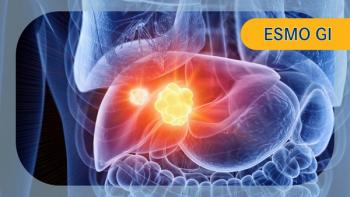
Efficacy results from a MAIC suggest potential benefit with nivolumab/ipilimumab over other first-line IO-based regimens in first-line unresectable HCC.
Efficacy results from a MAIC suggest potential benefit with nivolumab/ipilimumab over other first-line IO-based regimens in first-line unresectable HCC.

IRIGA trial comparing mFOLFIRINOX vs mFOLFOX6 shows mixed results in HER2-negative metastatic gastric and GEJ adenocarcinoma.

Tislelizumab plus chemotherapy improves efficacy vs chemotherapy alone in locally advanced ESCC, including those with PD-L1 TAP of 5% or higher.

Treatment with trifluridine/tipiracil led to an improvement in disease-free survival in ctDNA-positive colorectal cancer after curative resection.

ctDNA monitoring led to earlier recurrence detection and increased use of curative-intent treatment after recurrence in nonmetastatic colorectal cancer.
Richard Finn, MD, discusses the addition of tiragolumab to atezolizumab and bevacizumab in advanced hepatocellular carcinoma.
Rocío García-Carbonero, MD, discusses a subgroup analysis of fruquintinib vs placebo in patients with refractory metastatic colorectal cancer.
A real-world study in Portugal showed fruquintinib displayed a manageable safety profile and an efficacy trend in refractory colorectal cancer.
Nivolumab plus ipilimumab maintained an ORR benefit across subgroups of Chinese patients with unresectable hepatocellular carcinoma.

Quantitative vessel tortuosity features were able to detect the VEGFR inhibitory mechanism of fruquintinib in metastatic colorectal cancer.

A survey of UK and German physicians found that OS gains were needed to accept increased toxicities or treatment burden with third-line regimens in mCRC.
Benjamin L. Schlechter, MD, discusses efficayc and safety of botensilimab in combination with the anti–PD-1 antibody balstilimab in mCRC.
Post hoc analyses compared encorafenib plus cetuximab and mFOLFOX6 with different BREAKWATER control arm regimens.

A post hoc subgroup analysis of FRESCO-2 shed light on the safety and efficacy of fruquintinib by metastatic site in metastatic colorectal cancer.

Yelena Y. Janjigian, MD, discusses patient-reported outcomes and QOL assessments for durvalumab plus FLOT in resectable gastric/GEJ adenocarcinoma.
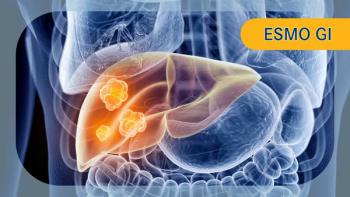
TACE plus atezolizumab and bevacizumab may represent effective option for untreated intermediate-to-high tumor burden unresectable HCC.

The addition of TTFields to chemotherapy improved quality of life and delayed time to pain deterioration in locally advanced pancreatic cancer.
CheckMate 8HW data show ipilimumab plus nivolumab improved PFS vs nivolumab alone while maintaining HRQOL.
Durvalumab plus FLOT did not lead to differences in patient-reported outcomes vs placebo plus FLOT in resectable gastric/GEJ cancer.

Eileen M. O’Reilly, MD, discusses the rapidly evolving role of local therapy in the management of advanced/metastatic pancreatic cancer.
Benjamin A. Weinberg, MD, FACP, discusses preliminary efficacy and safety findings from BXCL701 with pembrolizumab in microsatellite-stable mPDAC.

Invikafusp alfa produced responses as a single agent in antigen-rich gastrointestinal tumors, including metastatic colorectal cancer.
Irpagratinib combined with atezolizumab was effective and safe in both treatment-naive and ICI-exposed advanced HCC with FGF19 overexpression.
Certepetide plus gemcitabine and nab-paclitaxel was safe and effective in patients with untreated metastatic pancreatic ductal adenocarcinoma.
Rachel Riechelmann, MD, PhD, discusses clinical guidance for the management of refractory carcinoid syndrome in functional GI neuroendocrine tumors.
A research fellow from Dana-Farber Cancer Institute shares post hoc findings from the phase 3 JAVELIN Renal 101 trial.
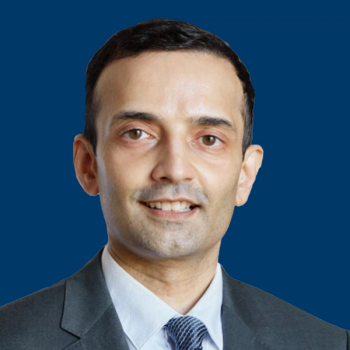
Ajai Chari, MD, expands on areas of uncertainty in multiple myeloma after his presentation at the Bridging the Gaps in Leukemia, Lymphoma, and Multiple Myeloma Conference.
Chinmay Jani, MD, discusses the rate of inclusion of patient-reported outcome end points in clinical trials of patients with lung cancer.
Noha Soror, MD, discussed data from an analysis of patient-reported outcomes in from hospitalized patients with cancer.
Ajai Chari, MD, highlighted key areas of debate in smoldering myeloma from the Bridging the Gaps in Leukemia, Lymphoma, and Multiple Myeloma Conference.