

Favorable long-term outcomes were reported with brexu-cel in patients with B-ALL and low disease burden who achieved peak CAR T-cell expansion.
Favorable long-term outcomes were reported with brexu-cel in patients with B-ALL and low disease burden who achieved peak CAR T-cell expansion.

Zanubrutinib bested acalabrutinib plus venetoclax in terms of PFS in patients with treatment-naive, low-risk CLL.
Findings from a meta-analysis associated asciminib with improved efficacy and safety vs other TKIs in chronic myeloid leukemia.

First-line venetoclax plus azacitidine did not improve overall survival vs placebo plus azacitidine in treatment-naive, higher-risk MDS.

Continuous zanubrutinib improved PFS and showed a trend for improved OS vs fixed-duration venetoclax-based therapy in treatment-naive CLL/SLL.

A post hoc analysis demonstrated the efficacy of olutasidenib monotherapy in primary refractory patients with IDH1-mutant AML.
Elena Élez, MD, PhD, discusses health-related QOL data with nivolumab plus ipilimumab in mCRC.
Jason A. Mouabbi, MD, discusses unmet needs and areas requiring further investigation in HER2-positive advanced breast cancer.
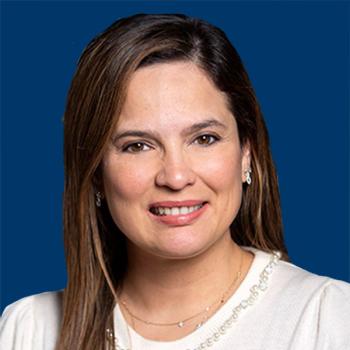
Experts preview key abstracts to watch at the IASLC 2025 World Conference on Lung Cancer.
Jyoti Malhotra, MD, MPH, discusses current knowledge of ADC efficacy in patients with NSCLC and brain metastases.
Fawzi F Abu Rous, MD, discusses evolving strategies for HER2 and MET testing in non–small cell lung cancer.

Upcoming oncology meetings in the second half of 2025 will present new data across tumor types and offering updates that may influence standards of care.
Balazs Halmos, MD, shares suggestions regarding patient selection for adjuvant therapy after neoadjuvant chemoimmunotherapy and surgery in NSCLC.
Hematology/oncology fellows shared insights on notable presentations given during the OncLive Fellows Forum on Thoracic Oncology.
Jonathan Wesley Riess, MD, MS, outlines treatment sequencing considerations for KRAS- and BRAF-targeted therapies in NSCLC.
Rana R. McKay, MD, expands on key updates and knowledge gaps in prostate cancer management discussed at the Bridging the Gaps in Prostate Cancer meeting.
Ravi Salgia, MD, PhD, highlights biomarker-driven strategies in development for second-line small cell lung cancer management.
Edward S. Kim, MD, MBA, highlighted the distinct purpose of the Bridging the Gaps in Lung Cancer consensus meeting.
Triparna Sen, PhD, discusses the role of immunotherapy for the treatment of patients with small cell lung cancer.
Corey J. Langer, MD, FACP, provides a focused overview of antibody-drug conjugate–related toxicities and AE management in lung cancer.
Roy S. Herbst, MD, PhD, highlights the evolution of EGFR TKIs and the need for treatments improving DFS and OS outcomes in EGFR-mutant NSCLC.
Sandip Patel, MD, explores how AI and multiomics are transforming localized non–small cell lung cancer care.
Jorge J. Nieva, MD, compares treatment options for patients with ROS1-positive non–small cell lung cancer.
Karen L. Reckamp, MD, discusses the feasibility of future pragmatic clinical trials for patients with lung cancer.
Millie Das, MD, discusses first-line standards of care for patients with extensive-stage and limited-stage small cell lung cancer.
Hossein Borghaei, DO, MS, discusses novel approaches to overcoming immunotherapy resistance in patients with non–small cell lung cancer.
C. Ola Landgren, MD, PhD, discusses the current treatment paradigm for patients with smoldering multiple myeloma.
Alexey Danilov, MD, PhD, discusses frontline treatment selection for chronic lymphocytic leukemia.
Pasi A. Jänne, MD, PhD, discusses changes to the second-line treatment paradigm and treatment decision-making factors for patients with EGFR-mutated NSCLC.
Sukhmani Padda, MD, discusses ways in which evolving treatment paradigms are tailoring treatment to target atypical EGFR alterations in NSCLC.