

Filippo Pietrantonio, MD, discusses the influence of primary results from the phase 3 CodeBreak 300 trial of sotorasib plus panitumumab on KRAS G12C-mutated metastatic colorectal cancer.

Your AI-Trained Oncology Knowledge Connection!
Filippo Pietrantonio, MD, discusses the influence of primary results from the phase 3 CodeBreak 300 trial of sotorasib plus panitumumab on KRAS G12C-mutated metastatic colorectal cancer.

Kim N. Chi, MD, FRCPC, discusses data from the updated and final analysis of the phase 3 MAGNITUDE trial in BRCA-positive metastatic castration-resistant prostate cancer.

Concurrent frontline nivolumab and gemcitabine-cisplatin followed by nivolumab maintenance therapy elicited OS and PFS benefits vs gemcitabine-cisplatin alone in patients with previously untreated, metastatic or unresectable urothelial carcinoma.
The addition of niraparib to abiraterone acetate and prednisone led to a benefit in overall survival vs treatment with AAP alone in patients with BRCA1/2-mutated metastatic castration-resistant prostate cancer.

Pembrolizumab plus enzalutamide provided no radiographic progression-free survival or overall survival improvements vs enzalutamide alone in patients with metastatic castration-resistant prostate cancer.

Osimertinib plus chemotherapy reduced the risk of central nervous system disease progression or death vs osimertinib alone in patients with locally advanced or metastatic EGFR-positive non–small cell lung cancer who had brain metastases at baseline, according to data from the phase 3 FLAURA2 trial.
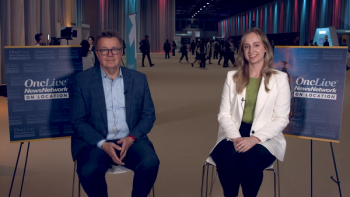
OncLive® will be LIVE with OncLive® News Network: On Location at the 2023 ESMO Congress. Each day, we will broadcast a series of interviews with top thought leaders, to learn their thoughts and reactions to data presented across oncology during the conference.
Selpercatinib resulted in a statistically significant improvement in progression-free survival and overall response rate compared with cabozantinib or vandetanib in patients with advanced, multikinase inhibitor–naïve, RET-mutant medullary thyroid cancer, according to interim findings from the phase 3 LIBRETTO-531 trial.

Nicolas Girard, MD, PhD, discusses primary efficacy results from the phase 3 PAPILLON trial of amivantamab plus chemotherapy in EGFR exon 20 insertion–mutated advanced non–small cell lung cancer.

The combination of amivantamab-vmjw (Rybrevant) and chemotherapy produced a median progression-free survival of 11.4 months vs 6.7 months with chemotherapy alone in patients with advanced, EGFR exon 20 insertion–positive non–small cell lung cancer.

The addition of durvalumab to first-line chemotherapy, followed by maintenance treatment with durvalumab plus olaparib significantly improved progression-free survival in patients with newly diagnosed advanced or recurrent endometrial cancer, according to data from the phase 3 DUO-E/GOG-3041/ENGOT-EN10 trial.

Treatment with the oral ALK inhibitor alectinib led to a statistically significant improvement in disease-free survival in patients with resected ALK-positive non–small cell lung cancer.

Treatment with belzutifan produced improvements in progression-free survival and objective response rate vs everolimus in patients with pretreated advanced clear cell renal cell carcinoma.

Neoadjuvant treatment with nivolumab plus chemotherapy followed by surgery and adjuvant nivolumab resulted in a statistically significant improvement in event-free survival vs placebo plus chemotherapy, in patients with previously untreated resectable stage II to IIIB non-small cell lung cancer, according to data from the phase 3 CheckMate 77T trial.

Selpercatinib (Retevmo) showcased superior efficacy, with improved progression-free survival, vs chemotherapy with or without pembrolizumab in the first-line treatment of patients with RET fusion–positive non–small cell lung cancer.

Perioperative treatment with cemiplimab continued to produce signs of efficacy in patients with resectable stage II to IV cutaneous squamous cell carcinoma.

Lifileucel demonstrated clinically meaningful activity in patients with advanced mucosal melanoma who experienced disease progression on immune checkpoint inhibitors, according to findings from a subgroup of patients in the phase 2 C-144-01 study.

Combination treatment with etigilimab and nivolumab was well tolerated in patients with recurrent or advanced solid tumors and promising efficacy was seen for patients with PD-L1 low disease

Treatment with fam-trastuzumab deruxtecan-nxki led to sustained improvements in overall survival and progression-free survival vs physician’s choice of treatment in patients with previously treated HER2-low metastatic breast cancer, irrespective of hormone receptor status.

Fam-trastuzumab deruxtecan-nxki elicited higher rates of intracranial responses vs comparator therapies in patients with HER2-positive metastatic breast cancer with both stable and active brain metastases.
Belzultifan in combination with cabozantinib generated durable responses independent of International Metastatic RCC Database Consortium risk category in patients with treatment-naïve clear cell renal cell carcinoma or those who had received prior immunotherapy.

Atezolizumab plus standard-of-care platinum-based chemotherapy, followed by maintenance therapy with atezolizumab monotherapy, improved progression-free survival vs chemotherapy plus placebo, followed by placebo maintenance therapy, in the frontline treatment of patients with advanced or recurrent endometrial carcinoma particularly in those with mismatch repair–deficient disease.

Second-line treatment with sacituzumab govitecan-hziy led to responses in patients with extensive-stage small cell lung cancer, according to results from the phase 2 TROPiCS-03 trial.

Sacituzumab govitecan-hziy led to modest but durable antitumor activity with predominant gastrointestinal toxicities in patients with metastatic or locally recurrent head and neck squamous cell carcinoma who received between 1 and 3 prior lines of therapy.
OncLive® will be LIVE with OncLive® News Network: On Location at the 2023 ESMO Congress. Each day, we will broadcast a series of interviews with top thought leaders, to learn their thoughts and reactions to data presented across oncology during the conference.

Patients with recurrent ovarian cancer did not experience a statistically significant improvement in clinical outcomes such as progression-free survival and objective response rate with the addition of atezolizumab to chemotherapy and niraparib maintenance therapy.
Neoadjuvant pembrolizumab plus chemotherapy followed by adjuvant pembrolizumab plus endocrine therapy generated a statistically significant increase in pathologic complete response vs neoadjuvant placebo plus chemotherapy followed by adjuvant pembrolizumab and endocrine therapy in patients with high-risk, early-stage, estrogen receptor–positive, HER2-negative breast cancer.

The addition of pembrolizumab to external beam radiotherapy and concurrent chemotherapy, followed by brachytherapy, resulted in statistically significant and clinically meaningful improvements in progression-free survival when compared with placebo plus EBRT/chemoradiotherapy/brachytherapy in patients with newly diagnosed, previously untreated, high-risk locally advanced cervical cancer.

Dostarlimab plus chemotherapy elicited a higher objective response rate and showcased a numerical improvement in overall survival compared with pembrolizumab and chemotherapy in patients with treatment-naïve, nonsquamous non–small cell lung cancer.
Treatment with the combination of lutetium Lu 177 vipivotide tetraxetan and enzalutamide led to an improvement in prostate-specific antigen progression-free survival vs enzalutamide alone in patients with metastatic castration-resistant prostate cancer.