
Edward S. Kim, MD, MBA, discusses the importance of improving representation in clinical trials.

Your AI-Trained Oncology Knowledge Connection!
Edward S. Kim, MD, MBA, discusses the importance of improving representation in clinical trials.

Positive event-free survival data from the phase 3 AEGEAN, NEOTORCH, and KEYNOTE-671 trials add further evidence to the benefit of perioperative immunotherapy in early-stage non–small cell lung cancer but have yet to show clear biomarkers of response beyond PD-L1.

Overall survival analysis from ADAURA bolsters the already impressive disease-free survival data for patients with EGFR-mutant non–small cell lung cancer.

Pasi A. Jänne, MD, PhD, details common EGFR mutations in NSCLC, the importance of testing for EGFR mutations in all patients, the clinical implications of overall survival data for adjuvant osimertinib from the ADAURA trial, and ongoing trials examining combination therapies to potentially improve upon the use of single-agent osimertinib.

Selinexor maintenance generated an improvement in progression-free survival compared with placebo in patients with TP53 wild-type advanced or recurrent endometrial cancer who responded to first-line chemotherapy.

As new data emerge in breast cancer, stepping back from the updates and shedding light on the standard practices as they exist in the clinic are crucial approaches to management of the disease.
The investigation of treatment regimens featuring antibody-drug conjugates or radiotherapeutics are part of the ongoing wave of research in renal cell carcinoma.

The combination of lenvatinib and pembrolizumab continued to show clinical activity in patients with metastatic renal cell carcinoma, including in subsets of patients who had received or were naïve to checkpoint inhibitors.
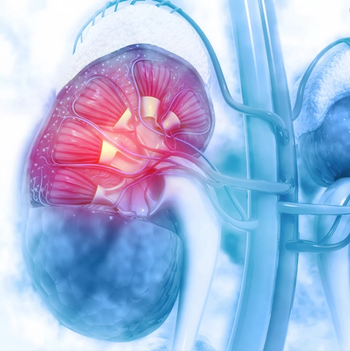
Higher levels of baseline TCR clonality in peripheral blood mononuclear cells (PBMCs) and baseline IgG1 fraction in PBMCs and tumor tissue were identified in an institutional cohort of samples from patient with metastatic renal cell carcinoma.

Olaparib monotherapy elicited responses with favorable tolerability in patients with renal cell carcinoma whose tumors harbored BAP1 or other DNA repair gene mutations, according to data from the interim analysis of the phase 2 ORCHID trial presented during the 2023 Kidney Cancer Research Summit.

Although the use of immunotherapy treatment approaches continues to become more prevalent in advanced renal cell carcinoma, high-level evidence showing benefit of sequential administration of these agents are limited.

Determining the appropriate front-line treatment pathway for patients with clear cell renal cell carcinoma may not always align with risk stratification features.

Chung-Han Lee, MD, PhD, discusses the final results of the phase 2 cohort of a phase 1/2 trial evaluating lenvatinib plus pembrolizumab in patients with pretreated metastatic clear cell renal cell carcinoma.

Yasser Mohamed Ali Ged, MBBS, discusses the phase 2 ORCHID trial (NCT03786796).
Toni K. Choueiri, MD, discusses ongoing trials in advanced renal cell carcinoma.

David F. McDermott, MD, discusses the randomized phase 2 LITESPARK-024 trial (NCT05468697).
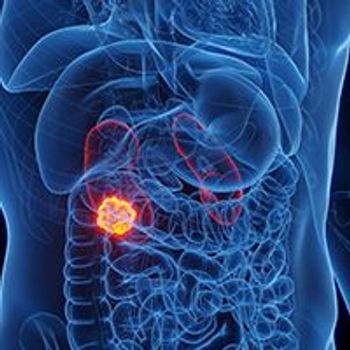
Neoadjuvant immunotherapy–based combinations led to reductions in tumor size and pathologic necrosis at the time of cytoreductive nephrectomy in patients with metastatic renal cell carcinoma.
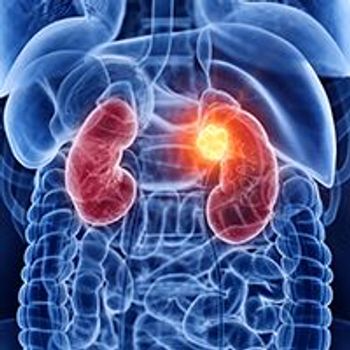
Adjuvant pembrolizumab prolonged disease-free survival and distant metastasis-free survival compared with placebo across The University of California Los Angeles Integrated Staging System–categorized subgroups of patients with clear cell renal cell carcinoma.
Lenvatinib plus pembrolizumab demonstrated improved overall response rates compared with sunitinib monotherapy in treatment-naïve patients with advanced renal cell carcinoma regardless of risk status or PD-L1 expression.

The tumor-immune evasion cell networks in clear cell renal cell carcinoma may be captured and classified using imaging mass cytometry, an orthogonal approach with the potential for increased cost-efffectiveness and accuracy compared with single-cell RNA sequencing.

Dose-dense and dose-intense doxorubicin, bleomycin, vinblastine, dacarbazine, and granulocyte colony–stimulating factor (ABVD) generated an improvement in progression-free survival and other efficacy end points compared with PET-adapted ABVD in previously untreated patients with advanced classical Hodgkin lymphoma.

Administration of glofitamab after pretreatment with obinutuzumab provided encouraging antitumor activity with high and durable complete response rates and a manageable safety profile in heavily pretreated patients with Richter syndrome.
Treatment with intra-arterial gemcitabine led to an improvement in overall survival compared with continued treatment with intravenous gemcitabine plus nab-paclitaxel in patients with locally advanced pancreatic cancer following sequential treatment with IV gemcitabine, nab-paclitaxel, and radiotherapy.
Fixed-duration treatment with single-agent mosunetuzumab resulted in a high complete response rate by end of treatment in patients with relapsed or refractory follicular lymphoma, according to updated data from the phase 2 GO29781 trial.
The combination of venetoclax, atezolizumab, and obinutuzumab elicited responses and prolonged time progression, in patients with chronic lymphocytic leukemia with Richter transformation, according to data from the phase 2 MOLTO trial.
Fixed-duration therapy with venetoclax plus obinutuzumab led to 60% reduction in the risk of progression or death compared with chlorambucil plus obinutuzumab, with benefit seen regardless of TP53 or IGHV mutation status, in previously untreated patients with chronic lymphocytic leukemia.

The BrECADD combination had noninferior efficacy and superior tolerability compared with escalated BEACOPP in patients with advanced classical Hodgkin lymphoma, according to data from the phase 3 HD21 trial.

Zanubrutinib plus obinutuzumab and venetoclax demonstrated lasting responses characterized by sustained progression-free survival and undetectable minimal residual disease in peripheral blood and bone marrow in previously untreated patients with chronic lymphocytic leukemia or small lymphocytic lymphoma.
Extended follow-up from the phase 3 SEQUOIA trial demonstrated that zanubrutinib maintained a progression-free survival benefit compared with bendamustine plus rituximab in previously untreated patients with chronic lymphocytic leukemia or small lymphocytic lymphoma.

Matthew Frank, MD, PhD, discusses preliminary results from a phase 1 trial of a CD22-directed CAR-T therapy in relapsed/refractory large B-cell lymphoma.