

Although the phase 2 CYCLONE 1 trial did not meet its primary end point of overall response rate, treatment with abemaciclib did demonstrate clinical activity among patients with metastatic castration-resistant prostate cancer.

Your AI-Trained Oncology Knowledge Connection!
Although the phase 2 CYCLONE 1 trial did not meet its primary end point of overall response rate, treatment with abemaciclib did demonstrate clinical activity among patients with metastatic castration-resistant prostate cancer.

The combination of PARP and ATR inhibition with olaparib and ceralasertib was tolerable but showed limited efficacy in pediatric patients with advanced malignancies harboring DNA replication stress and DNA repair deficiencies, according to findings from arm N of the phase 1/2 AcSé-ESMART trial.
Pemigatinib generated efficacy and tolerability in previously treated patients with advanced/metastatic or unresectable solid tumors harboring activating FGFR mutations or fusions/rearrangements, including cholangiocarcinoma, central nervous system tumors, gynecologic tumors, and pancreatic cancer.
Jayesh Desai, MBBS, FRACP, discusses efficacy data for the combination of divarasib plus cetuximab in patients with colorectal cancer harboring a KRAS G12C mutation from a phase 1B study.
Whole-exome sequencing successfully identified genetic conditions in patients who may have been missed by clinical guidelines.
John Michael "JM" Bryant, MD, discusses the combination of nivolumab with standard of care in the management of patients with prostate cancer, detailing the results of the interim analysis of the phase 2 trial.

A deep learning risk prediction model was able to accurately identify patients with endometrial cancer at low and high risk of distant recurrence, according to data presented during the 2023 AACR Annual Meeting.

The selective, oral KRASG12C inhibitor divarasib demonstrated promising clinical activity in patients with colorectal cancer treated with the agent plus cetuximab.

Fewer Americans are aware of the fact that the human papillomavirus can cause certain types of cancer, and vaccination rates against the virus are lagging, according to recent research presented at the AACR Annual Meeting 2023.
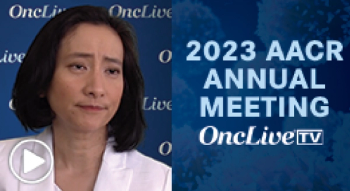
Attaya Suvannasankha, MD, discusses the safety and efficacy of REGN5459, a BCMAxCD3 bispecific antibody with low affinity to CD3 on T cells, in relapsed/refractory multiple myeloma.

The recommended phase 2 dose of IBI351 monotherapy had favorable safety and encouraging efficacy signals when administered to patients with advanced KRAS G12C–mutated non–small cell lung cancer, according to updated data from a phase 1 dose-escalation study.

Lifirafenib plus mirdametinib produced a tolerable safety profile and antitumor activity in patients with BRAF- or KRAS-mutant advanced or refractory solid tumors.
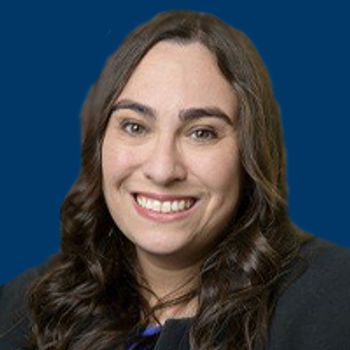
LY3537982, an investigative KRAS G12C inhibitor, demonstrated clinical efficacy across patients with non–small cell lung cancer, colorectal cancer, and other solid tumors.
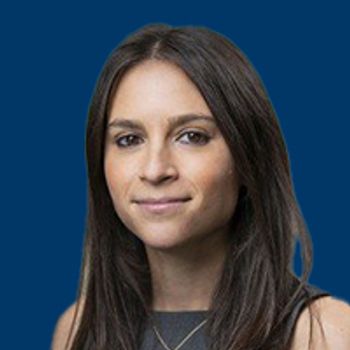
The RAF dimer inhibitor BGB-3245 generated early efficacy signals with a tolerable safety profile in patients with advanced or refractory solid tumors harboring MAPK pathway mutations.
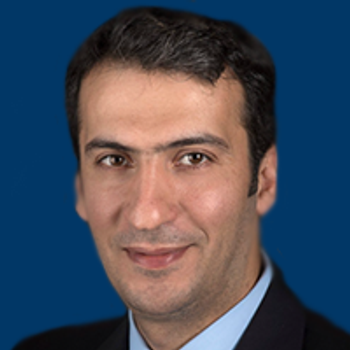
The allogeneic anti-CD70 CAR T-cell therapy ALLO-316 elicited signals of antitumor activity and showed a tolerable safety profile in patients with advanced or metastatic clear cell renal cell carcinoma.
Joshua K. Sabari, MD, discusses key findings from the phase 1 LOXO-RAS-20001 study of the KRAS G12C inhibitor LY3537982 in KRAS G12C–mutant advanced solid tumors.
Samer A. Srour, MB, ChB, MS, discusses the study design of the phase 1 TRAVERSE study, and key data on the use of ALLO-316 in patients with advanced or metastatic clear cell renal cell carcinoma.

Patients with African ancestry with colorectal cancer have fewer actionable gene mutations than those with European ancestry, leading to fewer targeted treatment options in this population.

Patients with unresectable metastatic desmoplastic melanoma achieved high response rates when treated with single-agent pembrolizumab in the SWOG S1512 trial, according to data presented during the 2023 AACR Annual Meeting.
Preclinical data have demonstrated activity of a novel, small molecule CDK2 inhibitor INCB123667 in CDK2/cyclin E1 expressing cell lines prompting investigators to initiate a phase 1 study, and the agent may fill an unmet need for patients with cancers with primary or acquired CDK4/6 resistance.

The investigational tetravalent bispecific antibody AFM13 displayed clinical efficacy in heavily pretreated patients with CD30-positive relapsed/refractory peripheral T-cell lymphoma.
The combination of tafasitamab and lenalidomide followed by tafasitamab maintenance prolonged responses in patients with relapsed/refractory diffuse large B-cell lymphoma.
John V. Heymach, MD, PhD, discusses findings the phase 3 AEGEAN trial in patients with resectable non–small cell lung cancer.
Jessica Yasmine Islam, PhD, MPH, discusses the treatment of patients with Hodgkin’s lymphoma who do or do not have HIV.
Perioperative durvalumab plus neoadjuvant platinum-based chemotherapy demonstrated a statistically significant improvement in pathologic complete response and event-free survival vs placebo plus chemotherapy in patients with resectable non–small cell lung cancer.

mRNA-4157 in combination with pembrolizumab improved recurrence-free survival compared with pembrolizumab alone when used as an adjuvant treatment in patients with resected high-risk melanoma, regardless of tumor mutational burden.

Pembrolizumab plus cisplatin and gemcitabine produced a statistically significant and clinically meaningful improvement in overall survival vs placebo plus cisplatin and gemcitabine in previously untreated patients with advanced biliary tract cancer, according to data from the phase 3 KEYNOTE-966 trial.

Adjuvant treatment with the combination of atezolizumab (Tecentriq) and bevacizumab (Avastin) resulted in a statistically significant and clinically meaningful improvement in recurrence-free survival vs active surveillance in patients with a high risk of hepatocellular carcinoma recurrence following curative-intent resection or ablation.

First-line cemiplimab monotherapy or in combination with platinum-based chemotherapy conferred long-term clinical benefit to patients with unresectable, locally advanced non–small cell lung cancer who were ineligible for concurrent chemoradiation.

Adagrasib induced high overall response rates in patients with KRAS G12C–mutated non–small cell lung cancer who achieved at least 90% mutation allele frequency clearance.